Quality Products

At a Fair Price

Wholesale Provider

Of Valves & Fittings

  • Corporate Office: 1301 Greengrass Drive Houston, TX 77008
  • 1-800-237-2512

Quality Products

At a Fair Price

Wholesale Provider

Of Valves & Fittings

What Are the Top Types of PVC Parts in 2026?

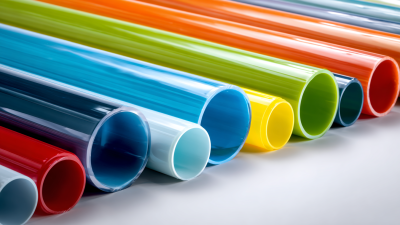
What kinds of PVC parts are likely to matter most in 2026? The answer depends on where they are used. PVC pipes and fittings remain familiar choices for water handling, drainage, and building services. Profiles, sheets, electrical conduit, valves, and molded components also serve distinct jobs. Each type has different dimensions, connection methods, and performance limits. Small details matter.

A rigid PVC fitting may suit a fixed installation, while a flexible component can handle movement or awkward routing. Neither is automatically better. That distinction is easy to miss when comparing products by price alone. This guide looks at common PVC parts, their typical uses, and the practical features buyers should check, such as wall thickness, temperature range, chemical exposure, and compatibility with adjoining components. For manufacturers and project teams, matching the part to actual operating conditions matters more than choosing a popular category. A product page cannot answer every question. Verify specifications with the supplier, especially when tolerances or service conditions are critical. Not every part fits. The aim is a clear, grounded overview—not a prediction that one PVC component will suit every project in 2026.
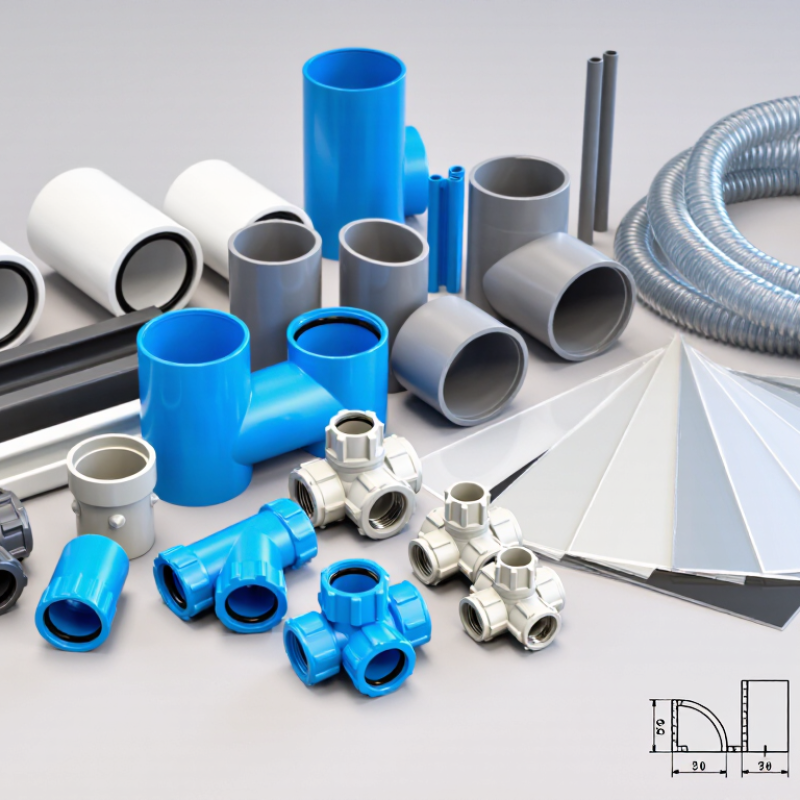
What Are the Top Types of PVC Parts in 2026?

How PVC Parts Are Classified by Shape, Rigidity, and Function

What Are the Top Types of PVC Parts in 2026?

How PVC Parts Are Classified by Shape, Rigidity, and Function

PVC parts are easier to compare when grouped by shape. Extruded pipes, channels, and edge profiles keep a consistent cross-section along their length. Molded elbows, caps, and housings can include bends or detailed features. Some components are machined from solid stock when closer dimensional control is needed. Shape affects assembly: a pipe may carry fluid, while an elbow redirects it.

Rigidity offers another useful distinction. Rigid PVC parts, often called uPVC, include drainpipes, window profiles, and electrical conduit. Flexible PVC is common in tubing, cable jackets, and soft seals. It bends around corners. But flexibility depends on the formulation, and not every grade suits the same temperatures or chemicals. Check the part specification, not just its appearance.

Function often determines the best choice. Flow-control parts need suitable pressure ratings and smooth internal surfaces. Sealing parts need consistent compression and a reliable fit. Protective covers and housings are judged by impact resistance and exposure conditions. That distinction matters. A common mistake is choosing by shape alone, then finding the part too brittle or too soft. Compare dimensions, operating conditions, and installation method before selecting a PVC component.

PVC Pipes, Fittings, and Valves for Fluid Systems

PVC Pipes, Fittings, and Valves for Fluid Systems

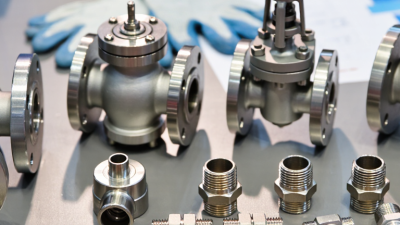
PVC fluid systems depend on more than straight pipe. Pipes carry water or process fluids, while fittings direct flow around corners, branches, and equipment. Valves control, isolate, or regulate it. Grand View Research estimated the global PVC pipes market at USD 58.5 billion in 2023, with growth projected through 2030. That scale reflects broad demand, but it does not make every PVC component suitable for every installation. Small details matter. Check fluid compatibility, pressure rating, temperature limits, and connection method before specifying parts.

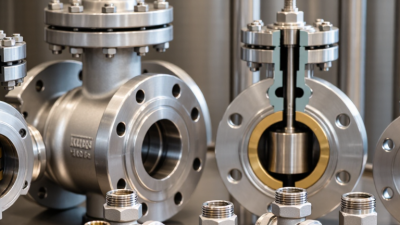
A well-matched system uses fittings with compatible dimensions and pressure classes. Elbows, tees, reducers, and unions can simplify routing and maintenance. For example, a union near a pump can make later servicing easier. PVC valves, including ball and check types, serve different control needs; selection depends on flow direction, operating pressure, and how often the valve will be used. Solvent-cement joints require clean, properly prepared surfaces and adequate curing time. Rushing that step is an easy mistake.

The VinylPlus 2024 Progress Report recorded 737,000 tonnes of PVC recycled in Europe during 2023 across applications. This is useful context, not proof that a particular pipe or fitting contains recycled material. Ask suppliers for product-specific information, and verify that the stated performance matches the actual fluid system. Even a sound design can fail if installation conditions are overlooked.

PVC Profiles, Sheets, and Panels for Building and Fabrication

PVC profiles, sheets, and panels serve different roles in building and fabrication. Profiles form window surrounds, corner trims, cable covers, and edge guards. Their shaped sections can hide joints and protect exposed edges. Small details matter.

PVC sheets provide flat stock for guards, partitions, signs, and made-to-measure enclosures. Rigid sheets hold their shape well, while foamed sheets are lighter and easier to handle. Panels often cover larger wall or ceiling areas. Their surface finish and thickness affect cleaning, fastening, and appearance. Not every panel suits damp or sunlit locations.

Choose materials around the actual conditions, not just the drawing. Check the product specification for temperature limits, UV resistance, and fire performance. These properties vary by formulation. Allow room for thermal movement, especially on long exterior runs, and test fasteners on a sample piece. PVC cuts cleanly with suitable tools, but edges can chip if the blade is dull. It can be practical and economical; still, heat and prolonged sunlight may cause problems. That trade-off deserves a closer look before fabrication begins.

What Are the Top Types of PVC Parts in 2026? – PVC Profiles, Sheets, and Panels for Building and Fabrication

A practical comparison of widely used PVC product types for construction, interior finishing, signage, and fabrication.

PVC Part Type Common Forms Typical Uses Key Characteristics Fabrication Notes
Rigid PVC Profiles Window and door frames, channels, trims, corner sections, and cable trunking Building envelopes, interior finishing, drainage details, and electrical cable management Extruded cross-sections; good resistance to moisture and many common chemicals; commonly supplied in rigid, unplasticized PVC (PVC-U) Can be cut, drilled, and mechanically joined. Welding and compatible adhesives are used for suitable grades and designs.
Solid PVC Sheets Flat rigid sheets, commonly supplied in thicknesses from about 1 to 25 mm Machine guards, equipment housings, laboratory fit-outs, cladding, and general fabrication Non-porous surface and relatively uniform structure; PVC-U sheet is often selected for chemical and moisture resistance Can be sawn, drilled, routed, and fabricated using methods suited to rigid thermoplastics. Check grade-specific limits before bonding or welding.
Expanded PVC Foam Sheets Lightweight cellular boards, often available in thicknesses of roughly 1–30 mm Display boards, signs, exhibition fixtures, wall panels, and lightweight interior components Lower weight than solid PVC sheet; smooth surfaces are available for printing, painting, or laminating Easy to cut, rout, and shape with suitable tools. Load-bearing performance depends on thickness, density, and support spacing.
PVC Wall and Ceiling Panels Hollow or solid interlocking boards, commonly installed with tongue-and-groove or similar joints Interior wall and ceiling finishes in residential, commercial, and utility areas Lightweight and moisture-resistant; surface textures and colors vary by product. Not all panels are designed for structural use. Panels are typically cut to size and fixed to an appropriate subframe or prepared surface. Follow the product’s installation and expansion-gap requirements.
PVC Cladding and Soffit Profiles Lap boards, fascia boards, soffit boards, and matching edge or corner trims Exterior wall finishing, roof eaves, fascia, and soffit applications Designed as a weather-exposed finish; color stability and impact performance vary with formulation and product design Allow for thermal movement and use compatible fixings. Installation details should follow the applicable building code and manufacturer guidance.
PVC Trim and Edge Profiles Skirting, architraves, glazing beads, edge trims, and protective corner profiles Finishing exposed edges, covering joints, and protecting corners in building interiors Available in solid or cellular constructions and in a range of cross-sections; offers a moisture-resistant alternative to some wood trims Usually cut with standard fine-tooth saws. Select compatible adhesives or fasteners for the substrate and intended exposure.

Note: Dimensions, performance, fire classification, and suitability vary by formulation and product design. Confirm the technical data sheet and local code requirements before specification.

Flexible PVC Tubing, Seals, and Protective Components

In 2026, flexible PVC tubing, seals, and protective components remain practical choices where parts need to bend, cushion, or resist moisture. Clear tubing can carry visible fluids; opaque tubing suits concealed runs. Soft PVC seals compress around doors, panels, and enclosures, while edge trims and protective sleeves cover sharp or scuffed surfaces. Small details matter. A tube that kinks at a tight bend can restrict flow, even when its wall looks sound.

Grand View Research valued the global PVC market at USD 67.5 billion in 2023 and projected 3.9% annual growth from 2024 to 2030. This broad market estimate does not predict demand for individual parts, but it reflects PVC’s continued industrial reach. For component selection, check operating temperature, fluid contact, UV exposure, and required flexibility. Formulations differ. A seal that performs well indoors may stiffen outdoors, and that trade-off deserves testing.

Tips: Match hardness and wall thickness to the job. Test a short sample under real conditions, including cold bends and cleaning fluids. Ask suppliers for current material data; catalog descriptions alone can leave important gaps.

Common PVC Parts in 2026: Typical Compound Density

Flexible tubing, seals and gaskets, and protective profiles are common PVC product types. The chart compares typical compound-density ranges; it is not a market-share ranking.

Density is shown in g/cm³. Ranges are indicative: formulation, plasticizers, fillers, and product design can change the density of a PVC part.

How to Select PVC Parts for Specific Applications

PVC parts in 2026 include rigid pipes, elbows, tees, valves, flexible tubing, and protective profiles. The right choice depends less on the part’s name than on its working conditions. For a water line, check operating pressure, temperature, pipe diameter, and fitting compatibility. A matching nominal size alone does not guarantee a sound connection.

For chemical handling, confirm the specific fluid and its concentration against a reliable compatibility chart. PVC can resist many chemicals, but not every mixture or temperature. For outdoor use, consider sunlight exposure and whether added UV protection is needed. In a workshop, a flexible PVC tube may suit vibration, while rigid PVC can provide sturdier routing. Check wall thickness, joint method, and published ratings before installation.

Small details matter.

A catalog can make parts look interchangeable.

They are not.

A valve rated for one pressure range may be unsuitable near a pump, where surges occur. Leave room for maintenance, too; a fitting that is difficult to reach can turn a minor repair into a frustrating job. Review technical data sheets and relevant local requirements with a qualified supplier or engineer.

One honest limitation: product tables rarely capture every real-world condition, so unusual heat, mixed chemicals, or repeated movement deserve closer review.

Top
error: Content is protected !!