Quality Products

At a Fair Price

Wholesale Provider

Of Valves & Fittings

  • Corporate Office: 1301 Greengrass Drive Houston, TX 77008
  • 1-800-237-2512

Quality Products

At a Fair Price

Wholesale Provider

Of Valves & Fittings

How to Choose Stainless Steel Valves and Fittings?

Choosing stainless steel valves and fittings is not simply a matter of selecting a corrosion-resistant alloy. The right choice depends on the fluid, operating pressure, temperature, connection type, and maintenance conditions. A valve that performs well on a clean-water line may fail sooner in a chloride-rich process. Small details matter.

The World Stainless Association reported 58.4 million tonnes of global stainless steel production in 2023. That figure reflects the material’s broad industrial use, but it does not guarantee that every stainless grade suits every application. AMPP’s IMPACT study estimated that corrosion costs about 3.4% of global GDP. Its findings reinforce a practical point: material selection and preventive maintenance both matter. Stainless steel can resist many forms of corrosion, yet grade, fabrication, surface condition, and exposure can change performance.

This guide explains how to compare stainless steel valves and fittings with those factors in mind. It covers grades such as 304 and 316, pressure and temperature ratings, sealing materials, end connections, and documentation. Check the actual service conditions. Ask suppliers for traceable material certificates and relevant test details, rather than relying on a product label alone. One limitation deserves attention: published specifications cannot predict every installation’s performance. Verify compatibility with the process fluid and consult a qualified engineer when conditions are uncertain.
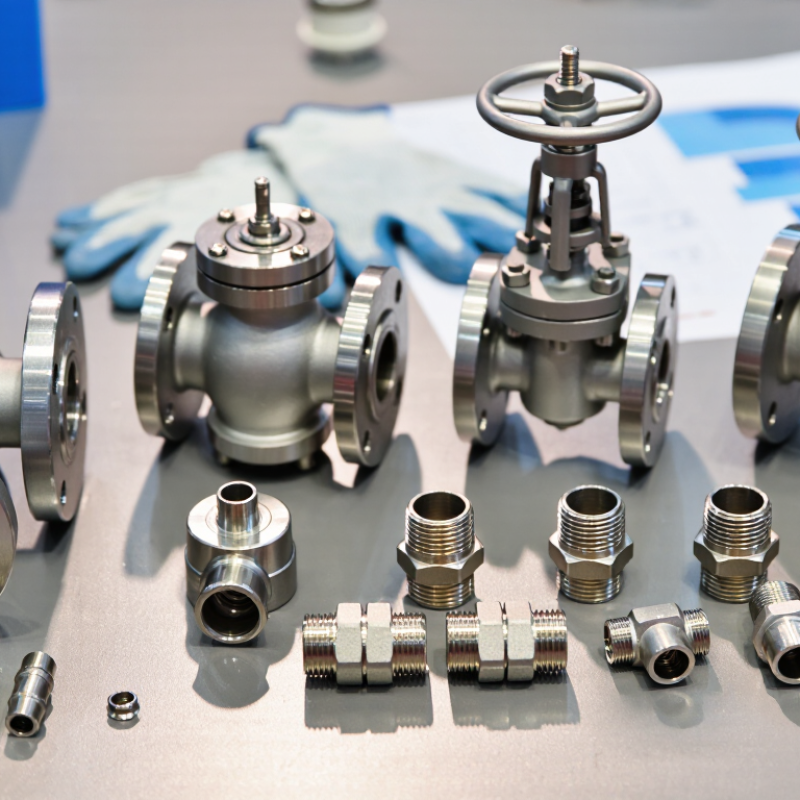
How to Choose Stainless Steel Valves and Fittings?

Define the System Requirements and Operating Conditions

Define the System Requirements and Operating Conditions

Start with the fluid, not the fitting. Record its composition, concentration, temperature, and any suspended particles. Water with chloride can behave differently from clean water, especially near welds or in warm, stagnant sections. “Stainless steel” is not one universal specification. Confirm material compatibility with reliable corrosion data or a qualified engineer.

Write down normal and peak pressure, including startup surges, vacuum conditions, and temperature changes. Check that the valve and fitting ratings apply at the actual operating temperature, not just room temperature. Check the peak. Consider flow rate, vibration, cycling frequency, and how often the line will be cleaned or drained. These details influence connection type, wall thickness, sealing method, and maintenance access. A tight equipment layout may save space but make inspection awkward. That trade-off is easy to overlook. Record uncertainties, too; field conditions rarely match every design assumption, and one missing detail can change the selection.

How to Choose Stainless Steel Valves and Fittings: Define System Requirements and Operating Conditions

Seat material is one part of valve selection: compare the expected operating temperature with the seat’s service range, then verify compatibility with the process fluid, pressure, and cleaning conditions. Ranges shown are approximate; formulations and manufacturer ratings vary.

Compare Stainless Steel Grades for Corrosion and Strength

How to Choose Stainless Steel Valves and Fittings?
Compare Stainless Steel Grades for Corrosion and Strength

Choosing a stainless steel grade means matching the metal to the fluid, temperature, and pressure—not just choosing the strongest option. Grade 304 suits many clean-water and indoor applications. Grade 316 contains molybdenum, which improves resistance to chloride-related pitting. That can matter near coastal air or in mildly saline process water. It is not immune to corrosion in every seawater condition. Small details matter. Stagnant fluid, tight crevices, and deposits can still cause trouble.

Tips: For chloride exposure, compare 316 with duplex 2205, which offers higher strength and strong resistance to stress corrosion cracking. Check the operating temperature and fabrication requirements too; welding and forming can affect performance. Confirm that the valve body, trim, and fittings suit the same service conditions.

A grade chart can make selection seem simpler than it is. For example, a 316 fitting connected to a different alloy may still create a weak point in a corrosive system. Review pressure ratings at the actual operating temperature, not just at room temperature. Ask for material certificates when traceability matters, and verify the specified grade against the parts supplied. I would not treat “marine grade” as a complete specification; the phrase leaves too much unsaid.

Choose Valve and Fitting Types for the Intended Function

Choose the valve by what the line must do. For full shutoff, a ball valve offers quick quarter-turn operation; for steady flow adjustment, a globe valve gives finer control. A gate valve is better suited to fully open or fully closed service than frequent throttling. Need one-way flow? Select a check valve and confirm its cracking pressure and installation direction. Function comes first.

Then match fittings to the route, pressure, temperature, and connection method. Elbows change direction; tees create branches; reducers manage pipe-size transitions. Confirm that the fitting’s pressure rating and material suit the valve and process fluid. World Stainless reported 58.4 million tonnes of global stainless-steel production in 2023, but a common alloy does not guarantee compatibility with every fluid or operating condition. Check the grade against the fluid’s chemistry and temperature, and verify dimensions against the project specification. I would pause over the failure mode, too: a poorly chosen fitting can complicate maintenance, even when the valve itself is correct. Small details matter. Sources: World Stainless, 2023 stainless-steel melt-shop production report; applicable valve and piping specifications.

Match Pressure Ratings, Connections, and Dimensions

Start with the actual operating conditions, not the largest pressure number printed on a valve. Record normal and peak pressure, fluid temperature, and pump-start surges; a component’s allowable pressure may decrease as temperature rises. Use the lowest applicable rating among the valve, fittings, tubing, and seals. Check pressure-temperature data for the exact material and configuration. Small mismatch, big leak. A safety margin matters, especially where pressure fluctuates or the system is difficult to inspect.

Match connection types precisely. NPT and BSP threads can appear similar but may not seal together; confirm the thread standard, size, and gender on every mating part. For flanged connections, compare the face style, bolt pattern, and gasket dimensions. Compression fittings must match the tube’s actual outside diameter, not just a nominal pipe size. It is tempting to trust a familiar size; that shortcut can be wrong. Measure face-to-face length, port diameter, and available clearance against the installation drawing. A caliper helps, but verify critical dimensions against the supplier’s specification sheet before ordering. A valve can fit the pipe and still leave too little room for a wrench or actuator.

Verify Standards, Manufacturing Quality, and Maintenance Needs

Selecting stainless steel valves and fittings starts with the service conditions, not the catalogue description. Confirm the alloy grade, pressure-temperature rating, connection type, and fluid chemistry. Chlorides, cleaning chemicals, and temperature swings can change corrosion risk. Check that the applicable design and test requirements match the component: ASME B16.34 covers specified valve designs, while ISO 5208 addresses pressure testing of industrial valves. Ask for material certificates, heat-number traceability, and documented test results. Small details matter.

Manufacturing quality shows up in the details: smooth sealing surfaces, consistent welds, clear identification, and dimensions that match drawings. Verify inspection records and, where the service warrants it, request positive material identification. The NACE International 2016 IMPACT study estimated corrosion costs at US$2.5 trillion annually, or about 3.4% of global GDP. That figure is not a valve-specific forecast, but it explains why material selection and inspection deserve attention.

Maintenance needs should shape the purchase. Consider how often the valve will cycle, whether seats or seals can be replaced, and whether technicians can reach fasteners safely. Keep operating limits and inspection intervals in the equipment file. No checklist catches every failure mode; actual fluid conditions can differ from design assumptions. Review field findings and adjust the maintenance plan when wear, leakage, or deposits appear.

How to Choose Stainless Steel Valves and Fittings? - Verify Standards, Manufacturing Quality, and Maintenance Needs

Selection Dimension What to Verify Relevant Standards or References Practical Selection Guidance Records or Checks to Request
Stainless steel grade Confirm the specified alloy and product form, such as cast, forged, or wrought material. ASTM A351 for cast valve bodies; ASTM A182 for forged flanges and fittings; ASTM A403 for wrought stainless butt-welding fittings. Common cast grades include CF8, broadly corresponding to 304 stainless steel, and CF8M, broadly corresponding to 316 stainless steel. Verify the exact specification and chemistry rather than relying on a grade name alone. Material test certificate, heat number, product specification, and chemical analysis.
Corrosion and process compatibility Review the fluid composition, chloride concentration, temperature, cleaning chemicals, and risk of crevice or pitting corrosion. Applicable material specification; project corrosion assessment; ISO 15156 / NACE MR0175 where sour-service requirements apply. 316-type alloys contain molybdenum and often offer better resistance to chloride pitting than 304-type alloys, but neither is universally suitable for every chloride or chemical environment. Confirm suitability for the actual service. Process conditions, corrosion review, and any service-specific material qualification.
Pressure and temperature rating Check the valve pressure class or rating at the operating temperature, including design pressure, surges, and vacuum conditions where relevant. ASME B16.34 for many industrial valves; applicable piping and component standards for the selected connection type. Do not assume that a pressure class gives the same allowable pressure at every temperature or for every material. Check the applicable rating tables and the weakest component in the assembly. Pressure-temperature rating data, design conditions, and documented component limits.
Valve and fitting dimensions Confirm end connections, face-to-face dimensions, wall thickness, nominal size, and compatibility with mating equipment. ASME B16.5 for many flanges; ASME B16.9 for factory-made butt-welding fittings; ASME B16.11 for forged socket-welding and threaded fittings. Match the dimensional standard and pressure rating across connected components. Standards and product scope differ, so verify the exact standard specified for the project. Dimension drawings, connection details, and dimensional inspection results.
Valve design and application Choose valve type, trim, seat material, flow direction, end connection, and actuation to suit the process and operating cycle. ASME B16.34 or the project-specified valve design standard; applicable product and piping specifications. Consider shutoff requirements, throttling duty, solids, cycling frequency, and whether the valve is intended for isolation or control. Confirm compatibility of soft seats and seals with the fluid and temperature. Data sheet, materials list, flow direction marking, and design documentation.
Manufacturing quality and traceability Check material identification, casting or forging quality, welding controls, machining, and traceability from finished item to material heat. Applicable ASTM product specification and project quality requirements; ISO 9001 may support quality-system controls but does not replace product acceptance requirements. Require consistent identification and documented inspection. Additional non-destructive examination should be specified according to component type, service, and project requirements. Material certificates, heat-number traceability, inspection plan, and required examination reports.
Material verification and surface condition Verify alloy identity where required and inspect for contamination, damage, unacceptable defects, and suitable surface finish. ASTM A967 for chemical passivation treatments when specified; project requirements for positive material identification and surface inspection. Passivation can help remove free iron and promote a passive surface, but it does not correct unsuitable alloy selection or eliminate the need for proper handling and cleaning. Passivation records when specified, PMI results when required, and visual inspection documentation.
Pressure and leakage testing Confirm test type, test medium, pressure, duration, and allowable leakage for the specific valve design and purchase specification. API 598 or ISO 5208 where specified and applicable; the governing product standard and purchase requirements take precedence. Ensure the test procedure matches the valve type and applicable acceptance criteria. A successful factory test does not remove the need for correct installation and service checks. Test report identifying the item, test conditions, acceptance criteria, and result.
Installation and joining Check alignment, support, flow direction, gasket selection, bolt tightening, and welding procedure where applicable. Applicable piping code, approved welding procedures, and project installation specifications. Avoid forcing misaligned piping into position. Use compatible gaskets and fasteners, and control heat input and post-weld cleaning as required by the material and project procedure. Installation checklist, welding records where applicable, and commissioning inspection.
Maintenance and service life Define inspection frequency based on service severity, operating cycles, leakage history, and consequences of failure. Manufacturer's maintenance instructions and site inspection, safety, and asset-management procedures. Inspect for external corrosion, leakage, abnormal operating torque, deposits, and damage. Isolate and depressurize equipment before maintenance; replace worn seals with compatible parts. Maintenance history, inspection findings, replaced-part details, and corrective actions.
Top
error: Content is protected !!