Quality Products

At a Fair Price

Wholesale Provider

Of Valves & Fittings

  • Corporate Office: 1301 Greengrass Drive Houston, TX 77008
  • 1-800-237-2512

Quality Products

At a Fair Price

Wholesale Provider

Of Valves & Fittings

7 Tips to Choose Stainless Steel Valves and Fittings

Choosing stainless steel valves and fittings is not a catalog exercise. It is a reliability decision made under pressure, heat, corrosion, and maintenance limits.

Grand View Research estimated the global industrial valves market at approximately US$78.7 billion in 2023. World Stainless reported about 58.4 million tonnes of stainless steel production during the same year. These figures reveal strong industrial demand, but they do not guarantee correct material selection. A valve may look polished and still fail in chloride-rich water, acidic chemicals, or repeated thermal cycling.

Greg Johnson, a valve-industry educator and author of The Valve Primer, offers a practical warning: “A valve is only as reliable as its application, installation, and maintenance.” That principle guides this introduction to stainless steel valves and fittings. The right choice begins with fluid chemistry, temperature, pressure, flow direction, and connection standards. Grade selection matters too. Stainless steel 304 may suit many general services, while 316 or duplex grades can provide better resistance in demanding environments. Yet higher alloy content is not automatically better.

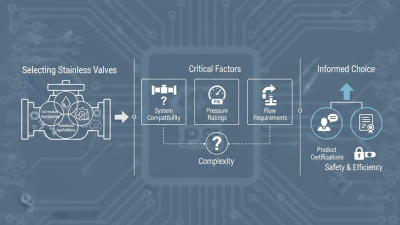
This guide presents seven useful selection checks. It examines pressure ratings, body and trim materials, fitting compatibility, sealing methods, standards, traceability, and lifecycle cost. Small details matter. A mismatched gasket can leak beside an expensive valve. An unverified casting certificate can weaken confidence. Some recommendations may seem obvious, but field failures often begin with overlooked basics. Good engineering is careful, documented, and willing to question convenient assumptions.
7 Tips to Choose Stainless Steel Valves and Fittings

Define the Application, Pressure, Temperature, and Media Conditions

7 Tips to Choose Stainless Steel Valves and Fittings

Tip 1: Define the application before selecting stainless steel valves or fittings. Identify whether the system serves water, steam, chemicals, food, or compressed air. Each service creates different demands. A fitting used indoors may face moisture, vibration, or frequent cleaning.

Tip 2: Check the pressure range, including sudden surges. Do not rely only on normal operating pressure. A small mistake here can cause leakage or premature failure.

Tip 3: Record the highest and lowest temperatures. Temperature affects pressure ratings, sealing materials, and metal expansion.

Tip 4: Describe the media clearly. Acidity, chloride content, viscosity, and suspended particles all matter. Stainless steel is corrosion resistant, not corrosion proof.

Chloride-rich water can still cause pitting. That detail is often missed.

Tip 5: Confirm compatibility between the media and every wetted component, including gaskets and seats.

Tip 6: Consider installation conditions. Tight spaces may require compact fittings, while vibration may need stronger supports and flexible connections.

Tip 7: Review cleaning, maintenance, and inspection needs before ordering. A valve that performs well in testing may be awkward to service on site.

Ask for pressure ratings, material certificates, and test records from reliable suppliers. Also check connection standards carefully.

Small differences in threads or dimensions can create expensive rework.

Recheck the assumptions; they are not always correct.

Select the Right Stainless Steel Grade for Corrosion Resistance

7 Tips to Choose Stainless Steel Valves and Fittings

Selecting the correct stainless steel grade is the foundation of corrosion resistance. A shiny surface does not guarantee long service life. Grade 304 suits many clean-water, indoor, and general industrial applications. However, chloride exposure can create pitting and crevice corrosion. Grade 316 usually performs better near seawater, brine, and chemical washdown areas because of its molybdenum content. Conditions still matter.

Identify the fluid, chloride level, temperature, pressure, and cleaning chemicals before choosing a grade. Check stagnant zones, threaded connections, and gasket gaps. Corrosion often begins there. In field inspections, poor drainage has caused more trouble than expected. I once underestimated a warm, salty environment. That decision needed correction.

Tip 1: Identify the fluid, chloride level, temperature, pressure, and cleaning chemicals before choosing a grade.

Tip 2: Check stagnant zones, threaded connections, and gasket gaps. Corrosion often begins there.

Tip 3: Consider duplex stainless steel when higher strength and improved chloride resistance are required.

Tip 4: For aggressive acids or high-purity systems, request professional material compatibility data. Grade 316 is not a universal solution.

Tip 5: Match the valve, fitting, weld, and fastener materials carefully. A weaker component can undermine the whole assembly.

Tip 6: Verify chemical composition through recognized material certificates and suitable testing standards.

Tip 7: Review the operating conditions after installation. Fluid concentration and temperature may change over time, making an originally suitable grade less reliable. Surface finish, proper welding, and thorough cleaning also influence performance. Small details matter.

Match Valve and Fitting Types to the Piping System

7 Tips to Choose Stainless Steel Valves and Fittings

Match each component to the piping system before comparing prices. A ball valve suits quick isolation, while a gate valve supports full-flow service. Use a globe valve when throttling control matters. Check the medium, pressure, temperature, and flow direction.

Small details matter. For clean water, sanitary processing, or corrosive chemicals, the required stainless steel grade may differ. Do not assume one grade fits every line.

Connection style must match the pipe and maintenance plan. Threaded fittings work well on smaller, lower-pressure lines. Flanged connections support easier removal and inspection. Butt-weld fittings reduce internal turbulence but demand accurate installation. Socket-weld designs can be practical, yet trapped fluid may create cleaning concerns.

Select compatible gaskets, bolts, seals, and end connections. A mismatched seal can fail before the valve does.

Review the system drawings, applicable standards, and actual site conditions. Confirm pressure ratings at operating temperature, not only at room temperature. Check whether the valve needs a lever, actuator, lockout feature, or position indicator.

Avoid mixing components from different specifications without verification. It may look acceptable. It may not be.

A useful selection mistake to avoid is focusing on the valve body while ignoring fittings, supports, drainage, and access space.

Inspectors should verify material certificates, dimensions, weld quality, and pressure-test records before installation. Supplier claims still require technical review.

Verify Size, Pressure Ratings, Connections, and Standards

7 Tips to Choose Stainless Steel Valves and Fittings

Verify Size, Pressure Ratings, Connections, and Standards

Choosing stainless steel valves and fittings starts with accurate size verification. Check the pipe’s outside diameter, nominal size, wall thickness, and flow requirement. Do not rely only on an old purchase record. Field measurements often reveal substitutions or worn threads. A small mismatch can create leakage, vibration, or difficult maintenance.

Pressure ratings need more than one number. Confirm the working pressure at the actual operating temperature. Consider pressure surges, frequent cycling, vacuum conditions, and the fluid’s chemical behavior. A fitting rated for cold water may perform differently with hot oil or corrosive process media. I have seen reasonable selections fail because temperature was ignored. That mistake deserves a second review.

Connections must match the installation method. Compare threaded, socket-weld, butt-weld, and flanged ends with the existing piping. Check gasket material, bolt patterns, thread type, and available service space. Then verify applicable standards for dimensions, materials, testing, and documentation. Request heat numbers, pressure-test records, and certificates when traceability matters. Standards are not interchangeable by assumption. Confirm the required edition and local code expectations with a qualified engineer or inspector. A clean catalog description is helpful, but it is not proof of suitability.

Check Manufacturing Quality, Certifications, Maintenance, and Cost

7 Tips to Choose Stainless Steel Valves and Fittings

Start with manufacturing quality, not the polished surface. Inspect casting marks, welds, threads, and sealing faces under strong light. Ask for heat numbers, material certificates, dimensional records, and pressure-test results. A reputable factory should trace each component from raw material to shipment. ISO’s 2023 survey recorded 1,265,216 ISO 9001 certificates worldwide, but certification alone does not prove consistent valve quality. Check the certificate scope and audit date. Also verify designs against relevant standards, such as ASME B16.34, ASME B16.5, or applicable ISO requirements. The paperwork matters.

Confirm the correct stainless-steel grade for temperature, chloride exposure, and process media. A cheaper grade can pit quickly in a wet coastal plant. The AMPP IMPACT study estimated global corrosion costs at 3.4% of global GDP, showing why material selection deserves serious attention. Ask whether the supplier performs PMI testing, surface inspection, and functional testing. These small checks prevent expensive surprises. I would not assume every “stainless” label means equal corrosion resistance.

Plan maintenance before installation. Record torque settings, gasket materials, inspection dates, and spare-part needs. The U.S. Department of Energy’s Operations and Maintenance Best Practices guide reports that preventive maintenance can reduce costs by roughly 12–18% compared with reactive repairs. Still, those figures are not guaranteed; dirty service, poor training, and inaccessible valves can erase the savings. Compare total cost, including installation, downtime, testing, replacement frequency, and disposal. The lowest quotation is sometimes the most expensive decision.

7 Tips to Choose Stainless Steel Valves and Fittings - Check Manufacturing Quality, Certifications, Maintenance, and Cost

Tip Selection Dimension What to Check Recommended Evidence or Standard Practical Benchmark Risk if Ignored
1 Confirm the correct material grade Match the valve or fitting body, trim, and wetted parts with the fluid, temperature, pressure, and corrosion conditions. Common stainless-steel choices include 304/304L for general water and mild service and 316/316L when higher resistance to chlorides and many chemical environments is required. ASTM A351 ASTM A182 ASTM A403
Review the material test certificate, heat number, chemical composition, and mechanical properties.
The material certificate should identify the exact grade, heat number, applicable standard, and test results. Do not select by appearance alone. Premature pitting, stress corrosion, leakage, or loss of pressure containment.
2 Verify pressure, temperature, and connection compatibility Confirm the pressure class or rating, design temperature, valve type, end connection, face-to-face dimensions, and pipe size. Check whether threaded, socket-weld, butt-weld, flanged, or sanitary connections match the piping system. ASME B16.34 ASME B16.5 ASME B16.9 ISO 5211
Request dimensional drawings, pressure-temperature charts, and applicable product specifications.
Every selected item should have a documented pressure-temperature rating at the actual operating conditions, including any reduced rating at elevated temperature. Installation failure, distortion, gasket blowout, or dangerous overpressure leakage.
3 Evaluate manufacturing quality and traceability Inspect casting or forging quality, weld integrity, machining accuracy, surface finish, passivation, marking, and traceability. For critical service, verify that non-destructive testing and final inspection are included in the quality plan. ISO 9001 EN 10204 3.1 ISO 9712
Ask for inspection and test plans, heat-number traceability, dimensional inspection reports, and relevant radiographic, dye-penetrant, or ultrasonic test records.
Product markings should remain legible and correspond with the inspection documents from raw material through final assembly. Hidden casting defects, inconsistent dimensions, difficult installation, and unreliable batch quality.
4 Check certifications and regulatory compliance Select certifications according to the application and destination market. Verify pressure-equipment compliance, potable-water suitability, fire safety, hygienic design, or material declarations only when they are relevant to the service. PED 2014/68/EU API 607 NSF/ANSI 61 3-A
Check certificate scope, validity, product size range, pressure category, and whether the certificate applies to the exact configuration.
A certificate is useful only when its scope matches the product, fluid, pressure, temperature, market, and intended installation. Failed inspection, rejected shipments, legal non-compliance, or unsuitable materials in regulated service.
5 Review testing and leakage performance Confirm shell testing, seat testing, functional operation, and visual inspection. For valves used with hazardous, toxic, or volatile media, also review fugitive-emission control and stem-sealing requirements. API 598 ISO 5208 ISO 15848
Request test reports showing the test medium, pressure, duration, acceptance class, and tested serial or heat number.
Test acceptance should be stated clearly rather than described only as “100% tested.” The required leakage class depends on the valve type and service. Seat leakage, external emissions, product contamination, or unplanned shutdowns.
6 Plan maintenance and serviceability Compare access to packing, seats, seals, bolts, actuators, and replacement parts. Consider cleaning requirements, operating frequency, installation orientation, spare-part availability, and whether the valve can be isolated safely for maintenance. Review maintenance manuals, exploded drawings, recommended spare-part lists, seal compatibility data, torque information, and service intervals. Prefer designs with replaceable wear parts, clear maintenance instructions, standard fasteners, and documented seal materials compatible with the process fluid. Longer downtime, difficult repairs, recurring leakage, and higher lifecycle maintenance cost.
7 Compare total cost of ownership Evaluate purchase price together with installation, testing, freight, spare parts, energy use, inspection, maintenance, downtime, and expected service life. Compare equivalent materials, ratings, connection types, and certification scopes. Use a lifecycle-cost worksheet containing initial cost, installation hours, inspection cost, replacement-part cost, expected maintenance frequency, and estimated downtime exposure. A lower unit price is not automatically lower cost. The comparison should use the same technical specification and include all mandatory tests, documents, and accessories. False savings, frequent replacement, unplanned outages, and a higher long-term operating budget.
Selection note: Standards and certifications should be confirmed against the project specification, operating conditions, and applicable local regulations. A qualified engineer should verify material compatibility and pressure-temperature suitability before purchase.
Top
error: Content is protected !!