Quality Products

At a Fair Price

Wholesale Provider

Of Valves & Fittings

  • Corporate Office: 1301 Greengrass Drive Houston, TX 77008
  • 1-800-237-2512

Quality Products

At a Fair Price

Wholesale Provider

Of Valves & Fittings

How to Choose the Right Ball Valves for Your Needs

Choosing the right ball valve is not just a matter of matching pipe size. The valve must suit the fluid, pressure, temperature, operating frequency, and installation environment. A unit that works well on a water line may fail prematurely in abrasive slurry or corrosive process service. Small details matter.

Market growth reflects how widely these components are used. MarketsandMarkets’ Ball Valves Market report estimated the global market at USD 8.4 billion in 2022, with a forecast of USD 11.9 billion by 2027. That estimate points to demand across sectors such as oil and gas, water treatment, chemicals, and power generation. It does not mean every valve design fits every application. Selection still depends on verifiable operating conditions and manufacturer documentation.

A useful choice begins with the job the valve must perform. Consider whether you need a floating or trunnion-mounted design, and check body and seat materials against the process fluid. Confirm pressure and temperature ratings, end connections, actuation needs, and expected cycle frequency. For example, a valve beside a hot process line may need different materials and seals than one serving a low-pressure water branch. Standards such as API 6D can help define requirements for pipeline valves, but they do not replace application-specific engineering review. I would also verify the supplier’s test records and ask how the valve performs under actual service conditions. The overlooked detail is often the one that drives maintenance cost.
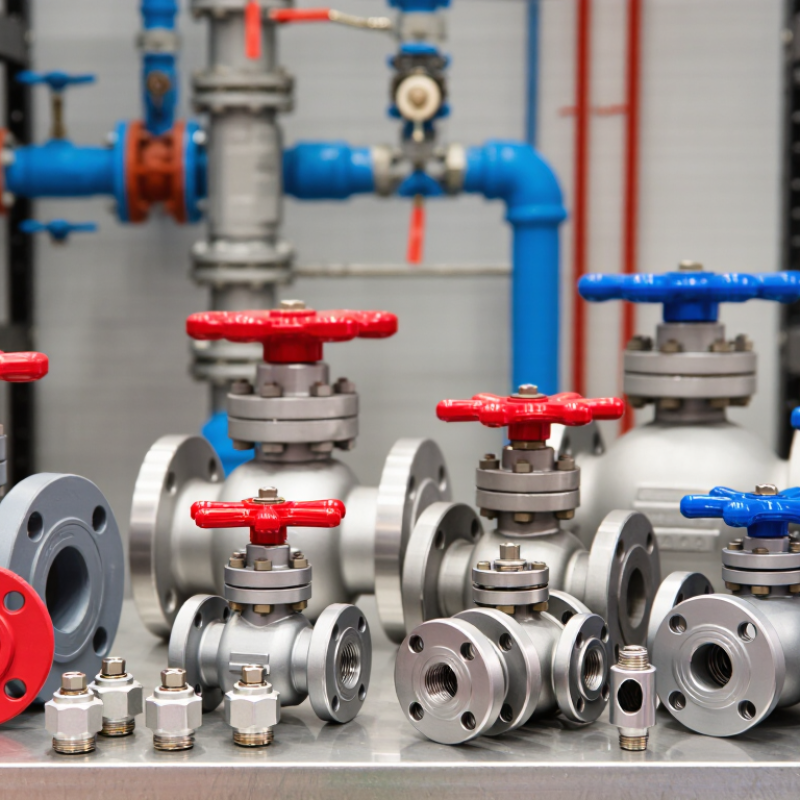
How to Choose the Right Ball Valves for Your Needs

Identify the Application and Operating Requirements

Start with the fluid and the job the valve must perform. Is it clean water, hot oil, or a slurry carrying fine grit? Fluid chemistry, temperature, and suspended particles affect the body, ball, seats, and seals. A material that suits the pipe may still wear quickly at the sealing surfaces. Check compatibility across the full operating range, not just at startup. Small details matter.

Pressure matters. Record normal and peak pressure, temperature, flow rate, and the pressure difference across the valve. Confirm the valve’s rating at the actual operating temperature, and specify whether tight shutoff is essential. Ball valves are commonly used for on-off service; frequent throttling can damage seats or create unstable flow.

For example, a washdown line may need corrosion-resistant parts, while a gritty process may call for different seat materials. The right choice depends on the exact fluid and duty.

Consider how often the valve will cycle and how it will be operated. A hand lever may work for occasional use, but a hard-to-reach line or frequent cycle may need actuation. Check connection type, available space, and whether maintenance access is practical. It is easy to trust a neat specification sheet too much. Verify assumptions with operating data, and review the valve documentation with a qualified supplier or engineer before ordering.

Compare Ball Valve Types and Port Designs

Ball valves differ most at the port. A full-port valve has a bore close to the adjoining pipe’s inside diameter, helping limit flow restriction. A reduced-port valve uses a smaller opening, often making the body more compact.

For a simple geometry check, a 25 mm circular bore has about 491 mm² of area; a 16 mm bore has about 201 mm². That is roughly 59% less area, not a direct prediction of flow. Real flow also depends on pressure, fluid properties, and the valve’s flow coefficient.

Crane’s Flow of Fluids Technical Paper No. 410 explains how resistance coefficients help estimate pressure loss through valves and fittings. For control-valve sizing, ISA-75.01.01 sets out flow equations. Use the valve’s published Cv or Kv data alongside those methods; nominal pipe size alone can mislead. Full-port designs suit applications where low restriction or tool access matters, while reduced-port designs can work where space and cost matter more. Not every line needs the larger bore.

There is a trade-off. A larger valve may add weight and expense without improving a system whose pump or piping is the real bottleneck. Check the fluid, operating pressure, shutoff needs, and available installation space. Then compare port geometry and pressure-drop data for the actual duty. A quick visual match is tempting. It is not enough.

Select Suitable Materials and Connection Options

Choosing a ball valve starts with the fluid, operating temperature, pressure, and cleaning routine. Carbon steel can suit many general-duty services, while stainless steel often offers better resistance to corrosion. For aggressive chemicals, check compatibility tables for the exact fluid and concentration; “corrosion-resistant” does not mean suitable for every chemical. Seat materials matter too. A soft polymer seat may seal tightly, but heat or abrasive particles can shorten its service life. Confirm the valve’s pressure and temperature ratings together, not separately.

Connection style affects installation, maintenance, and leak risk. Threaded ends are compact and convenient for smaller lines, but repeated removal can wear threads or disturb sealant. Flanged connections are easier to inspect or replace, especially where space allows wrench access. Welded ends reduce potential leak paths, though removal later may require cutting the pipe. Match the connection to the pipe schedule, available tools, and maintenance plan. It is easy to focus on the valve body and overlook how a cramped installation complicates repairs.

Tips: Check the fluid’s full operating range, not just its normal condition. Verify end dimensions before ordering. If details are uncertain, pause and confirm them with the piping engineer or supplier. A small mismatch can mean a costly rework.

Check Pressure, Temperature, and Flow Specifications

Check the valve’s pressure rating against the highest pressure it will actually face, including startup or shutoff conditions. A catalog maximum is not a sensible everyday target. Ratings can change with temperature, valve material, and seat construction, so check the pressure-temperature data for the exact configuration. Do not guess. A pressure gauge near the line can help confirm real operating conditions, but it cannot replace design information.

Temperature affects more than the body. Heat can soften seats, while cold can make some materials less flexible. Compare the full temperature range of the process with the limits for both the valve and its seals. If the line carries hot water, for example, account for temperature during cleaning or an upset—not only during steady operation. These less frequent conditions are easy to overlook.

Flow specifications matter too. Check the valve’s flow coefficient and whether its port is full or reduced bore. A reduced port may create extra pressure drop, even when the pipe connection looks correct. For liquids, estimate the pressure loss at the expected flow rate; for gases, use sizing data suited to compressible flow. I find this check is tempting to rush, especially when pipe size seems like an obvious match. It is not always. Confirm the operating range and leave a practical margin without oversizing the valve so much that control becomes awkward.

Evaluate Installation, Maintenance, and Service Life

How to Choose the Right Ball Valves for Your Needs
Evaluate Installation, Maintenance, and Service Life

A ball valve should suit the pipe layout, fluid, pressure, and operating frequency. Check connection type and available clearance before ordering. A handle that hits a wall can make routine operation awkward. Confirm the valve’s flow direction and pressure rating against the system specifications. During installation, support the piping properly; a valve should not carry pipe strain. Small details matter. Even a well-made valve may wear early if it is forced into a poor fit.

Tips: Leave room to turn the handle and remove the valve. Keep the product data sheet accessible. Note any leaks, stiff movement, or unusual noise during inspections. Don’t overtighten connections; too much force can damage sealing surfaces.

Maintenance needs depend on the medium and how often the valve cycles. In clean, moderate-duty service, checks may be less frequent; abrasive or corrosive fluids can demand closer attention. Follow the manufacturer’s inspection guidance, and verify that seals remain compatible with the fluid and temperature. Record inspection dates and changes in operating feel. Service life is not a fixed number. It can be shorter than expected, and that is worth considering when setting replacement intervals.

How to Choose the Right Ball Valves for Your Needs - Evaluate Installation, Maintenance, and Service Life

Selection Factor Option or Feature When It May Be Suitable Installation Considerations Maintenance and Service-Life Factors
Valve design Floating ball Common for many low- and medium-pressure shutoff applications. The ball is supported by the seats and moves slightly under pressure. Check the valve’s pressure and temperature ratings for the actual service conditions. Install with suitable pipe support to avoid excessive loads on the body. Seat and seal wear depends on pressure, temperature, fluid cleanliness, and operating frequency. Leakage or increased operating torque can indicate a need for inspection.
Valve design Trunnion-mounted ball Often selected for larger sizes or higher-pressure duties. The ball is supported by trunnions, which can reduce the load carried by the seats. Verify the specified flow direction and any required seat or cavity-relief arrangement. Allow access for actuator operation and maintenance. Internal design and service conditions affect inspection needs. Follow the manufacturer’s procedures for seat, seal, and actuator checks.
Flow capacity Full-port or reduced-port bore A full-port bore is useful when low flow restriction or passage of a cleaning pig is required. A reduced-port bore may be suitable where a smaller flow opening is acceptable. Compare the valve’s flow coefficient and pressure drop with the system design. Confirm that the bore meets any pigging or solids-passage requirements. Bore size alone does not determine service life. Abrasive particles, deposits, and unsuitable flow conditions can damage or obstruct internal components.
Seat material Soft-seated or metal-seated Soft seats can provide tight shutoff in compatible conditions. Metal seats may be considered for higher temperatures or more demanding wear conditions, subject to the valve specification. Check compatibility with the process fluid, temperature, pressure, and cleaning chemicals. Confirm the required leakage class and fire-safe requirements where applicable. Soft-seat life can be reduced by heat, incompatible chemicals, or abrasive particles. Metal-seated valves may need specific inspection and can have different shutoff performance.
Body and trim materials Material matched to fluid and environment Material selection should account for corrosion, erosion, pressure, temperature, and the chemistry of the process fluid. Check material compatibility and pressure-temperature ratings. Consider external corrosion, insulation, and the possibility of galvanic effects in connected components. Corrosion, erosion, and chemical attack can shorten service life. Inspect for leakage, corrosion, deposits, and signs of material damage during planned maintenance.
Connection and operation Threaded, flanged, welded, manual, or actuated Choose connections and operating methods that match the piping system, access needs, required response, and applicable codes. Follow the connection-specific installation procedure. Avoid using the valve to correct pipe misalignment, and verify actuator orientation, clearances, and controls. Check external joints, stem seals, stops, and actuators as specified. Operating frequency, cycling conditions, and maintenance quality influence useful service life.

Service life is not a fixed value: it depends on the valve design, materials, process conditions, installation quality, operating frequency, and maintenance. Use the valve’s technical documentation and applicable piping requirements to confirm suitability.

Top
error: Content is protected !!