
China Top Ball Valve Manufacturers for Global Buyers
Finding reliable ball valves from China requires more than comparing prices on a supplier directory. Global buyers need evidence of manufacturing capability, material control, testing discipline, and consistent export experience. A strong manufacturer should explain how its valves are produced, inspected, marked, packed, and supported after shipment.
This guide examines China’s leading ball valve manufacturers through practical buying criteria. These include product range, pressure ratings, body materials, connection standards, factory certification, and quality records. Buyers may encounter stainless steel, carbon steel, brass, forged, cast, floating, and trunnion-mounted designs. Each option suits different fluids, temperatures, pressures, and installation conditions. Small details matter. A clear material certificate can prevent a costly mistake.
Factory visits, third-party inspections, and sample testing can reveal more than attractive brochures. Ask for hydrostatic test reports, dimensional drawings, traceability documents, and references from comparable projects. ISO certification may support confidence, but it does not replace direct verification. This point is often overlooked.
No shortlist is perfect. A capable supplier may still have weak communication or limited customization. Another may offer excellent engineering but longer lead times. Buyers should compare the complete supply picture, not one impressive feature. Local regulations, project specifications, and end-user approval requirements also deserve careful review before purchase.
The manufacturers discussed here are considered through transparent, buyer-focused standards rather than unverified popularity claims. Their real value depends on application fit, documentation quality, delivery performance, and accountable technical support. A careful evaluation takes time. It usually saves more time later.
What Is a Ball Valve and Why Choose Chinese Manufacturers?
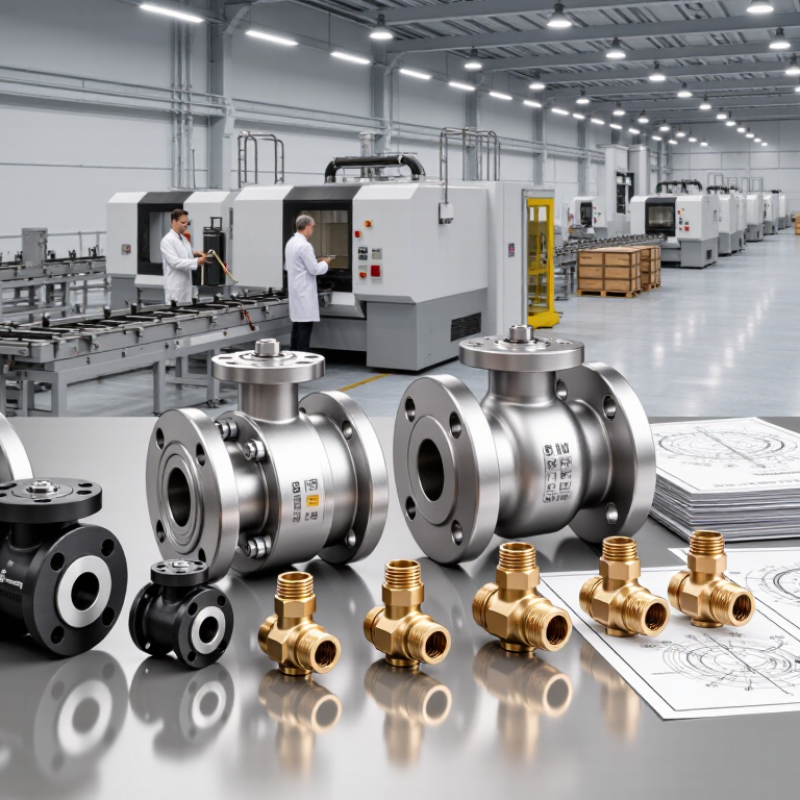
A ball valve controls fluid flow with a rotating ball containing a drilled passage. A quarter turn opens or closes the line. When fully open, its smooth internal path creates limited resistance. When closed, properly made seats press against the ball and reduce leakage. This design suits water, oil, gas, chemicals, and industrial processing systems. Yet, no valve fits every service. Media, pressure, temperature, pipe size, and connection type must guide selection.
Chinese manufacturers attract global buyers through broad machining capacity and a mature component supply chain. Many facilities support stainless steel, carbon steel, and alloy valve production. Experienced factories usually provide pressure testing, dimensional checks, material certificates, and batch traceability. Some also follow internationally recognized quality systems and valve standards. Buyers should request inspection records, sample reports, and clear drawings before placing large orders. Factory audits can reveal details that catalogs often hide.
Price alone is not proof of value. It can mislead. A lower quote may exclude testing, special materials, packaging, or documentation. I have found that small specification gaps can create costly installation problems. Confirm the sealing material, pressure class, actuator interface, and surface treatment in writing. Communication may also require patience, especially with technical terms and changing production schedules. Reliable cooperation comes from transparent records, realistic lead times, and inspections at agreed production stages.
China Top Ball Valve Manufacturers for Global Buyers - What Is a Ball Valve and Why Choose Chinese Manufacturers?
A practical buyer’s reference covering ball valve construction, performance ranges, applicable standards, and common reasons global buyers evaluate Chinese manufacturing sources.
| Data Dimension | Typical Technical Data | What Global Buyers Should Consider |
|---|---|---|
| Basic Definition | A ball valve is a quarter-turn shut-off valve that uses a drilled spherical ball to control the flow of liquid or gas. | The 90-degree operating movement enables fast opening and closing, making the design suitable for isolation service and emergency shut-off applications. |
| Main Operating Principle | The flow passage is aligned with the pipeline when the valve is open and turned perpendicular to the pipeline when the valve is closed. | Buyers should confirm the required operating torque, actuator compatibility, and available space for installation and maintenance. |
| Common Valve Configurations | Common designs include floating ball, trunnion-mounted ball, one-piece, two-piece, three-piece, top-entry, and side-entry constructions. | Floating designs are common for smaller and moderate-pressure services, while trunnion-mounted designs are often selected for larger sizes and higher-pressure applications. |
| Port Design | Full-port valves have a bore close to the connected pipe diameter. Reduced-port valves have a smaller flow passage. | Full-port construction can reduce pressure loss and facilitate pipeline pigging. Reduced-port construction may offer lower weight and cost where a smaller bore is acceptable. |
| Typical Size Range | Ball valves are commonly available from small instrument and utility sizes, such as DN6 or DN8, to large pipeline sizes exceeding DN1000, depending on the design and application. | Confirm nominal size, end-to-end dimensions, flange dimensions, bore size, face-to-face requirements, and available manufacturing capacity before placing an order. |
| Typical Pressure Classes | Industrial ball valves are commonly supplied in pressure classes such as ASME Class 150, 300, 600, 900, 1500, and 2500. Metric pressure ratings may also be specified in PN values. | Pressure rating must be matched with the operating temperature, fluid, body material, end connection, and applicable design standard rather than selected by pressure class alone. |
| Common Body Materials | Frequently used materials include carbon steel, stainless steel, duplex stainless steel, cast iron, ductile iron, and nickel-based alloys for specialized services. | Material selection should reflect corrosion resistance, temperature, pressure, fluid composition, and any project-specific material certification requirements. |
| Common Ball and Stem Materials | Balls and stems may be manufactured from stainless steel, alloy steel, duplex stainless steel, or other corrosion-resistant alloys. Surface treatments and coatings may also be used. | Ask for material certificates, hardness information where relevant, coating details, and compatibility with the process medium. |
| Seat Materials | Soft seats commonly use PTFE, reinforced PTFE, RPTFE, PEEK, or similar polymers. Metal-seated designs use engineered metal sealing surfaces for demanding conditions. | Soft seats generally provide tight shut-off for compatible temperatures and media. Metal seats are considered for high temperature, abrasive, or severe-service applications. |
| Temperature Capability | Temperature limits vary substantially by body, seat, seal, and design. Polymer seats normally have lower temperature limits than metal-seated constructions. | Buyers should request a pressure-temperature rating table and avoid using a general temperature figure without confirming the exact seat and sealing materials. |
| End Connections | Available connections commonly include flanged, threaded, socket-weld, butt-weld, wafer, and lug-style configurations. | Check pipe schedule, flange standard, facing type, bolt-hole pattern, weld preparation, and installation orientation for compatibility with the existing system. |
| Leakage Performance | Many industrial ball valves are designed for tight shut-off and may be tested according to API 598, ISO 5208, or another specified valve-testing standard. | The purchase specification should state the required test standard, allowable leakage rate, test medium, test pressure, and whether a documented test report is required. |
| Pipeline and Oil & Gas Service | Pipeline ball valves may be designed and tested in accordance with requirements such as API 6D, with additional project requirements for fire safety, anti-static design, and emission control. | Confirm the complete compliance package, including design calculations, pressure tests, fire-safe testing where required, traceability records, and coating specifications. |
| Fire-Safe Requirements | Fire-safe ball valve designs are commonly evaluated against standards such as API 607 or API 6FA, depending on valve type and project requirements. | Fire-safe compliance is not automatically included in every ball valve. It must be clearly specified and supported by relevant test documentation. |
| Actuation Options | Ball valves can be operated manually or fitted with electric, pneumatic, or hydraulic actuators. Gear operators may be used for larger or higher-torque valves. | Evaluate torque margins, fail position, operating speed, control signals, enclosure rating, solenoid valves, limit switches, and local operating requirements. |
| Mounting Interface | Actuated valves commonly use standardized mounting interfaces such as ISO 5211, although the exact interface depends on valve size and manufacturer design. | Confirm mounting dimensions and stem output torque so the actuator can be installed without adapters or unexpected modifications. |
| Relevant International Standards | Frequently referenced standards include ASME B16.34 for valves, ASME B16.5 or B16.47 for flanges, ISO 5211 for actuator mounting, ISO 5208 for pressure testing, and API standards for specific services. | A reliable purchase specification should identify the applicable edition and clarify which standard governs design, materials, dimensions, testing, marking, and documentation. |
| Quality Documentation | Typical documentation may include dimensional drawings, material certificates, pressure-test reports, inspection reports, coating records, certificates of conformity, and operation manuals. | Agree on the inspection and documentation requirements before production. This helps reduce approval delays and supports traceability after delivery. |
| Why Evaluate Chinese Manufacturers | China has a large industrial manufacturing base covering casting, forging, machining, assembly, testing, actuation, and export logistics for valve products. | Buyers may find a broad selection of configurations, materials, sizes, standards, and customization options from suppliers serving domestic and international projects. |
| Customization Potential | Manufacturing sources may offer customized body materials, seat combinations, end connections, coatings, actuators, markings, packaging, and inspection plans. | Provide a complete technical datasheet and drawing rather than relying only on a product name. Customization should be confirmed in writing before order acceptance. |
| Cost Evaluation | Product cost is influenced by pressure class, nominal size, material, seat type, actuator, testing, certification, surface treatment, packaging, and shipping terms. | Compare total landed cost, including inspection, certification, freight, duties, spare parts, and after-sales support, instead of comparing the valve unit price alone. |
| Supplier Verification | A supplier assessment may include factory capability review, quality-system evidence, production samples, third-party inspection, reference projects, and manufacturing traceability. | Verify that the proposed production site can manufacture the required valve type and rating. Do not assume that every supplier offering a standard catalog can produce specialized valves. |
| Recommended Buyer Checklist | Key information includes valve type, size, pressure class, body and trim materials, seat material, end connection, operating temperature, medium, actuator requirements, standards, testing, and documentation. | A complete technical request enables accurate quotations, improves supplier comparison, and lowers the risk of receiving a valve that does not fit the system or service conditions. |
Related Posts
-
Understanding the Importance of Ball Valves in Modern Industrial Applications
-
Top 10 Ball Valves for Optimal Performance and Reliability in Your Projects
-
Top 2025 Ball Valves Types You Need to Know for Your Projects
-
How to Choose the Right Stainless Steel Ball Valves for Your Needs
-
How to Choose the Right Sharpe Ball Valves for Your Needs?
-
Why Are Sharpe Ball Valves Essential for Efficient Fluid Control?