Quality Products
At a Fair Price
Wholesale Provider
Of Valves & Fittings
- HOME
- Products
- Ball Valves
- Bull Plugs & Swages
- Butterfly Valves
- Check Valves
- Cushion / Flow Tees & Bleed Rings
- Enhanced Oil Recovery
- Floating Ball Valves
- Foot Valves
- Forged Steel Fittings
- Forged Steel Outlets
- Gaskets-Insulation Kits
- Gate Valves
- Gate, Globe & Check Valves
- Malleable Fittings
- Needle Valves
- Nipples
- Piston Valves
- Plug Valves
- Stainless Steel Flanges, Fittings & Nipples
- Strainers
- Studs
- Trunnion
- Unions
- Weld Fittings & Flanges
- Manufacturers
- Advance
- American Block
- Anvil
- Balon
- Bonney Forge
- Champion
- Clayton Mark
- Crane
- Daniel
- DMIC
- GMI
- Galli & Cassina
- Hackney-Ladish
- JMC
- Lone Star
- MATCO
- Marpac-McCanna
- National Flange
- National Gasket
- Nordstrom
- Nutron
- PPI
- SHARPE
- SMI
- TEXSTEAM
- TEX-THREAD
- Titan
- USA Fastner
- Vogt
- Weld Bend
- Westbrook
- Wheatley
- Williams
- WKM
- Wolar
- Locations
- Contact
- Blog
- Careers
- Get a Quote
- HOME
- Products
- Ball Valves
- Bull Plugs & Swages
- Butterfly Valves
- Check Valves
- Cushion / Flow Tees & Bleed Rings
- Enhanced Oil Recovery
- Floating Ball Valves
- Foot Valves
- Forged Steel Fittings
- Forged Steel Outlets
- Gaskets-Insulation Kits
- Gate Valves
- Gate, Globe & Check Valves
- Malleable Fittings
- Needle Valves
- Nipples
- Piston Valves
- Plug Valves
- Stainless Steel Flanges, Fittings & Nipples
- Strainers
- Studs
- Trunnion
- Unions
- Weld Fittings & Flanges
- Manufacturers
- Advance
- American Block
- Anvil
- Balon
- Bonney Forge
- Champion
- Clayton Mark
- Crane
- Daniel
- DMIC
- GMI
- Galli & Cassina
- Hackney-Ladish
- JMC
- Lone Star
- MATCO
- Marpac-McCanna
- National Flange
- National Gasket
- Nordstrom
- Nutron
- PPI
- SHARPE
- SMI
- TEXSTEAM
- TEX-THREAD
- Titan
- USA Fastner
- Vogt
- Weld Bend
- Westbrook
- Wheatley
- Williams
- WKM
- Wolar
- Locations
- Contact
- About
- Careers
- Get a Quote
How to Choose Stainless Steel Valves in 2026?
How to Choose Stainless Steel Valves in 2026? The answer begins with service conditions, not appearance. A bright, polished body may look dependable. It can still fail in chloride-rich water, high-temperature steam, or abrasive slurry.
Michael F. Ashby, a leading materials-selection authority, states, “The best material is the one that satisfies the design requirements at minimum cost.” This principle remains highly practical when choosing stainless steel valves. Buyers should examine pressure, temperature, media composition, flow rate, cycling frequency, and installation environment. A 316 stainless steel valve may resist many corrosive fluids. It is not automatically suitable for every chemical process. Pitting remains a real concern. So does stress corrosion cracking.
Look closely at the details. Check the valve body, stem, seat, packing, end connections, and pressure class. Confirm whether the product meets relevant ASME, API, ISO, or project-specific requirements. Traceable material certificates can reveal more than a sales photograph. Welding quality matters too, especially for fabricated bodies and hygienic systems.
The cheapest option may become expensive after repeated maintenance. Yet the most expensive valve is not always the best choice. That is where selection becomes uncomfortable. Specifications can be incomplete, and operating data can be poorly recorded. I would not rely on nominal pipe size alone. Field experience shows that incorrect trim, unsuitable seals, or neglected shutoff requirements often cause avoidable problems.
This guide examines practical selection decisions for 2026. It connects metallurgy, operating evidence, compliance, and lifecycle cost. Details matter. And assumptions deserve a second look.
Understanding Stainless Steel Valve Types and Their Applications
How to Choose Stainless Steel Valves in 2026?
Understanding Stainless Steel Valve Types and Their Applications
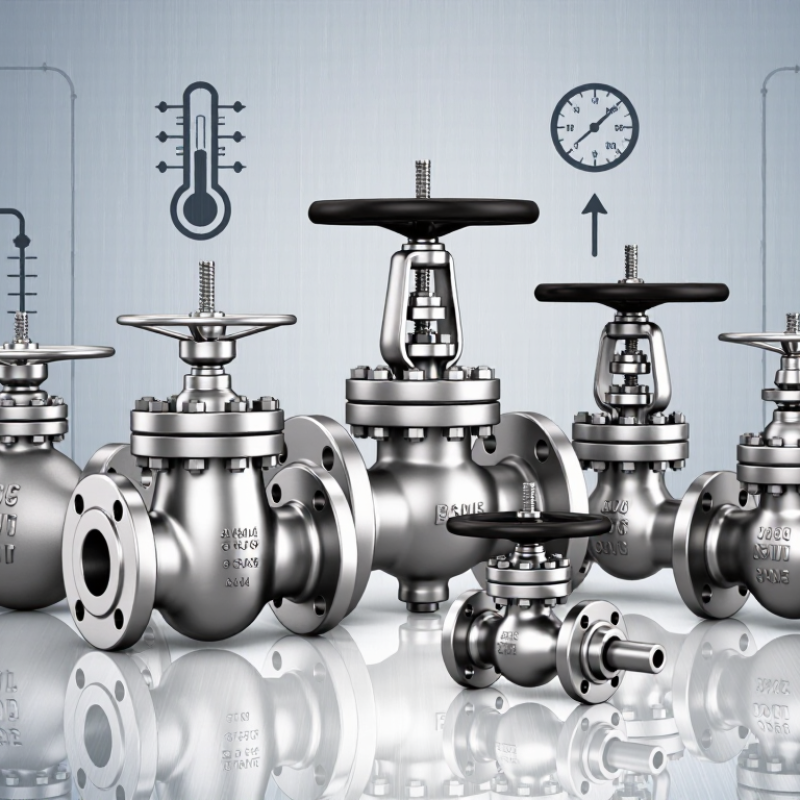
Valve selection starts with the fluid, not the catalog photograph. Ball valves suit fast isolation in water, air, and many chemical lines. Their quarter-turn action reduces operating time, but dirty media can damage seats. Gate valves work well for full-flow service. Do not use them for frequent throttling. Globe valves control flow more precisely, although their pressure loss is higher. Butterfly valves save space in large pipelines. That convenience can hide sealing limits.
Check valves prevent reverse flow in pumps, pipelines, and processing equipment. Needle valves support fine adjustment where low flow needs careful control. Stainless steel grade matters. Grade 304 often serves clean water and general indoor duties. Grade 316L offers stronger resistance to chlorides and harsh process conditions. Material alone is not enough. Match the body, trim, seat, and gasket to temperature and chemical concentration. At a coastal wastewater site, chloride exposure can punish an otherwise sensible 304 selection. Pressure rating and end connection deserve equal attention.
Actuation changes the practical choice. Manual handles suit simple, accessible lines. Pneumatic or electric actuators help with remote or repeated operation. Specify fail-safe behavior when an unexpected shutdown could create danger. Small details matter. Ask for test records, traceability, and relevant pressure or hygiene certificates. A recurring mistake is choosing by diameter alone. The valve may fit, yet the seat, torque, or maintenance access may not. Review the actual operating cycle before approval.
Defining Pressure, Temperature, and Flow Control Requirements
How to Choose Stainless Steel Valves in 2026?
Defining Pressure, Temperature, and Flow Control Requirements
Valve selection starts with a clear operating envelope, not a catalog search. Record normal, minimum, and maximum pressure at the valve inlet and outlet. Include startup surges, pump shutoff pressure, and water hammer. A valve rated only for average pressure may fail during a transient event. That detail matters. Confirm the pressure rating at the actual operating temperature, because allowable ratings can decrease as temperature rises.
Temperature data should include the fluid, surrounding environment, and cleaning conditions. Steam, hot oil, chilled water, and corrosive chemicals affect stainless steel differently. Check the valve body, stem, seat, gasket, and actuator as one assembly. The weakest component controls reliability. Thermal cycling also deserves attention. Repeated heating and cooling can loosen seals or increase operating torque. These details are often missed during early design reviews.
Flow requirements define whether the valve should isolate, regulate, or prevent reverse movement. Estimate minimum, normal, and maximum flow, then review the required Cv value and pressure drop. Excessive velocity may cause noise, erosion, or cavitation. A valve that is too large may operate near its closed position, creating unstable control. A valve that is too small can restrict capacity and waste energy. Real systems rarely match the spreadsheet perfectly. Verify calculations with tested data, applicable standards, material certificates, and site conditions before approval.
Comparing Stainless Steel Grades, Standards, and Corrosion Resistance
How to Choose Stainless Steel Valves in 2026?
Grade selection should follow the fluid, temperature, chloride level, and maintenance plan. Grade 304 suits clean water, dry gases, and many indoor services. Grade 316L contains molybdenum, giving better resistance in chlorides and coastal atmospheres. Duplex 2205 offers higher strength and improved pitting resistance, but welding quality becomes more critical. The PREN value helps compare pitting resistance, yet it cannot replace site testing. Small details matter, including stagnant pockets, gasket crevices, and unexpected temperature spikes.
Standards reduce uncertainty. Specify pressure and temperature ratings under ASME B16.34, dimensions under ASME B16.10, and leakage testing under ISO 5208. For cast valve bodies, ASTM A351 covers common stainless grades. European projects may require EN 10213 and EN 12266. These references are useful, but a standard does not guarantee service life. NACE IMPACT estimates that corrosion costs about 2.5 trillion US dollars annually, equal to roughly 3.4% of global GDP. That figure makes a weak material decision expensive.
In practical selection, ask for heat numbers, chemical analysis, ferrite control, and passivation records. Review chloride concentration, oxygen exposure, and cleaning chemicals with the supplier. I would not choose 316L automatically. It can still suffer pitting in warm, concentrated chlorides. Duplex may be stronger, but poor fabrication can undermine its advantages. The uncomfortable lesson is simple: valve grade, design, and installation must be evaluated together.
How to Choose Stainless Steel Valves in 2026?
Comparing Stainless Steel Grades, Standards, and Corrosion Resistance
The chart compares typical Pitting Resistance Equivalent Number (PREN) values calculated from nominal alloy compositions using the formula: PREN = %Cr + 3.3 × %Mo + 16 × %N. A higher PREN generally indicates better resistance to localized pitting corrosion in chloride-containing environments.
| Valve Material | Common UNS Grade | Typical ASTM Forged-Valve Reference | Typical PREN |
|---|---|---|---|
| 304 stainless steel | S30400 | ASTM A182 F304 | 19 |
| 316L stainless steel | S31603 | ASTM A182 F316L | 25 |
| Duplex 2205 | S31803 / S32205 | ASTM A182 F51 / F60 | 35 |
| 904L stainless steel | N08904 | ASTM A182 F904L | 36 |
PREN is a comparative screening value rather than a guaranteed service-life rating. Final valve selection should also consider chloride concentration, temperature, crevice conditions, flow velocity, pressure class, welding requirements, and the applicable ASTM, ASME, EN, or ISO standard.
Evaluating Valve Designs, Actuation Methods, and Connection Options
Choosing stainless steel valves in 2026 requires more than comparing pressure ratings. Valve design must match the fluid, temperature, cycling frequency, and maintenance access. A floating ball valve often suits clean, on-off service, while a trunnion design can offer better control in larger, higher-pressure lines. For corrosive fluids, verify the stainless grade, seat material, and actual chemical compatibility. “Stainless” is not one answer.
Actuation changes the installation’s behavior. Manual handles remain practical for occasional isolation. Pneumatic actuators respond quickly and perform well in hazardous or wet areas, but they need clean, reliable air. Electric actuators simplify remote operation and position feedback, although heat, moisture, and power failure require careful planning. Specify fail-open or fail-closed action according to process risk, not convenience. A position indicator is useful. It is not proof of flow.
Connection choice affects leakage risk and future work. Threaded ends suit smaller lines and compact equipment, but damaged threads can complicate repairs. Flanged connections support inspection and replacement, while welded ends reduce external leak paths in permanent systems. Hygienic applications may require clamp connections with smooth internal surfaces and drainable geometry. Check face dimensions, gasket selection, bolt access, and thermal expansion before ordering. I have seen a correctly rated valve fail operationally because the actuator had no clearance. That detail is easy to miss. Independent pressure testing, material certificates, and documented inspection records provide stronger confidence than a catalogue description.
Checking Quality, Certification, Maintenance, and Total Cost of Ownership
Choosing stainless steel valves in 2026 requires more than a shiny finish. In field inspections, surface appearance can hide weak threads, poor welding, or incorrect alloy markings. Request heat numbers, material certificates, pressure-test records, and dimensional reports. Check whether each certificate matches the valve, not merely the supplier’s product family. For hygienic or high-pressure service, confirm applicable certification and testing scope with an independent inspector. Certification is useful evidence. It is not a guarantee.
Ask how quality is controlled from casting through final assembly. Review inspection frequency, calibration dates, and nonconformance records. A 316-grade label means little if the process contaminates wetted surfaces. Examine seats, stems, seals, and actuators under actual temperature and chemical conditions. Maintenance planning should include accessible packing adjustments, replacement seals, isolation procedures, and inspection intervals based on duty cycles. Keep service logs with leak rates, torque changes, and replaced parts. Small trends can prevent an expensive shutdown. Sometimes they do not.
Compare total cost of ownership, not purchase price alone. Include installation labor, cleaning, energy losses, spare parts, testing, downtime, disposal, and expected service life. A cheaper valve may require frequent adjustment or early replacement. An over-specified valve can also waste capital without improving reliability. Request written lifecycle assumptions, then challenge them with operating data. I would inspect one delivered sample before approving a large order. That feels slow. It can reveal packaging damage, wrong markings, or missing documents before service begins.
| Valve Material Option | Typical Corrosion Resistance | Recommended Service | Typical Temperature Range | Typical Pressure Classes | Quality Checks Before Purchase | Relevant Certification or Standard to Specify | Maintenance Profile | Indicative Purchase Cost DN50 Manual Ball Valve |
Estimated 10-Year TCO Index | Best-Use Recommendation |
|---|---|---|---|---|---|---|---|---|---|---|
| 304 / 304L Stainless Steel | Good resistance to atmospheric corrosion, freshwater, many organic chemicals, and mild process environments. Limited resistance to chlorides and seawater. | General water treatment, food-processing utilities, compressed air, non-chloride chemicals, and indoor industrial services. | -29°C to approximately 200°C for common soft-seated ball-valve applications; verify seat and seal limits. | Commonly Class 150–600 or PN16–PN63, depending on design and valve type. | Confirm positive material identification, body and trim grade, casting or forging quality, pressure-test records, surface finish, and traceability of pressure-containing parts. | Specify applicable requirements such as ISO 5208 or API 598 pressure testing, EN 10204 3.1 material certificates, and ISO 9001 manufacturing quality systems. | Low to moderate. Inspect seats, packing, bolting, and actuator interfaces annually; avoid chloride contamination and stagnant deposits. | US$180–350 | 100 | Economical choice for clean, low-chloride services where 316L is not required. |
| 316 / 316L Stainless Steel | Better resistance than 304 to chlorides, pitting, crevice corrosion, and many chemical environments because of molybdenum content. | Seawater-adjacent systems, chemical processing, pharmaceutical utilities, food processing, marine atmosphere, and moderately saline water. | -29°C to approximately 200°C for common soft-seated ball-valve applications; metallic seats may support higher temperatures. | Commonly Class 150–600 or PN16–PN63, depending on valve construction and size. | Check that wetted parts are genuinely 316/316L, verify molybdenum content by PMI, review heat numbers, inspect weld quality, and confirm seat compatibility. | Specify ISO 5208 or API 598 testing, EN 10204 3.1 certificates, ISO 15848-1 where fugitive-emission control is required, and applicable pressure-equipment legislation. | Low. Routine inspection is normally sufficient, but flushing and periodic exercising are important in saline or infrequently operated systems. | US$230–450 | 108 | Best general-purpose selection when chloride exposure or product hygiene justifies the premium over 304L. |
| Duplex 2205 Stainless Steel | High resistance to chloride pitting and stress-corrosion cracking, with higher strength than common austenitic stainless steels. | Offshore equipment, desalination, high-chloride water, oil and gas utilities, and demanding chemical services. | -46°C to approximately 150°C in many pressure applications; confirm design limits, weld condition, and material qualification. | Commonly Class 150–900 or PN16–PN100, depending on valve design and size. | Verify duplex grade, ferrite balance where applicable, heat treatment, PMI results, impact requirements, weld procedure qualification, and corrosion-service suitability. | Specify ISO 5208 or API 598 testing, EN 10204 3.1 or 3.2 documentation where required, NORSOK or project-specific material requirements when applicable, and relevant fugitive-emission testing. | Low to moderate. Fewer corrosion-related interventions are expected, but inspection should focus on welds, deposits, erosion, and operating torque. | US$420–850 | 96 | Suitable when failure consequences or chloride corrosion risk outweigh the higher initial purchase price. |
| 904L Stainless Steel | Very high resistance to sulfuric acid, phosphoric acid, and severe acidic environments; performance depends strongly on concentration and temperature. | Specialized chemical processing, acid handling, pharmaceutical chemicals, and severe non-chloride acidic services. | -29°C to approximately 200°C for many valve applications; confirm exact chemical and pressure limits. | Commonly Class 150–600 or PN16–PN63, subject to valve design and temperature derating. | Confirm full chemical composition, PMI, heat treatment, weld procedures, corrosion data for the actual medium, pressure-boundary traceability, and surface condition. | Specify ISO 5208 or API 598 testing, EN 10204 3.1/3.2 certificates as required, applicable pressure-equipment conformity, and chemical-service material approval. | Moderate. Prevent contamination, inspect for localized attack, and verify that elastomers and packing remain compatible with the process fluid. | US$650–1,300 | 112 | Use only when documented chemical compatibility justifies the substantial material premium. |
| Low-Temperature Stainless Steel Construction | Corrosion resistance depends on the selected grade; impact toughness and material qualification are the primary concerns at low temperature. | Refrigeration, cryogenic support systems, liquefied-gas service, and outdoor installations in cold climates. | Potentially below -46°C, but the allowable range must be established from the valve design, seat material, and impact-test data. | Commonly Class 150–600 or PN16–PN63, with temperature derating applied. | Review impact-test temperature, Charpy results, low-temperature seat performance, stem sealing, thermal contraction allowances, and pressure-test temperature. | Specify the applicable design code, ISO 5208 or API 598 testing, EN 10204 material certificates, low-temperature impact testing, and ISO 15848 where emissions control is required. | Moderate. Exercise valves carefully, inspect for ice formation and seal leakage, and confirm suitable lubricants and packing. | US$350–900 | 105 | Choose when minimum design temperature, not just corrosion resistance, governs valve selection. |
| Cost and TCO basis: Indicative 2026 purchasing ranges for a manually operated DN50 stainless steel ball valve with standard end connections, excluding taxes, installation, shipping, actuators, special testing, and project certification. The 10-year TCO index uses 304L as the reference value of 100 and considers purchase price, inspection, routine maintenance, likely replacement frequency, and corrosion-related downtime risk. Actual values vary by valve type, size, pressure rating, service fluid, quantity, documentation level, and regional labor costs. | ||||||||||
Related Posts
-
7 Tips for Choosing Stainless Steel Valves
-
What Are Stainless Steel Valves and How Do They Work?
-
Why Are Stainless Steel Valves Essential for Your Plumbing Needs?
-
Top Stainless Steel Valves Types and Their Applications?
-
How to Choose the Best Stainless Valves for Your Needs?
-
Top Stainless Valves for Global Buyers in 2026?