Quality Products
At a Fair Price
Wholesale Provider
Of Valves & Fittings
- HOME
- Products
- Ball Valves
- Bull Plugs & Swages
- Butterfly Valves
- Check Valves
- Cushion / Flow Tees & Bleed Rings
- Enhanced Oil Recovery
- Floating Ball Valves
- Foot Valves
- Forged Steel Fittings
- Forged Steel Outlets
- Gaskets-Insulation Kits
- Gate Valves
- Gate, Globe & Check Valves
- Malleable Fittings
- Needle Valves
- Nipples
- Piston Valves
- Plug Valves
- Stainless Steel Flanges, Fittings & Nipples
- Strainers
- Studs
- Trunnion
- Unions
- Weld Fittings & Flanges
- Manufacturers
- Advance
- American Block
- Anvil
- Balon
- Bonney Forge
- Champion
- Clayton Mark
- Crane
- Daniel
- DMIC
- GMI
- Galli & Cassina
- Hackney-Ladish
- JMC
- Lone Star
- MATCO
- Marpac-McCanna
- National Flange
- National Gasket
- Nordstrom
- Nutron
- PPI
- SHARPE
- SMI
- TEXSTEAM
- TEX-THREAD
- Titan
- USA Fastner
- Vogt
- Weld Bend
- Westbrook
- Wheatley
- Williams
- WKM
- Wolar
- Locations
- Contact
- Blog
- Careers
- Get a Quote
- HOME
- Products
- Ball Valves
- Bull Plugs & Swages
- Butterfly Valves
- Check Valves
- Cushion / Flow Tees & Bleed Rings
- Enhanced Oil Recovery
- Floating Ball Valves
- Foot Valves
- Forged Steel Fittings
- Forged Steel Outlets
- Gaskets-Insulation Kits
- Gate Valves
- Gate, Globe & Check Valves
- Malleable Fittings
- Needle Valves
- Nipples
- Piston Valves
- Plug Valves
- Stainless Steel Flanges, Fittings & Nipples
- Strainers
- Studs
- Trunnion
- Unions
- Weld Fittings & Flanges
- Manufacturers
- Advance
- American Block
- Anvil
- Balon
- Bonney Forge
- Champion
- Clayton Mark
- Crane
- Daniel
- DMIC
- GMI
- Galli & Cassina
- Hackney-Ladish
- JMC
- Lone Star
- MATCO
- Marpac-McCanna
- National Flange
- National Gasket
- Nordstrom
- Nutron
- PPI
- SHARPE
- SMI
- TEXSTEAM
- TEX-THREAD
- Titan
- USA Fastner
- Vogt
- Weld Bend
- Westbrook
- Wheatley
- Williams
- WKM
- Wolar
- Locations
- Contact
- About
- Careers
- Get a Quote
China Top Stainless Steel Valves Manufacturers
China has become a major manufacturing base for industrial flow-control equipment, including stainless steel valves. World Stainless reported approximately 58.4 million tonnes of global crude stainless steel production in 2023. That scale supports extensive casting, forging, machining, and component supply chains across Chinese industrial regions.
Market demand is also linked to energy, chemical processing, water treatment, food production, and semiconductor facilities. Grand View Research has identified industrial valve demand as a growing global market, driven by infrastructure investment and process automation. However, market figures differ between research companies. They should guide investigation, not replace it.
This article introduces leading China stainless steel valve manufacturers through practical selection criteria. These include material grades such as CF8M and 316, pressure ratings, leakage testing, actuator compatibility, and documentation quality. Relevant standards may include API 6D, API 598, ISO 5211, EN 12266, and ASME requirements, depending on the application.
A serious supplier should provide heat numbers, inspection records, dimensional reports, and traceable certificates. Factory audits can reveal details that catalogues hide, such as rough casting surfaces, inconsistent polishing, or weak packaging. Small details matter.
No ranking remains permanently accurate. Production capacity, export experience, certifications, and engineering support can change within one year. Buyers should verify current records directly, including test procedures and reference projects. A polished website proves little. Real reliability appears when a manufacturer explains material selection, pressure testing, and failure prevention clearly. This guide aims to support that evaluation with industry context, technical judgment, and a necessary degree of caution.
China’s Stainless Steel Valve Manufacturing Industry Overview
China Top Stainless Steel Valves Manufacturers
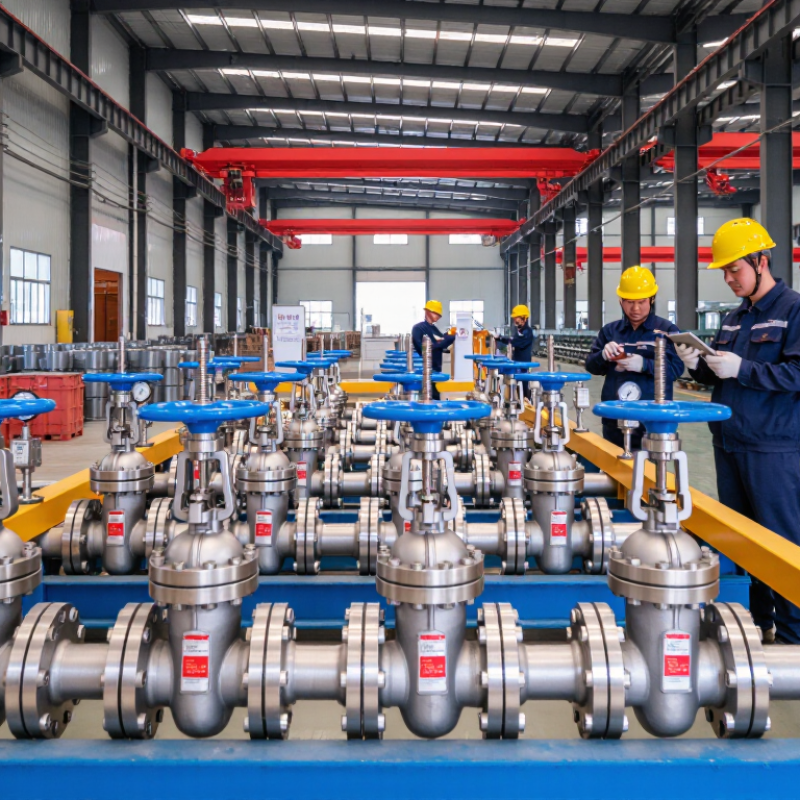
China’s stainless steel valve industry has developed from basic casting into a broad manufacturing network. Factories now produce ball, gate, globe, check, and butterfly valves for water, food processing, chemical, and energy systems. Manufacturing quality varies, so buyers should examine more than catalog photographs.
Experienced suppliers usually control several stages, including material sourcing, machining, welding, assembly, and pressure testing. Common stainless grades include 304 and 316, but grade selection depends on chlorides, temperature, and the process medium. Traceable heat numbers and inspection records provide useful evidence.
A practical audit should review surface finish, thread accuracy, seat performance, and hydrostatic test results. Some facilities look modern yet provide weak documentation. That gap deserves attention.
Tips: Request a sample valve and a recent test report before approving volume production. Confirm pressure ratings, connection standards, seal materials, and operating temperatures in writing. Ask how rejected parts are isolated. Visit the production line when possible. Take notes. Small details often reveal process discipline. Independent inspection can reduce uncertainty, although it adds time and cost. No supplier is perfect, and even careful assessment may miss problems after shipment. Build acceptance checks into the purchasing plan.
Key Types of Stainless Steel Valves Made in China
China Top Stainless Steel Valves Manufacturers
Key Types of Stainless Steel Valves Made in China
Chinese valve manufacturers produce several stainless steel valve types for water, chemicals, food processing, and industrial equipment.
Ball valves use a rotating sphere for quick shutoff and reliable sealing. They suit compact pipelines and frequent operation.
Gate valves provide low resistance when fully open, but they are not ideal for regular throttling.
Globe valves offer better flow control through a shaped internal passage.
Butterfly valves are lightweight and practical for large-diameter lines. Their centered disc saves installation space.
Check valves prevent reverse flow without manual operation. Common designs include swing, lift, and wafer check valves.
Sanitary stainless steel valves often use polished surfaces, clamp connections, and crevice-resistant structures. These details matter in hygienic processing systems.
Material selection needs careful review.
Stainless steel 304 works well in many general applications, while 316L offers stronger resistance to chlorides and corrosive media. Temperature, pressure, gasket material, and connection standards should match the working conditions. Experienced manufacturers usually provide pressure testing, material certificates, dimensional inspection, and traceability records. Ask for these documents.
A polished body does not guarantee dependable performance. Internal casting defects may remain hidden. Some buyers focus too much on price and overlook testing quality. That is a mistake. No valve choice is perfect. Engineers should compare actual operating data before approving a model.
Leading Chinese Stainless Steel Valve Manufacturers
Leading Chinese stainless steel valve manufacturers combine practical engineering with disciplined production control. Many serve chemical processing, water treatment, food equipment, and energy projects. Their stainless steel grades may include 304, 316, and duplex options, depending on corrosion conditions. Experienced manufacturers review pressure, temperature, media, and connection standards before recommending a valve design. That step prevents costly mismatches.
Production quality depends on more than polished surfaces. Machining accuracy affects sealing performance, especially around the stem, seat, and body joints. Reliable factories use pressure testing, material identification, dimensional inspection, and batch records. Test reports should show clear values, methods, and dates. Traceability matters.
Small details often reveal engineering discipline. A well-finished thread turns smoothly. A tested actuator responds without hesitation. Packaging protects machined faces from moisture and impact during transport. These details are easy to overlook.
However, not every manufacturer offers the same technical depth. Some suppliers present strong catalogs but provide limited inspection evidence. Buyers should request drawings, certificates, sample test records, and production photographs. Factory audits can also reveal cleaning standards and assembly practices. Communication remains another practical test. If a supplier cannot explain pressure ratings clearly, caution is reasonable. Even capable manufacturers may need improvement in documentation or delivery coordination. Careful verification creates a more dependable sourcing decision.
Manufacturing Standards, Quality Control, and Certifications
China Top Stainless Steel Valves Manufacturers
China’s top stainless steel valve manufacturers are evaluated through standards, testing, and production discipline. Reliable factories use controlled procedures for casting, machining, welding, assembly, and final inspection. Each batch should have material certificates and traceable heat numbers. For 316L valves, positive material identification can confirm the alloy before shipment. Dimensional checks also verify threads, flange faces, and sealing surfaces. Small errors matter.
Quality control should include shell pressure tests, seat leakage tests, torque checks, and visual inspections. Standards such as ISO 5208 or API 598 may apply, depending on valve design and project requirements. ISO 9001 certification indicates a documented quality management system. However, certification alone does not guarantee consistent performance. Paperwork is not performance. Buyers should review certificate scope, validity, test records, and inspection methods. Independent inspection can add confidence for critical applications.
Tips: Request a sample inspection report before ordering. Confirm the pressure rating, temperature range, stainless steel grade, and applicable standard in writing. Ask whether testing uses calibrated equipment. It is also wise to verify certificates directly with the issuing organization. Some manufacturers communicate well but provide incomplete evidence. That weakness deserves attention, even when the product looks excellent.
China Top Stainless Steel Valves Manufacturers — Manufacturing Standards, Quality Control, and Certifications
ASME B16.34 pressure-class designations commonly used for industrial valve design and testing
The chart presents the nominal pressure classes defined for widely used industrial valve applications under ASME B16.34. These designations support engineering selection and pressure-temperature rating checks; they are not a ranking of manufacturers or a direct measure of product quality. Quality systems such as ISO 9001 and application-specific standards such as API 6D or ISO 15848 may be required depending on the valve’s service and end-use sector.
How to Select a Reliable Chinese Valve Manufacturer
Selecting a reliable Chinese valve manufacturer starts with process evidence, not a glossy catalog. Grand View Research estimated the global industrial valves market at USD 78.6 billion in 2023. That scale attracts capable factories and careless suppliers.
Ask for traceable material certificates, heat numbers, PMI records, and pressure-test results. Verify each document against the valve serial number. For critical service, check designs against ASME B16.34. Confirm flanges meet ASME B16.5 requirements. Calibration certificates should come from laboratories operating under ISO/IEC 17025. ISO’s 2022 survey recorded more than 1.2 million ISO 9001 certificates worldwide. Certification helps, but it does not prove valve metallurgy or field performance.
Audit the workshop when possible. Inspect welding qualifications, machining records, test benches, packing areas, and spare-part controls. Request references involving similar media, pressure, and temperature. A polished factory tour can still mislead. Review nonconformance reports and corrective actions. Honest manufacturers can explain a failed test and its root cause. That matters more than claiming zero defects. Use independent pre-shipment inspection for dimensional checks, coating thickness, leakage testing, and nameplate accuracy. Witness a random sample. Do not inspect only selected units. One weakness remains: remote audits cannot reveal every production habit. Keep technical requirements, acceptance criteria, and replacement responsibilities written into the purchase contract.
China Top Stainless Steel Valves Manufacturers - How to Select a Reliable Chinese Valve Manufacturer
| Selection Dimension | Reliable Manufacturer Indicators | Common Technical Data or Standard | Recommended Verification |
|---|---|---|---|
| Valve Construction | Clear documentation of valve type, body design, end connection, pressure class, and operating temperature. | Ball, gate, globe, check, and butterfly valves; threaded, flanged, wafer, lug, or welded ends. | Review approved drawings, dimensional drawings, datasheets, and applicable product standards before ordering. |
| Stainless Steel Grade | Material traceability is available from raw material to finished valve. | 304/304L stainless steel is widely used for general corrosion resistance; 316/316L provides improved resistance in chloride-containing and more aggressive environments. | Request heat numbers, material test certificates, chemical composition, mechanical properties, and positive material identification when required. |
| Casting Material Designation | The material designation on the quotation matches the selected manufacturing process and service conditions. | ASTM A351 CF8 is commonly associated with cast 304 stainless steel; ASTM A351 CF8M is commonly associated with cast 316 stainless steel. | Check the material standard, grade, heat-treatment condition, and certificate details against the purchase specification. |
| Pressure Rating | Pressure-temperature ratings are provided for the actual body material and valve design. | Common ASME Class ratings include 150, 300, 600, and higher; actual allowable pressure decreases as temperature increases. | Confirm the pressure-temperature table, nominal size, end standard, and design conditions for the application. |
| Applicable Valve Standards | The manufacturer identifies the exact standard used for design, testing, inspection, and marking. | ASME B16.34 covers many industrial valves; API 608 applies to many metal ball valves; API 6D is used for pipeline valves where applicable. | Ask for the standard edition, compliance statement, design calculations, and inspection records. |
| Leakage Testing | Every finished valve is tested according to a documented procedure with recorded results. | ISO 5208 and API 598 are commonly referenced for pressure testing and seat leakage requirements, depending on valve type and project specification. | Request hydrostatic shell-test results, seat-test results, test pressure, duration, medium, and acceptance criteria. |
| Flange and End Dimensions | End dimensions are controlled and inspected before shipment. | ASME B16.5 is commonly used for many flanges up to NPS 24; ASME B16.47 covers certain larger-diameter flanges; ASME B16.10 covers face-to-face and end-to-end dimensions. | Compare certified dimensional inspection reports with the project drawings and piping system requirements. |
| Quality Management | A documented quality management system controls purchasing, production, inspection, nonconformities, and corrective actions. | ISO 9001 certification is a useful quality-system indicator, but it does not replace product-specific inspection. | Verify certificate validity, certification scope, issuing body, audit status, and quality manual or inspection plan. |
| Production Capability | The factory has suitable machining, assembly, pressure-testing, cleaning, marking, and inspection equipment. | Capability should match the required valve size range, pressure class, material, connection type, and annual quantity. | Request a factory audit, equipment list, process flow, capacity statement, and recent inspection records. |
| Surface Treatment and Cleanliness | The manufacturer controls surface finish, passivation, cleaning, and protection against contamination. | Stainless steel valves may require pickling and passivation or other specified treatments; requirements depend on the service medium. | Specify surface condition, cleanliness level, treatment method, packaging method, and required test reports. |
| Special Service Compatibility | The manufacturer evaluates corrosion, temperature, pressure, cycling frequency, and fluid compatibility before selecting materials and seals. | Seat and seal materials may include PTFE, reinforced PTFE, graphite, elastomers, or metal seats, subject to service limitations. | Provide fluid composition, concentration, temperature, pressure, flow direction, emissions requirements, and operating cycle data. |
| Documentation Package | The supplier can deliver a complete, traceable document package with the shipment. | Typical documents include datasheets, drawings, material certificates, pressure-test reports, certificates of conformity, packing lists, and operation manuals. | Define documentation requirements in the purchase order and approve the inspection and test plan before production. |
| Pre-Shipment Inspection | The supplier accepts independent inspection or customer witness points for critical orders. | Inspection may include visual checks, dimensional verification, material review, functional operation, and pressure testing. | Use a risk-based inspection plan with hold points for material identification, assembly, testing, and final release. |
| Delivery and Supply Reliability | The manufacturer provides realistic lead times, production milestones, export packaging, and shipment tracking. | Lead time depends on valve type, size, material availability, testing requirements, customization, and order quantity. | Request a production schedule, agreed inspection date, packing specifications, spare-parts list, and delivery contingency plan. |
| After-Sales Support | Technical support covers installation, maintenance, spare parts, warranty claims, and root-cause analysis. | Support quality should be measured by response time, availability of replacement parts, and clarity of maintenance instructions. | Obtain warranty terms, service contacts, recommended spare-parts inventory, and documented complaint-handling procedures. |
Related Posts
-
Why Are Stainless Steel Valves Essential for Your Plumbing Needs?
-
How to Choose Stainless Steel Valves and Fittings for Your Needs?
-
Top 5 Stainless Steel Valves and Fittings Buyers Should Know?
-
2026 Top Stainless Steel Valves Buying Guide for Global Importers
-
10 Best Stainless Steel Valves and Fittings Suppliers
-
How to Choose Stainless Steel Ball Valves in 2026?