Quality Products

At a Fair Price

Wholesale Provider

Of Valves & Fittings

  • Corporate Office: 1301 Greengrass Drive Houston, TX 77008
  • 1-800-237-2512

Quality Products

At a Fair Price

Wholesale Provider

Of Valves & Fittings

What Are the Best Stainless Steel Flange Fittings in 2026?

Choosing the best stainless steel flange fittings in 2026 starts with the job, not a brand name. A fitting used on a washdown line may face different demands from one carrying hot process fluid. Pressure, temperature, media, vibration, and cleaning routines all affect the choice. So does the mating flange. Small mismatch, big trouble.

This guide compares options by material grade, flange dimensions, pressure rating, finish, and available product documentation. It explains what to check on drawings and data sheets before ordering, including dimensions, tolerances, and traceability details. Grade names alone are not enough; confirm that the specified material suits the service conditions and the supplier’s documentation supports the claim. For critical installations, qualified engineering review remains important.

There is no single fitting that is best for every plant. A lower purchase price can look attractive, but compatibility, inspection needs, and replacement access matter over time. Even a careful comparison has limits: published specifications cannot show every detail of manufacturing consistency or site performance. That is worth remembering. The sections ahead offer a practical way to weigh these trade-offs, ask suppliers focused questions, and narrow the shortlist without treating marketing language as proof. The aim is a dependable choice grounded in application requirements and verifiable information—not a universal winner.
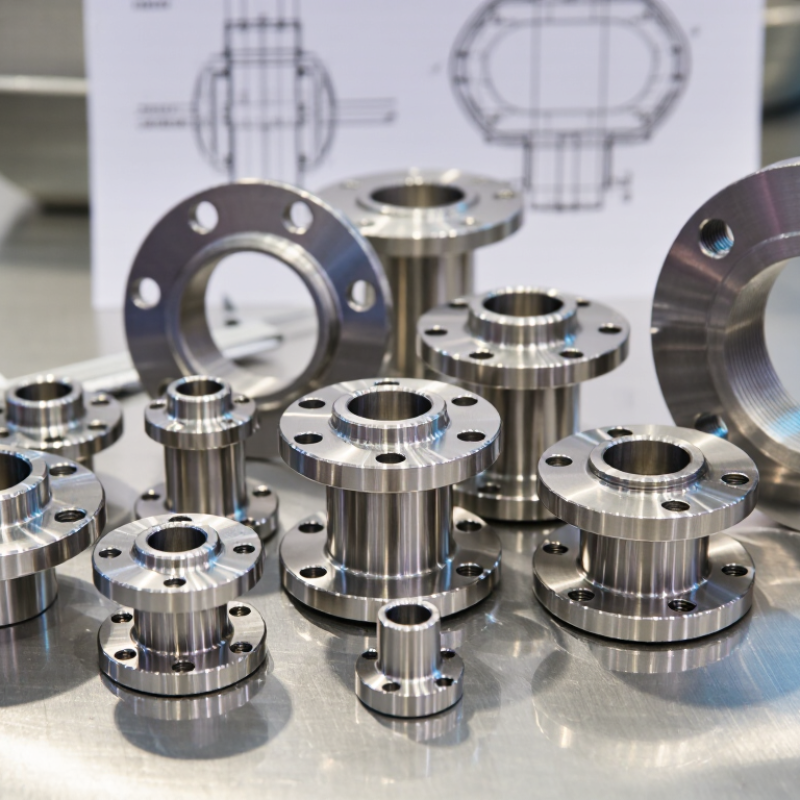
What Are the Best Stainless Steel Flange Fittings in 2026?

What Stainless Steel Flange Fittings Are and Where They Are Used

Stainless steel flange fittings are detachable pipe connections. Two flanges meet face to face, with a gasket between them and bolts holding the joint tight. They connect pipe runs to pumps, valves, tanks, and process equipment. Unlike welded joints, bolted flanges allow inspection or replacement without cutting the pipe. Small detail. Big consequences.

Their uses include water treatment, food processing, chemical plants, marine systems, and power facilities. The UN World Water Development Report 2024 notes that 2.2 billion people lacked safely managed drinking water in 2022. That figure describes a global infrastructure challenge, not flange demand, but it helps explain why dependable water-treatment piping matters. The World Stainless Association reported 58.4 million tonnes of global stainless steel production in 2023, in its Stainless Steel in Figures 2024 report. Stainless alloys are valued for corrosion resistance, though performance depends on grade, temperature, chloride exposure, and cleaning conditions.

In practice, specify the flange material, pressure class, face type, gasket, and bolt set as one joint system. Dimensions should match the applicable piping standard, such as ASME B16.5 where relevant. A stainless flange can still fail early if dissimilar metals, poor alignment, or an unsuitable gasket are ignored. Gasket seating is easy to overlook. It deserves a second check.

How ASME B16.5 Covers NPS ½–24 and Pressure Classes 150–2500

For stainless steel flange fittings in 2026, ASME B16.5 sets a practical selection boundary: NPS ½ through NPS 24, with pressure classes 150, 300, 400, 600, 900, 1500, and 2500. The standard specifies dimensions, tolerances, marking, materials, and pressure–temperature ratings. A key distinction. “Class 150” does not mean a universal 150-psi rating; allowable pressure depends on material and operating temperature. Check the applicable rating table, not just the class stamped on the flange.

For stainless options, verify the material grade and product specification alongside the B16.5 dimensions. ASTM A182/A182M, for example, covers forged or rolled alloy and stainless steel pipe flanges and related components. At the workbench, that means confirming the heat or material documentation, facing, bolt pattern, and gasket fit before installation. Small mismatches matter. A flange can share the right nominal size yet fail to suit the service conditions. ASME B16.5 does not cover every size: larger flanges generally fall under ASME B16.47. It is easy to treat a standard as a full compatibility guarantee; it is not one. Specify the standard edition required by the project, and review temperature, corrosion exposure, and joining details with the responsible engineer.

How 304’s 18–20% Chromium and 316’s 2–3% Molybdenum Compare

Choosing the best stainless steel flange fittings in 2026 starts with the fluid, temperature, and exposure around the joint. Grade 304 typically contains 18–20% chromium, which supports a protective oxide layer in many ordinary service environments. For clean water, indoor piping, and mild process conditions, that balance can be practical and economical. The chromium percentage alone, however, cannot predict service life.

Grade 316 adds roughly 2–3% molybdenum, improving resistance to pitting and crevice corrosion in chloride-bearing environments. Think of a flange near a coastal washdown area, where salty droplets collect beneath a gasket. That added molybdenum may reduce localized attack. Not magic. High chloride levels, warm stagnant liquid, poor drainage, and damaged surfaces can still cause problems.

A useful but imperfect rule is to consider 304 for lower-corrosion exposure and 316 where chlorides or harsher cleaning conditions are expected. Then verify pressure class, dimensions, gasket compatibility, and the fitting’s product documentation. Weld quality and surface finish matter, too; deposits around a joint can undermine a good material choice. Check the details. If the fluid chemistry is uncertain, obtain a qualified materials review rather than choosing by alloy percentage alone.

What Are the Best Stainless Steel Flange Fittings in 2026?

How 304’s 18–20% Chromium and 316’s 2–3% Molybdenum Compare

The ranges shown are common specified composition limits by weight. Grade 304 requires 18–20% chromium; grade 316 contains 16–18% chromium and 2–3% molybdenum. Molybdenum is not a required alloying range for 304. For flange selection, also check the applicable product standard, service conditions, pressure rating, and temperature.

Which Flange Types Best Suit Different Piping Systems

What Are the Best Stainless Steel Flange Fittings in 2026?

Which Flange Types Best Suit Different Piping Systems

The right flange depends on pressure, temperature, pipe size, and how often the line needs servicing. Weld neck flanges suit demanding systems with pressure changes or vibration. Their tapered hubs help distribute stress, but installation requires accurate alignment and skilled welding. They are often a practical choice for process lines where joint reliability matters more than quick assembly.

Slip-on flanges are easier to position on site and can suit moderate-duty water or utility piping. They need welds inside and outside the flange, so they may be less suitable for severe cyclic loading. For smaller-bore lines, socket weld flanges offer a compact connection, though weld access and inspection should be considered. Threaded flanges avoid field welding, but vibration and temperature changes can loosen threaded joints. Use them selectively.

Blind flanges close a pipe end or provide access for inspection; confirm their pressure rating before installation. Lap joint flanges, paired with stub ends, work well where sections are dismantled often, such as maintenance-heavy systems. They can also help limit corrosion costs when the stub end matches the fluid, though material selection is not always straightforward. Check the applicable flange dimensions, stainless grade, gasket, and bolting as one assembly. A familiar fitting can still fail when these details are mismatched.

How to Select Fittings by Pressure, Temperature, Corrosion, and Standards

What Are the Best Stainless Steel Flange Fittings in 2026?

Selecting stainless steel flange fittings starts with the actual service conditions, not the alloy name alone. Record operating and peak pressure, temperature, fluid composition, and any cleaning chemicals. Pressure ratings change with fitting size, material, and temperature. A rating that looks adequate at room temperature may not apply at elevated temperatures. Check the applicable pressure tables and system design documents.

Corrosion resistance depends on more than whether a fitting is stainless steel. Chlorides, stagnant fluid, and narrow crevices can affect performance. Grade 316 often offers better resistance to chlorides than grade 304, but it is not suitable for every environment. Consider the fluid concentration, temperature, and exposure time. Surface condition matters, too. A fitting can look spotless and still be vulnerable in service.

Standards help confirm dimensions, materials, and pressure classes. Check that the flange standard, facing, bolt pattern, gasket, and connected pipe are compatible. Depending on the system, relevant documents may include ASME flange dimensions and ASTM material specifications; confirm the required editions and jurisdiction with the project engineer. This is easy to overlook during a quick catalog comparison. Verify material certificates, pressure-temperature ratings, and inspection requirements before installation. A small mismatch in facing or bolt-circle dimensions can delay a job.

What Are the Best Stainless Steel Flange Fittings in 2026? How to Select Fittings by Pressure, Temperature, Corrosion, and Standards

Service or Selection Need Common Flange Type Typical Material Options Pressure Selection Temperature and Corrosion Considerations Relevant Standards and Checks
General-purpose piping with sound access for welding Weld neck ASTM A182 F304/304L or F316/316L Select the ASME pressure class using the applicable pressure–temperature rating table for the material group and design temperature. Common classes include 150, 300, 600, 900, 1500, and 2500. F316/316L is often considered where greater resistance to pitting than 304/304L is needed. Neither grade is immune to chloride pitting or chloride stress-corrosion cracking. ASME B16.5 for NPS 1/2–24; confirm flange dimensions, facing, material specification, and applicable piping code.
Lower-cost, moderate-duty piping where space and installation access are suitable Slip-on ASTM A182 F304/304L or F316/316L Choose the class from the governing rating tables and design conditions; do not infer allowable pressure from the class number alone. Suitable grade depends on the fluid, concentration, contaminants, temperature, and cleaning regime. Check weld details and corrosion allowance where relevant. ASME B16.5; verify the applicable flange class, bore, facing, and construction requirements.
Small-bore piping where a socket-weld connection is permitted Socket weld ASTM A182 F304/304L or F316/316L Confirm the flange rating and the limits of the complete piping system, including the pipe, weld, and connected components. Assess crevice and stagnant-fluid risks at the socket. Socket-weld details may be unsuitable for services where crevice corrosion or strict drainability is a concern. ASME B16.5 and the applicable construction code; check size limitations and project welding requirements.
Existing threaded piping or locations where welding is restricted Threaded ASTM A182 F304/304L or F316/316L Use only where the pressure class and threaded joint are approved for the service. Account for the pressure limits of the pipe thread and sealing method. Thread roots can retain fluid and create crevice-corrosion sites. Evaluate cyclic loading, vibration, leakage risk, and the service fluid. ASME B16.5; confirm thread form, engagement, sealing method, and governing code requirements.
Systems requiring easy alignment or occasional dismantling Lap joint with a compatible stub end Flange commonly in F304/304L or F316/316L; select the stub end material for the process fluid Rate the assembled joint according to the applicable standard and component ratings. Confirm the stub end, backing flange, and bolting are suitable together. The wetted stub end usually controls process-side corrosion performance. Avoid assuming the backing flange material alone provides corrosion resistance. ASME B16.5; verify stub-end geometry, facing, materials, and compatibility with the mating flange.
Closing a pipe end or providing access for inspection Blind flange ASTM A182 F304/304L or F316/316L; other alloys may be required by the service Check the blind flange rating at design temperature and the design loads for the closed end. Consider bolt load and gasket selection. Evaluate the trapped-fluid environment, corrosion during shutdown, and the effect of temperature cycling. ASME B16.5 or ASME B16.47, as applicable to size and design; check bolting and gasket requirements.
Chloride-bearing or otherwise aggressive environments Type selected to suit the piping layout and joining method F316/316L may be considered for improved pitting resistance over 304/304L; duplex stainless such as ASTM A182 F51 may be considered when justified by service conditions Verify the pressure–temperature rating for the exact material and standard. Material selection does not establish a pressure rating by itself. Assess chloride concentration, temperature, oxygen, pH, crevices, deposits, and stress-corrosion risk. Obtain corrosion-engineering review for severe or uncertain conditions. Check the material specification and product form, applicable ASME or EN flange standard, and project corrosion requirements.
Large-diameter piping Type determined by the system design; weld neck and blind flanges are common choices Material grade selected for fluid compatibility, strength, and design temperature Use the standard and rating tables applicable to the flange size. Large-diameter dimensions and ratings may differ from those for smaller flanges. Account for thermal expansion, external loads, gasket seating, and corrosion exposure in addition to fluid conditions. ASME B16.47 covers large-diameter steel flanges in NPS 26–60; confirm series, class, dimensions, and material requirements.
Projects specified to European flange dimensions Type and facing as specified by the piping design Use the stainless steel grade and product form specified for the service; confirm material equivalence rather than relying on grade-name similarity alone Choose the PN designation and allowable conditions from the applicable standard and project design basis. PN is not a universal direct conversion to ASME Class. Verify the full material designation, temperature limits, corrosion data, gasket, and bolting for the actual service. EN 1092-1; confirm the flange type, PN designation, dimensions, facing, and material group.

Selection note: A flange class or PN designation is not a standalone allowable-pressure value. Final selection must follow the governing code and the applicable pressure–temperature rating tables, with checks for material, size, temperature, bolting, gasket, loads, and corrosion conditions.

Top
error: Content is protected !!