What is Stainless Flanges and Why Are They Important?
Stainless flanges play a crucial role in various industries, including oil and gas, construction, and manufacturing. According to a recent market report by Grand View Research, the global stainless steel flange market is projected to reach $9.97 billion by 2026, growing at a compound annual growth rate (CAGR) of 5.2%. This growth reflects the increasing need for durable and corrosion-resistant materials in critical applications.
Industry expert Dr. Mark Jensen notes, "Stainless flanges are vital for maintaining the integrity of piping systems in demanding environments." His insight underscores the necessity of using stainless flanges to prevent leaks and failures. The importance of stainless flanges extends beyond mere functionality; they also enhance safety in operations.
While the demand for stainless flanges is rising, challenges remain. Variability in stainless steel grades and manufacturing processes often leads to inconsistencies in quality. It is critical for engineers and procurement teams to work closely with suppliers to ensure the selection of appropriate grades for each application. Investing time in understanding these products can yield significant benefits in performance and lifespan.

What are Stainless Flanges: Definition and Key Features
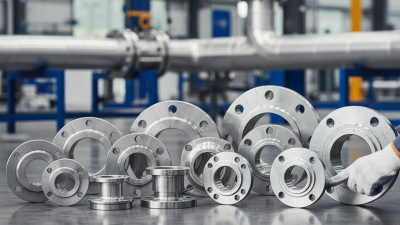
Stainless flanges are essential components in piping systems. They serve as connectors that join different sections of pipes, valves, and other equipment. The main advantage of stainless steel is its resistance to corrosion, which extends the lifespan of the pipelines. According to a report by Research and Markets, the global stainless steel flange market is expected to grow at a CAGR of 5.2% from 2021 to 2028.
Stainless flanges possess key features that make them indispensable. They can withstand high pressures and temperatures, making them suitable for various industries. Flanges come in different types, such as slip-on, threaded, and blind. Slip-on flanges are favored for their ease of installation, while blind flanges are crucial for closing off piping systems. Despite their robustness, improper installation can lead to leaks or failures, highlighting the need for precision in usage.
Another noteworthy aspect is the variety of grades available for stainless steel flanges. 304L and 316L are the most common grades, each providing different levels of strength and resistance. A study by the International Journal of Pressure Vessels and Piping emphasizes that the choice of grade can influence not just performance, but long-term maintenance costs. Users must understand these nuances to ensure they select the correct flange type for their application.
Types of Stainless Flanges and Their Specific Applications
Stainless flanges come in various types, each designed for specific applications. One common type is the Weld Neck flange. It is ideal for high-pressure systems. This flange is welded to piping, providing strong support. Its design accommodates thermal expansion and vibration well.
Another type is the Slip-On flange. It is easy to install and suitable for lower pressure applications. Slip-On flanges slip over the pipe's end. They are less costly than Weld Neck flanges. However, they may not handle extreme conditions as effectively.
Blind flanges serve a distinct purpose. They cover the end of piping systems. This makes them useful for inspection and maintenance. Installation is straightforward, but they may require careful torque to avoid leaks. Each type of stainless flange offers unique advantages and challenges. Understanding these differences is key in selecting the right flange for your project.
Importance of Stainless Flanges in Various Industries
Stainless flanges play a crucial role in various industries, including oil and gas, food processing, and water treatment. They provide a robust connection between pipes, ensuring leak-free joints. This reliability is essential in high-pressure systems. In food processing, they help maintain hygiene standards, preventing contamination. The smooth surface of stainless flanges is easy to clean, making them ideal for sanitary applications.
Moreover, industries that deal with corrosive substances rely on stainless flanges for their durability. These flanges can withstand harsh environments without compromising performance. Their resistance to rust ensures a long lifespan, reducing maintenance costs. However, improper installation can lead to failures or leaks. Regular inspections of flanges are necessary to prevent potential issues.
While stainless flanges are widely used, not all applications require them. For some, more affordable options might suffice. It's essential to evaluate the specific needs of each project. Sometimes, budget constraints overshadow the long-term benefits of using high-quality materials. Balancing cost and quality is a reflection of sound engineering judgment.
Material Specifications and Standards for Stainless Flanges
Stainless flanges serve a crucial role in piping systems across various industries. Their material specifications greatly influence performance and reliability. Commonly made from stainless steel, these flanges are categorized by standards such as ASTM A182 and ASME B16.5. These guidelines ensure consistency in mechanical properties and chemical composition. For example, ASTM A182 specifies the tensile strength of stainless steel grades. This contributes to a minimum yield strength of 30,000 psi, essential for high-pressure applications.
In addition to tensile strength, other factors like corrosion resistance are vital. Flanges often feature grades like 304 and 316 stainless steel. The latter is known for superior resistance to chloride environments. Studies suggest that using 316 flanges can reduce failures in marine and chemical processing. However, while these specifications hold great promise, they must be scrutinized. Ongoing evaluations are necessary to adapt to environmental changes.
Moreover, the fabrication method impacts the final product. Issues such as uneven surfaces or misalignment during machining can arise. This can weaken the flange connection, presenting safety risks. A thorough quality assurance process is essential to mitigate such concerns. Industry standards recommend frequent inspections and checks for corrosion and wear to maintain integrity.
Stainless Flanges Usage by Material Type
Market Trends and Projected Growth for Stainless Flanges Industry
The stainless flanges market is evolving rapidly. Analysts predict a steady increase in demand due to infrastructure development. Key sectors such as oil and gas, water treatment, and construction are driving this growth. Stainless steel flanges offer durability and resistance to corrosion. These properties make them vital in critical applications.
The current market trend reflects a shift towards sustainability. Manufacturers are focusing on eco-friendly practices. This shift affects the production and lifecycle of flanges. Industry experts emphasize the need for innovation. Traditional manufacturing processes require rethinking to meet new standards. Consumer demand for quality drives companies to invest in research and development.
However, challenges persist. Supply chain disruptions have affected availability. Fluctuating raw material prices create uncertainty. Companies must navigate these issues to maintain profitability. As the industry grows, adaptability becomes crucial. Stakeholders need to stay informed and agile. The next few years will be telling for the stainless flanges market.