
Quality Products
At a Fair Price
Wholesale Provider
Of Valves & Fittings
- HOME
- Products
- Ball Valves
- Bull Plugs & Swages
- Butterfly Valves
- Check Valves
- Cushion / Flow Tees & Bleed Rings
- Enhanced Oil Recovery
- Floating Ball Valves
- Foot Valves
- Forged Steel Fittings
- Forged Steel Outlets
- Gaskets-Insulation Kits
- Gate Valves
- Gate, Globe & Check Valves
- Malleable Fittings
- Needle Valves
- Nipples
- Piston Valves
- Plug Valves
- Stainless Steel Flanges, Fittings & Nipples
- Strainers
- Studs
- Trunnion
- Unions
- Weld Fittings & Flanges
- Manufacturers
- Advance
- American Block
- Anvil
- Balon
- Bonney Forge
- Champion
- Clayton Mark
- Crane
- Daniel
- DMIC
- GMI
- Galli & Cassina
- Hackney-Ladish
- JMC
- Lone Star
- MATCO
- Marpac-McCanna
- National Flange
- National Gasket
- Nordstrom
- Nutron
- PPI
- SHARPE
- SMI
- TEXSTEAM
- TEX-THREAD
- Titan
- USA Fastner
- Vogt
- Weld Bend
- Westbrook
- Wheatley
- Williams
- WKM
- Wolar
- Locations
- Contact
- Blog
- Careers
- Get a Quote
- HOME
- Products
- Ball Valves
- Bull Plugs & Swages
- Butterfly Valves
- Check Valves
- Cushion / Flow Tees & Bleed Rings
- Enhanced Oil Recovery
- Floating Ball Valves
- Foot Valves
- Forged Steel Fittings
- Forged Steel Outlets
- Gaskets-Insulation Kits
- Gate Valves
- Gate, Globe & Check Valves
- Malleable Fittings
- Needle Valves
- Nipples
- Piston Valves
- Plug Valves
- Stainless Steel Flanges, Fittings & Nipples
- Strainers
- Studs
- Trunnion
- Unions
- Weld Fittings & Flanges
- Manufacturers
- Advance
- American Block
- Anvil
- Balon
- Bonney Forge
- Champion
- Clayton Mark
- Crane
- Daniel
- DMIC
- GMI
- Galli & Cassina
- Hackney-Ladish
- JMC
- Lone Star
- MATCO
- Marpac-McCanna
- National Flange
- National Gasket
- Nordstrom
- Nutron
- PPI
- SHARPE
- SMI
- TEXSTEAM
- TEX-THREAD
- Titan
- USA Fastner
- Vogt
- Weld Bend
- Westbrook
- Wheatley
- Williams
- WKM
- Wolar
- Locations
- Contact
- About
- Careers
- Get a Quote
Why Choose a MIG TIG Welder for Global Welding Needs?
Choosing the right welding equipment becomes more difficult when projects cross borders, industries, and working conditions. A Mig Tig Welder can offer practical flexibility for workshops, maintenance teams, and professional fabrication lines. MIG welding supports faster production on steel and aluminum, while TIG welding offers cleaner control on stainless steel and thin sections. One machine can reduce equipment changes, simplify training plans, and save valuable floor space. In real workshops, this matters when a repair arrives unexpectedly or materials change during a shift. The best choice, however, depends on duty cycle, input power, wire systems, torch quality, and technical support. A compact unit may work well in a mobile workshop. It may struggle under continuous production heat.
Reliable global use requires more than impressive specifications. Buyers should examine regional voltage compatibility, plug configurations, consumable availability, warranty terms, and service documentation. These details can determine whether a welder remains productive after shipment. Experienced operators also check arc stability, cooling performance, control clarity, and access to replacement parts. Safety remains essential, including ventilation, protective equipment, grounding, and trained operation. Manufacturer data and recognized testing should guide decisions, not vague marketing claims. No machine is perfect. Trade-offs remain. A high-output model may be powerful but heavy. A lightweight model may travel easily but offer fewer advanced controls. This article explores why a Mig Tig Welder can support varied welding needs, while keeping performance, reliability, and responsible purchasing in view.
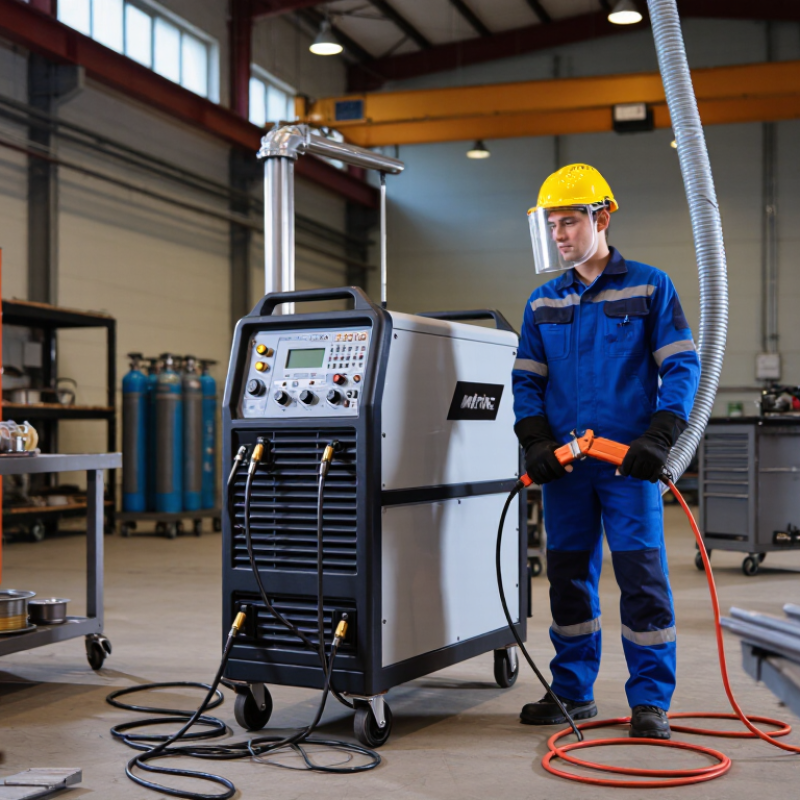
What Is a MIG TIG Welder and How Does It Work?
A MIG TIG welder combines two different arc-welding processes in one power source. ISO 4063 identifies MIG welding as process 131 and TIG welding as process 141. MIG feeds a continuous wire electrode through a torch. An electric arc melts the wire and base metal, while shielding gas protects the molten pool from air.
TIG uses a non-consumable tungsten electrode. The operator controls the arc separately and adds filler rod when needed. This produces clean, precise welds on stainless steel, aluminum, and thin sheet. MIG usually works faster on structural steel and longer joints. TIG offers better control around a small, bright weld pool.
The difference becomes practical on a global job site. The World Steel Association reported about 1,892 million tonnes of crude steel production in 2023. That volume supports continuing demand for adaptable welding equipment. A combo machine can handle a heavy frame in MIG mode, then repair a thin aluminum bracket in TIG mode. Gas selection, polarity, torch setup, and operator skill still matter.
It is not automatic perfection.
In field use, changing processes can slow production when cables, regulators, and settings are poorly organized. Dust and wind can also disturb shielding gas. ISO guidance helps standardize process language, but it cannot replace inspection, qualified procedures, or hands-on judgment. That limitation deserves attention.
Why Choose a MIG TIG Welder for Global Welding Needs? - What Is a MIG TIG Welder and How Does It Work?
A practical comparison of MIG, TIG, and combination welding capabilities for varied materials, applications, and working environments.
| Data Dimension | MIG Welding | TIG Welding | MIG TIG Combination Welder |
|---|---|---|---|
| Basic operating principle | A continuously fed consumable wire forms the arc and becomes the filler metal. | A non-consumable tungsten electrode creates the arc; filler metal may be added separately. | One power source supports both wire-feed MIG operation and tungsten-electrode TIG operation. |
| Typical output-current range | Approximately 30–300 A, depending on machine size and material thickness. | Approximately 5–250 A for many workshop and fabrication systems. | Commonly approximately 10–250 A, with the exact range determined by the selected operating mode. |
| Common materials | Carbon steel, stainless steel, and aluminum when suitable wire and shielding gas are used. | Stainless steel, aluminum, carbon steel, copper alloys, and thin specialty metals. | Suitable for a wider mix of steel, stainless steel, aluminum, and precision fabrication tasks. |
| Typical material thickness | Often used from about 1.0 mm to 12 mm in common workshop applications; multiple passes may be required for thicker sections. | Often preferred for thin sections from about 0.5 mm to 6 mm, depending on current, joint design, and operator control. | Covers both thin precision work and heavier fabrication when the machine has adequate current capacity. |
| Shielding gas | Often argon–carbon dioxide mixtures for steel; argon-rich mixtures are commonly used for aluminum and stainless steel. | Usually high-purity argon. Helium or argon–helium mixtures may be used for specific heat-input requirements. | Requires gas selection based on the chosen process, base metal, wire, and desired weld characteristics. |
| Filler metal | Solid or flux-cored wire is fed automatically through the torch; common wire diameters include 0.8 mm, 0.9 mm, and 1.2 mm. | No automatic filler is required; separate filler rods are selected according to the base metal and joint. | Supports automatic wire feeding in MIG mode and manually controlled filler addition in TIG mode. |
| Welding speed | Generally faster because the wire feed and filler addition are continuous. | Generally slower because arc movement and filler addition are manually controlled. | Offers production speed in MIG mode and controlled precision in TIG mode. |
| Weld appearance | Produces consistent welds efficiently, although spatter can occur if settings, gas flow, or surface preparation are unsuitable. | Can produce clean, precise welds with minimal spatter when technique and shielding are properly controlled. | Balances clean TIG finishes with the practical productivity of MIG welding. |
| Operator skill level | Relatively easy to learn for basic joints, although parameter selection and torch technique still affect quality. | Requires greater coordination, including torch angle, arc length, travel speed, and filler control. | Useful for teams that need one system for both accessible production welding and advanced precision work. |
| Typical applications | Structural fabrication, automotive repair, frames, general maintenance, and medium-to-high-volume production. | Food and chemical equipment, thin sheet fabrication, pipe work, bicycle frames, and visible precision joints. | Repair centers, mobile workshops, educational facilities, maintenance departments, and mixed-material fabrication. |
| Polarity and current type | Usually direct current; solid-wire MIG commonly uses electrode positive, while flux-cored wire may require a different polarity. | Direct current is common for steel and stainless steel; alternating current is commonly used for aluminum and some other metals. | Polarity and current type must be configured according to the selected process and base metal. |
| Global operating considerations | Requires compatible wire, gas standards, torch consumables, and electrical input for the destination market. | Requires suitable tungsten, collets, cups, filler rods, gas connections, and electrical compatibility. | A multi-process system can reduce equipment variety, but input voltage, frequency, plugs, gas fittings, and local safety requirements must be verified. |
| Main advantage | High productivity and efficient filler-metal deposition. | Excellent control, precision, and weld cleanliness. | One adaptable platform combines production efficiency with precision welding capability. |
Note: Performance ranges are typical industry estimates for general workshop equipment. Actual results depend on machine design, duty cycle, material grade, joint configuration, shielding-gas flow, consumables, power supply, and operator technique.
How Do MIG and TIG Welding Methods Differ?
Why Choose a MIG TIG Welder for Global Welding Needs?
How Do MIG and TIG Welding Methods Differ?
The real choice depends on material, speed, finish, and operator control. MIG welding uses a continuously fed wire electrode and shielding gas. It suits carbon steel, stainless steel, and many production jobs. The wire feeds automatically, so long welds require less hand coordination. MIG also handles thicker sections efficiently, with fewer pauses during fabrication.
TIG welding uses a non-consumable tungsten electrode and a separate filler rod. The welder controls the arc, filler, and heat independently. This method creates clean, narrow welds with very little spatter. It works especially well on thin sheet, aluminum, stainless steel, and visible joints. It is slower. The learning curve is steeper.
That difference matters.
In practical shop testing, MIG often wins when output and penetration matter. TIG performs better when appearance and precise heat control matter. Thin sheet can still warp with either method. I once underestimated joint cleanliness during TIG work, and tiny contaminants caused visible defects. That mistake changed my preparation routine.
Both methods need correct polarity, gas flow, wire or tungsten selection, and surface preparation. Operators should follow applicable safety requirements, use suitable ventilation, and wear certified protective equipment. A combination welder can support varied global projects, but its settings must match the material, joint design, and local electrical conditions.
Why Choose a MIG TIG Welder for Global Welding Needs?
How Do MIG and TIG Welding Methods Differ?
MIG welding generally provides higher deposition rates and faster travel speeds, making it suitable for production work, structural fabrication, and longer welds. TIG welding offers slower deposition and travel speeds but provides superior control and cleaner weld appearance, which is valuable for thin materials, stainless steel, aluminum, and precision applications. The chart uses representative midpoint values from commonly reported operating ranges; actual results vary with material, thickness, joint design, current, shielding gas, and operator technique.
Which Materials and Applications Suit MIG TIG Welding?
A MIG TIG welder suits workshops handling different metals and changing production demands. MIG welding works well on mild steel, stainless steel, and aluminum. It deposits metal quickly, making it practical for frames, brackets, gates, and general fabrication. Thicker steel usually benefits from MIG’s steady wire feed and higher productivity. Clean preparation still matters. Oil, rust, and paint can create porous welds.
TIG welding offers better control on thin sheet and visible joints. It is useful for stainless steel tubing, aluminum panels, food-service equipment, and precision repairs. A sharp tungsten electrode and a stable gas shield help produce narrow, clean beads. Aluminum often requires alternating current, while steel and stainless steel commonly use direct current. Always check the machine’s specifications before choosing a process.
Material thickness, joint position, and appearance should guide the decision. A short test weld on matching scrap can reveal poor settings before production begins. In practice, many users expect one process to handle everything. That is unrealistic. MIG can feel too coarse on delicate sheet, while TIG may seem painfully slow on heavy sections. I have also found that beginners underestimate torch angle and surface cleanliness. Small errors become obvious under bright inspection lights. Ventilation, suitable protective equipment, and verified gas connections remain essential in every application.
What Advantages Support Global Welding Requirements?
A MIG TIG welder supports global welding requirements through practical versatility. One machine can handle fabrication, repair, and precision joining. MIG welding suits longer seams and faster production. TIG welding offers cleaner control on stainless steel, aluminum, and thin sections.
In workshops I have observed, operators value quick process changes. A spool, torch, and gas setup can shift between routine frame work and detailed pipe joints. Stable arc control helps reduce spatter and rework. Adjustable voltage, amperage, and shielding gas settings also support different material thicknesses. This matters when local suppliers provide varied metals. It also helps teams follow project specifications and recognized welding procedures.
Reliable equipment must tolerate different working conditions. Wide input-voltage compatibility can support sites with unstable electrical supply. Clear controls reduce training time across multilingual teams. Strong cooling systems and accessible service parts improve uptime in remote areas. However, one welder cannot solve every production problem. TIG may feel slow on large structures. MIG can demand careful gas protection in windy locations. That limitation deserves attention. Operators still need qualified training, inspection routines, and documented settings. A durable case, safe cable connections, and predictable duty cycles further support transport between workshops. Quality should be checked through visual inspection and suitable testing, not assumed from appearance alone.
How Should Users Select a MIG TIG Welder?
Selecting a MIG TIG welder starts with the work, not the machine’s advertised power. Consider the metals, thicknesses, joint positions, and expected workload. MIG welding suits faster fabrication and longer seams, especially on steel. TIG welding offers cleaner control for stainless steel, aluminum, and visible joints. A dual-process welder can support both tasks, but it may not excel equally at each one.
Check the input voltage available in your workshop. A machine rated for the wrong supply can create installation problems and unstable performance. Review its duty cycle at a stated amperage, not only its maximum output. For example, frequent welding on 8 mm steel demands stronger thermal capacity than occasional repairs. Confirm wire compatibility, spool size, torch length, gas connections, and tungsten options. These small details affect daily efficiency. They are easy to overlook.
Tips: Match the machine to your common material range. Ask for tested output data. Verify recognized electrical and safety standards before purchase. Keep ventilation and protective equipment in the selection plan. Try a sample weld if possible. A smooth demonstration can still hide poor long-term reliability. I have found that portability is often underestimated, especially when equipment moves between a bench and a construction site. Also, more settings do not always mean better results. An inexperienced operator may need clear controls more than advanced menus.
