
Quality Products

At a Fair Price

Wholesale Provider

Of Valves & Fittings

  • Corporate Office: 1301 Greengrass Drive Houston, TX 77008
  • 1-800-237-2512

Quality Products

At a Fair Price

Wholesale Provider

Of Valves & Fittings

What Are Free Standing Giant LED Letters?

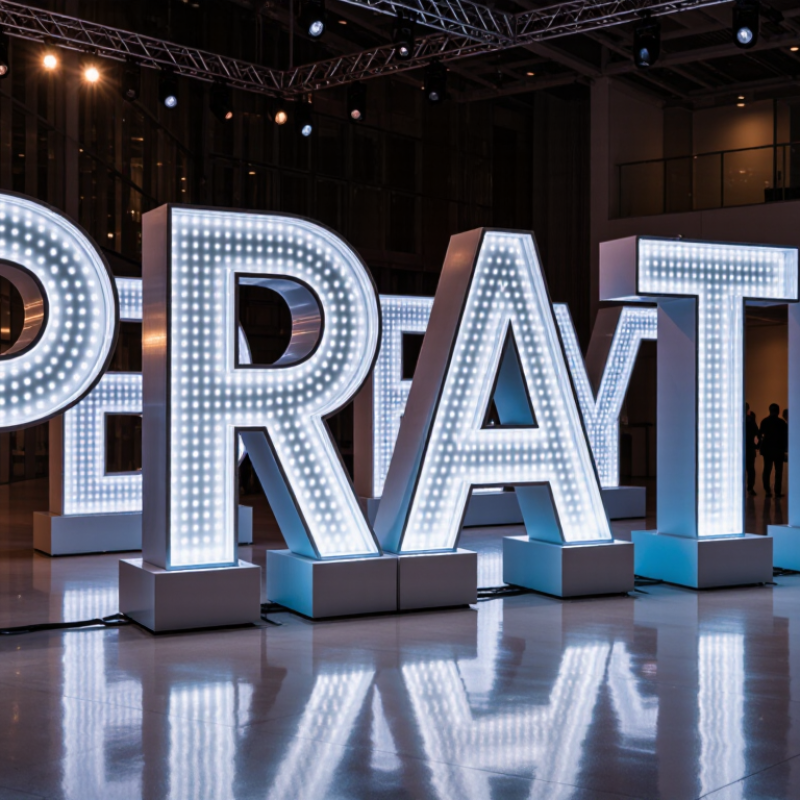
free standing giant led letters have become a practical feature in event spaces, retail entrances, weddings, festivals, and brand activations. They combine large-scale typography with programmable light. A single letter can become a photo point, a directional marker, or a glowing architectural object. The effect is immediate. People notice scale before they read the message.

Industry data supports the wider move toward LED technology. The U.S. Department of Energy reports that LED products use at least 75% less energy and last up to 25 times longer than incandescent lighting. Grand View Research also identifies outdoor and decorative lighting as important areas within the expanding LED market. These figures do not guarantee a successful installation. Design, brightness, weather protection, cable management, and venue access still matter.

Roland Haitz, a former Hewlett-Packard LED researcher, offered a useful perspective: “The best is yet to come.” His statement reflects LED development, but it also challenges signage designers to think beyond simple illumination. Well-built free standing giant led letters should feel stable, readable, and visually balanced from several angles. They need bright faces, clean edges, and safe bases. Small details matter.

However, bigger is not always better. Excessive brightness can damage photographs and make nearby branding disappear. Poor spacing can create awkward shadows. These weaknesses are easy to overlook during planning. A responsible specification should consider audience distance, power demand, operating hours, transport, and maintenance. The strongest results come from visual ambition controlled by practical experience.
What Are Free Standing Giant LED Letters?

Definition and Key Features of Free Standing Giant LED Letters

What Are Free Standing Giant LED Letters?

Definition and Key Features of Free Standing Giant LED Letters

Free standing giant LED letters are oversized, three-dimensional characters designed to stand independently on floors, platforms, or outdoor surfaces. Unlike wall-mounted signage, each letter uses a concealed frame, solid base, and internal LED modules. The result is readable branding from a distance, often with a strong photographic effect. Typical construction includes aluminum or steel framing, translucent acrylic faces, rear access panels, and low-voltage wiring.

Scale is the main feature, but stability matters more. In real installations, uneven paving, wind, cable placement, and crowd movement can affect performance. A wide ballast base may look less elegant, yet it can prevent dangerous movement. Weather-resistant housings, sealed connectors, and drainage channels are essential outdoors. Some designs offer front illumination, halo lighting, or programmable color effects. Too many effects can weaken legibility. That mistake is easy to make.

Energy efficiency is another practical advantage. The U.S. Department of Energy reports that LED lighting uses at least 75% less energy than incandescent lighting and lasts up to 25 times longer. This supports longer display periods and reduced maintenance, although the complete system still depends on power supplies, controls, and installation quality. The International Energy Agency also identifies LEDs as a major pathway for reducing lighting electricity demand. However, brightness should not replace thoughtful design. A letter that photographs beautifully may still create glare, shadows, or difficult servicing conditions.

What Are Free-Standing Giant LED Letters?

Free-standing giant LED letters are self-supporting illuminated characters built from LED modules, internal frames, power systems, and control components. Letter height is a key factor in determining long-distance readability. The chart uses the common sign-legibility planning rule of approximately 1 inch of letter height for every 10 feet of viewing distance.

Planning reference: estimated viewing distances are calculated from letter height using the 1-inch-per-10-feet guideline. Actual visibility also depends on LED pixel pitch, brightness, contrast, viewing angle, ambient light, and content design.

Common Materials and Structural Components

Free-standing giant LED letters are built as small architectural structures, not oversized plastic signs. Their frames commonly use welded aluminum for lighter weight and corrosion resistance. Galvanized steel adds strength, especially for tall letters exposed to wind. The face often combines translucent acrylic with a polycarbonate diffuser. Acrylic gives cleaner light transmission, while polycarbonate tolerates impacts better. The U.S. Department of Energy’s 2023 Solid-State Lighting R&D Opportunities report identifies laboratory LED efficacy above 200 lumens per watt. Real installations achieve less because lenses, wiring, heat, and diffusion reduce output.

Inside each letter, LED modules attach to an aluminum back panel or internal rails. Constant-voltage power supplies distribute current through protected circuits. Ventilation gaps and thermal paths matter. Heat shortens component life. The electrical enclosure should match the site environment, using an appropriate NEMA rating. For outdoor installations, engineers should calculate wind pressure under ASCE 7-22 and specify base plates, anchor bolts, and ballast accordingly. A heavy steel base is not automatically safer. Poorly designed anchors can still fail. I have seen attractive prototypes become unstable after adding decorative cladding.

Tips: Keep letters modular for transport and maintenance. Leave service access behind the face. Use stainless fasteners near moisture. Request photometric testing, load calculations, and electrical documentation before fabrication. The UL 48 standard is a useful reference for electric sign construction, but local inspections may require additional controls. LED spacing also deserves testing; overly wide spacing creates dark patches, while excessive density increases heat and energy use.

What Are Free Standing Giant LED Letters? - Common Materials and Structural Components

Category Component or Material Typical Specification or Property Primary Function Common Considerations
Definition Free-standing giant LED letter A three-dimensional illuminated letter designed to stand independently on a floor, platform, or temporary base. Provides large-format branding, wayfinding, decoration, or photo opportunities. Usually requires a stable base or anchoring system because of its height and exposed surface area.
Letter Face Translucent acrylic Commonly available in sheet thicknesses of approximately 3–5 mm; allows light transmission and can be produced in various colors. Forms the visible illuminated front surface. Should be UV-stable for outdoor use and properly supported to reduce cracking or vibration.
Letter Face Polycarbonate sheet Typically more impact-resistant than acrylic at comparable thicknesses; often selected for demanding environments. Provides a durable translucent or transparent face. May require UV protection and careful cleaning to minimize surface scratching.
Body or Returns Aluminum sheet or aluminum composite panel Lightweight, corrosion-resistant, and commonly used for sidewalls and rear panels. Creates the letter depth and protects internal electrical components. Edges and joints should be sealed when the letter is exposed to rain or humidity.
Body or Returns Galvanized steel Steel coated with zinc to improve resistance to atmospheric corrosion; generally heavier than aluminum. Provides a rigid structural shell or internal support frame. Cut edges, welds, and drilled areas may need additional corrosion protection.
Internal Frame Steel tube or angle frame Common structural shapes include square tube, rectangular tube, and angle sections selected according to letter size and loading. Supports the letter body, face panels, LED modules, and base connections. Design should account for wind pressure, transport loads, and repeated installation.
Illumination LED modules Low-voltage modules are commonly arranged in rows or clusters behind the face; spacing depends on letter depth and optical design. Produces even backlighting or face illumination. Correct module spacing helps prevent bright spots, dark areas, and visible shadows.
Illumination LED strip lighting Flexible low-voltage strips are available in different color temperatures and protection ratings. Used for accent lighting, edge lighting, or internal illumination in suitable cavities. Requires adequate heat dissipation, compatible power supplies, and appropriate moisture protection.
Electrical System Low-voltage power supply Common output levels include 12 V or 24 V DC, depending on the selected LED system. Converts mains electricity to the voltage required by the LEDs. Capacity should include a practical reserve above the calculated connected load.
Electrical System Wiring and connectors Low-voltage cable, terminal blocks, waterproof connectors, and cable glands are commonly used. Distributes power between the supply, LED units, and control devices. Wire size, insulation, polarity, and ingress protection should match the installation environment.
Electrical System Protection and control equipment May include fuses, circuit breakers, timers, dimmers, and residual-current protection where required. Improves operational safety and allows brightness or operating-time control. Electrical work should follow applicable local codes and be completed by qualified personnel.
Base Structure Steel plate base A heavy plate or welded base frame is commonly used for indoor displays and temporary installations. Distributes the load and helps prevent tipping. Base size and mass must be matched to letter height, center of gravity, and expected contact forces.
Base Structure Concrete footing or ballast Used when additional resistance to overturning is needed, especially for larger outdoor letters. Provides weight and stability against wind and accidental impact. Requires suitable drainage, site preparation, lifting access, and consideration of surface loading.
Anchoring Anchor bolts and fixings Mechanical fixings connect the base to concrete, steel, or another engineered support surface. Restrains sliding, uplift, and overturning. Fixing type and embedment depth should be selected according to the substrate and calculated loads.
Diffusion Diffuser film or internal diffuser panel Light-diffusing material is placed behind the face when additional optical uniformity is required. Spreads light more evenly across the visible surface. Must be compatible with LED heat levels and accessible for maintenance.
Finishing Powder coating or protective paint Applied to metal surfaces in a wide range of colors and gloss levels. Improves appearance and protects metal from wear and corrosion. Surface preparation is essential; outdoor finishes need appropriate weather resistance.
Weather Protection Seals, gaskets, and drainage openings Used at panel joints, access doors, cable entries, and low points in the enclosure. Reduces water ingress and allows trapped moisture to escape. Outdoor designs should avoid sealed pockets where condensation can accumulate.
Maintenance Removable rear or side access panels Designed to allow access to LED modules, wiring, power supplies, and fasteners. Shortens inspection and repair time. Access panels should remain secure during operation while being practical to remove.
Safety Stability and load assessment Evaluation should consider height, width, weight, center of gravity, wind exposure, and anchoring conditions. Reduces the risk of tipping, structural failure, and unsafe operation. Outdoor or public installations may require professional engineering review and local permits.
Specifications shown are common industry practices and typical material characteristics. Final dimensions, fixings, electrical ratings, and structural details should be determined from the installation environment and applicable safety requirements.

How Giant LED Letters Operate and Display Light

Free standing giant LED letters operate through a simple but carefully engineered lighting system. Each letter usually contains an aluminum or steel frame, a translucent acrylic face, LED modules, wiring, and a regulated power supply. The modules are positioned behind the face to spread light evenly. Small gaps or incorrect spacing can create bright spots, especially on curved letters. Not glamorous, but important.

Most systems convert incoming mains electricity into safer low-voltage DC power. A driver controls current and reduces flicker, while dimming equipment adjusts brightness for daylight, evening viewing, or photography. The U.S. Department of Energy reports that LED products can use at least 75% less energy than incandescent lighting and last up to 25 times longer. That advantage depends on proper ventilation. Heat trapped inside a sealed letter can shorten LED life. In practice, installers often add vents, thermal paths, and weather-resistant cable glands.

Light quality also depends on diffusion material and viewing distance. A matte acrylic face softens individual diode points and produces a cleaner glow. The Illuminating Engineering Society recommends evaluating luminance, glare, color consistency, and viewing conditions rather than brightness alone. The result should remain readable without shining harshly into nearby eyes. Real installations are rarely perfect. Dust, uneven faces, and slight color shifts can appear over time, so maintenance access should be designed before the letters are built.

Typical Applications for Events, Businesses, and Public Spaces

What Are Free Standing Giant LED Letters?

Free standing giant LED letters are illuminated, three-dimensional characters built for visibility and movement. They usually stand on weighted bases, without needing a wall or stage frame. Front-facing LEDs create sharp color, while translucent acrylic or fabric diffuses the light. Some systems support animation, dimming, and timed content.

Their event applications are highly visual. Organizers use them behind registration desks, near photo areas, and beside award stages. They can mark entrances at festivals, conferences, and retail launches. Grand View Research valued the global LED display market at approximately $7.4 billion in 2023, showing strong demand for digital visual communication. Still, a large letter is not automatically effective. Poor spacing can make a venue feel crowded. That mistake happens often.

Businesses use giant letters to strengthen storefront recognition, guide visitors, or create memorable waiting areas. In public spaces, they can identify plazas, cultural districts, transportation hubs, and seasonal attractions. The U.S. Department of Energy states that LED lighting can use at least 75% less energy than incandescent lighting, although display power depends on brightness, controls, and operating hours.

Tips: Choose viewing distance before letter height. Test brightness at night. Leave clear walking space. Check wind loading, cable safety, and access for maintenance. A darker setting may need lower output. It is easy to over-light a public place.

Safety, Installation, and Maintenance Considerations

What Are Free Standing Giant LED Letters?

Free standing giant LED letters create strong visual impact at exhibitions, weddings, retail events, and public installations. Their size also creates practical risks. A letter can tip when its base is too light, especially on uneven floors or outdoors. Wind changes the calculation quickly.

Before installation, inspect the ground, access route, and available power supply. Use stable bases, suitable ballast, and approved fixings for the surface. Keep cables covered and away from walkways, emergency exits, and wet areas. A qualified electrician should check connections, current demand, and protective devices. Outdoor units need suitable weather protection, but no enclosure is completely maintenance-free.

Lift large letters with enough staff and proper handling equipment. Do not drag them across finished floors. This can damage both the letter and the venue surface. I once underestimated how much space a wide letter needed during delivery planning. The result was extra repositioning and unnecessary handling. Measure doorways, lifts, turning areas, and storage zones beforehand.

Maintenance should include checking loose panels, damaged cables, flickering LEDs, moisture, and unstable feet. Switch the display off before opening any access panel. Clean surfaces with a soft cloth and a mild solution. Avoid pressure washing. Record inspections, repairs, and operating hours. Small faults are easier to correct early, although maintenance schedules sometimes need adjustment after heavy use or harsh weather.

Top
error: Content is protected !!