
What Are the Top Types of Hex Machine Screws?
Choosing the right Hex Machine Screw begins with understanding the joint, not the product label. A screw that looks suitable may fail when clearance, load, or corrosion changes. This guide examines common types, including socket head cap screws, button head screws, flat head screws, and hex-head machine screws. Each design leaves a different footprint on the assembly.
Socket head cap screws provide strong clamping force in compact spaces. Their cylindrical heads work well with Allen keys and torque-controlled tools. Button head versions offer a lower profile and smoother appearance, though their reduced head height can limit strength. Flat head screws sit nearly flush after countersinking. Hex-head machine screws suit applications needing an external wrench and easy access.
Practical selection requires more than comparing head shapes. Check thread size, pitch, material, strength grade, finish, and matching nut or tapped hole. Stainless steel may resist moisture, while alloy steel often supports higher mechanical loads. Confirm dimensions against recognized standards and the supplier’s current datasheet. Small differences matter.
A useful workshop lesson is simple: measure twice. I have seen installation problems caused by a socket that was too deep, a countersink cut too shallow, or a thread length chosen by guesswork. No single type wins every application. A neat comparison chart can still mislead without joint details. The sections ahead connect each Hex Machine Screw type with practical uses, limitations, and selection considerations, helping readers make a defensible choice rather than relying on appearance alone.
What Are Hex Machine Screws and How Do They Work?
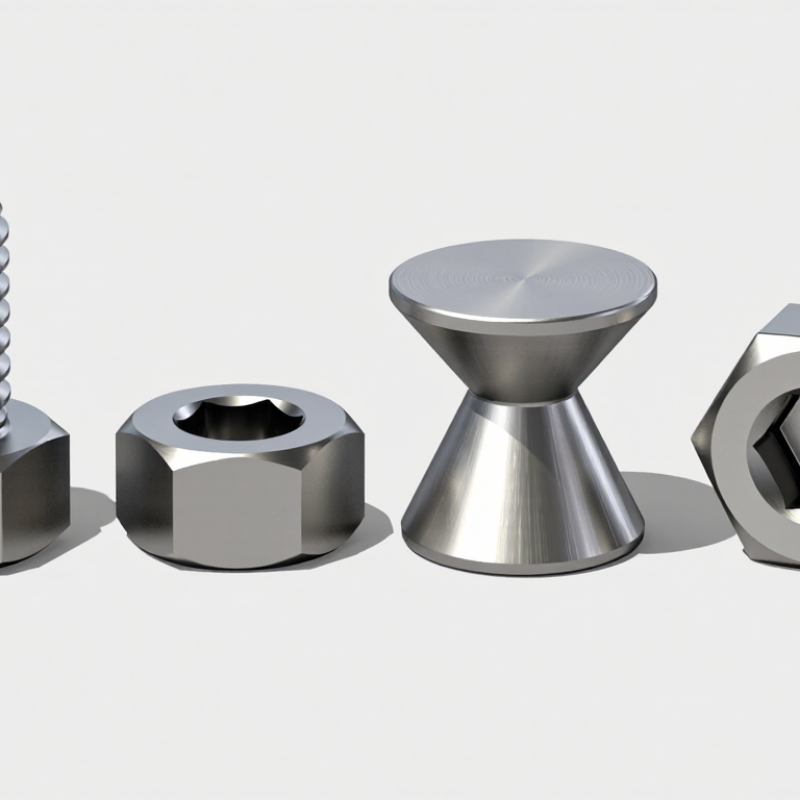
Hex machine screws are threaded fasteners with a six-sided external head. A wrench turns the head, driving the screw into a tapped hole or through a clearance hole and nut. Their machine threads create controlled clamping force, unlike wood screws, which cut their own paths.
The hex head gives better tool engagement than a Phillips recess. This matters when assembly requires repeated tightening or higher torque. Common forms include fully threaded hex-head screws, slotted hex screws, and washer-head versions. ISO 4017 covers many fully threaded hexagon-head screws, while ASME B18.2.1 specifies dimensional requirements for inch-series hex bolts and screws. ISO 898-1 also classifies mechanical properties, including property classes from 4.6 to 12.9 for carbon and alloy steel fasteners. Small detail, big effect.
A 2024 industrial-fasteners market analysis estimated the global market at about USD 84.9 billion in 2023, with continued growth through 2030. The figure suggests broad demand, but market size does not guarantee correct fastener selection. ASTM F606/F606M provides test methods for tensile, proof-load, and hardness evaluation. In practice, thread engagement, joint material, lubrication, and wrench access can change performance. The term “hex machine screw” is also not perfectly consistent across suppliers. That ambiguity deserves attention. A screw may meet the dimensional standard yet fail in service because the joint design was overlooked. Check thread size, pitch, strength class, coating, and installation torque before approval. Feedback from actual assembly work often reveals problems that datasheets miss.
What Are the Top Types of Hex Machine Screws? – What Are Hex Machine Screws and How Do They Work?
| Type | Head and Drive Design | How It Works | Typical Applications | Main Advantages | Important Considerations |
|---|---|---|---|---|---|
| Hex Head Machine Screw | External six-sided hexagonal head; driven with a wrench or socket. | The threaded shaft passes through a clearance hole or engages a tapped hole. Turning the head advances the threads and clamps the joined parts. | General machinery, equipment panels, metal assemblies, and serviceable joints. | Good wrench access, dependable torque transfer, and easy removal. | Requires clearance around the head for a wrench or socket; head height may interfere with compact designs. |
| Hex Flange Machine Screw | Hexagonal head with an integrated circular flange beneath the head. | The flange distributes the clamping load over a wider area while the threaded portion produces the joining force. | Automotive components, appliances, frames, and assemblies using thin or relatively soft materials. | Larger bearing surface; may reduce the need for a separate flat washer. | Flange dimensions must match the joint; it is not automatically a replacement for a washer in every application. |
| Hex Washer Head Machine Screw | Hexagonal head with a captive or integrated washer-like bearing surface. | The broad underside spreads the tightening load and helps protect the mating surface as the screw is tightened. | Sheet-metal work, electrical enclosures, equipment covers, and light structural assemblies. | Convenient installation and improved load distribution without handling a loose washer. | The washer-like underside can limit access in recessed areas and may not suit countersunk or flush-mounted joints. |
| Slotted Hex Head Machine Screw | External hexagonal head with a straight slot across the top. | The hex head accepts a wrench, while the slot permits a flat-blade screwdriver when wrench access is limited. | General maintenance, older equipment, low-volume assembly, and applications requiring flexible tool access. | Two possible driving methods and straightforward inspection. | The slot can allow screwdriver cam-out and generally offers less efficient torque transfer than dedicated internal drives. |
| Socket Head Cap Screw | Cylindrical head with an internal hexagonal socket, commonly called an Allen drive. | An internal hex key or bit turns the screw. The small head diameter allows the fastener to fit in confined areas while producing substantial clamping force. | Machine tools, precision equipment, robotics, fixtures, and compact mechanical assemblies. | High strength-to-size ratio, compact external profile, and effective torque application when properly engaged. | The socket must be fully engaged and kept clean; insufficient engagement can damage the internal drive. |
| Low-Profile Socket Head Screw | Reduced-height cylindrical head with an internal hexagonal socket. | The threaded body provides clamping force while the shorter head reduces the overall envelope of the assembly. | Compact machinery, covers, guards, electronics hardware, and areas with limited overhead clearance. | Lower head height than a standard socket head design and good access from above. | Usually has less head material and may have different strength or tightening limits; use the applicable specification. |
| Tamper-Resistant Hex Socket Screw | Internal hex socket with a center pin or modified geometry requiring a matching security tool. | The specialized drive transfers torque while making removal with ordinary hex keys more difficult. | Public fixtures, access panels, equipment enclosures, and assemblies where unauthorized removal is a concern. | Improves resistance to casual tampering and discourages unapproved access. | Requires the correct security bit; it is a deterrent rather than a complete security system. |
Selection note: Choose the screw type according to thread size and pitch, head clearance, required clamp load, material compatibility, corrosion exposure, drive access, and the applicable dimensional or strength standard.