Top 10 OLED Module Suppliers for Global Buyers
Choosing an Oled Module supplier is not simply a price comparison. Global buyers must examine display quality, engineering support, production capacity, and delivery reliability. A bright panel may look impressive in a sample, yet fail after repeated temperature changes or continuous operation.
This guide introduces ten leading OLED module suppliers serving international markets. It considers practical factors, including active-matrix and passive-matrix options, flexible and rigid designs, touch integration, viewing angles, brightness, and interface compatibility. Supplier experience matters when a project requires custom dimensions, low-power performance, or stable color output across large batches. Manufacturing certifications, inspection procedures, warranty terms, and technical documentation also deserve careful attention.
Details matter here.
A reliable supplier should provide clear drawings, test reports, sample records, and realistic production timelines. Buyers should confirm whether quoted specifications apply to mass production or only laboratory samples. Regional support can also affect communication, customs planning, and after-sales service. This list is a useful starting point, not a permanent verdict. Market conditions, factory capabilities, and component availability can change quickly. Some suppliers may perform exceptionally for automotive displays but offer fewer advantages for wearable devices or industrial instruments. That distinction is easy to overlook.
The strongest decision combines documented evidence with hands-on evaluation. Request samples, inspect brightness consistency, test connectors, and review long-term operating data before signing a major contract. Price still matters, but predictable performance usually protects the wider project budget.
What OLED Modules Are and Why Global Buyers Need Them
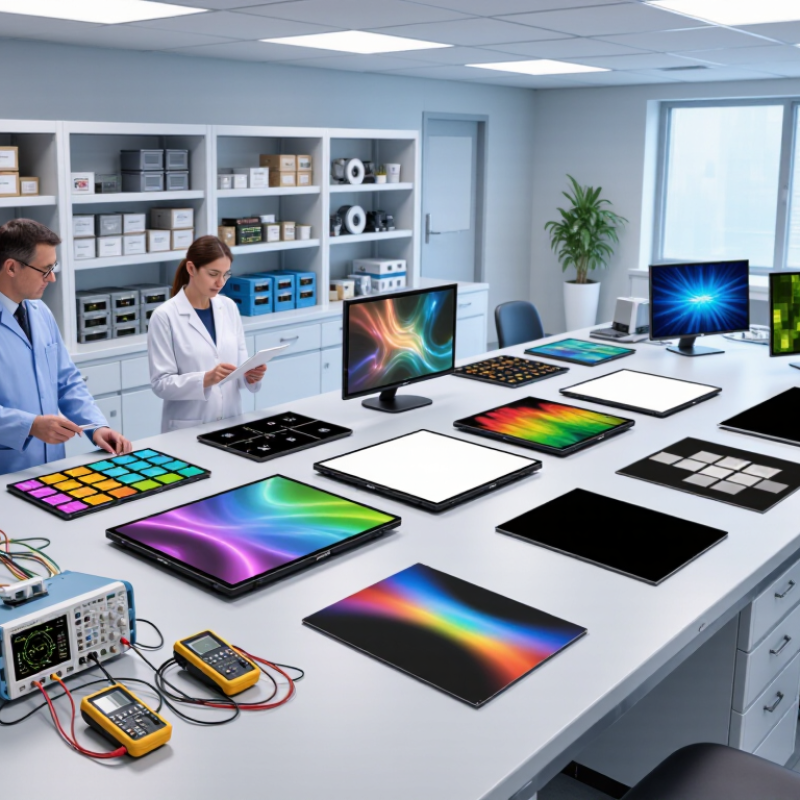
OLED modules are display assemblies built around organic light-emitting diodes. Each pixel produces its own light, so no separate backlight is required. This design creates deep blacks, strong contrast, and thin product profiles. Global buyers use OLED modules in medical instruments, industrial panels, vehicle interfaces, wearable devices, and consumer electronics. Their flexible design can support curved surfaces, but not every module suits every enclosure.
Buying decisions require more than checking screen size. Engineers should compare resolution, brightness, viewing angle, operating temperature, interface type, lifetime, and power behavior. A factory floor may need stronger protection than a handheld device. Medical applications also demand careful documentation and stable quality control. From practical sourcing experience, early sample testing prevents costly redesigns. Still, specifications can look perfect on paper and fail during long-term use. That weakness deserves attention.
Tips: Request test samples and inspect them under real lighting conditions. Confirm connector placement, mounting dimensions, and software compatibility before placing volume orders. Ask suppliers for reliability data, inspection procedures, and production capacity. Keep written records of agreed specifications. Small differences in color, brightness, or connector fit may become serious production problems. Also, leave time for compliance reviews and environmental testing. A lower unit price is not always a lower total cost.
Key Criteria for Evaluating OLED Module Suppliers
Key Criteria for Evaluating OLED Module Suppliers
Selecting an OLED module supplier requires more than comparing quoted prices. Buyers should verify display size, resolution, brightness, viewing angle, interface, and operating temperature. Request current datasheets and production samples. Test real samples.
A capable supplier can explain uniformity, burn-in risks, power consumption, and expected lifetime. Ask how each specification was measured. A reliable factory should provide inspection records, material traceability, and clear quality procedures. Check certifications relevant to your target markets. An independent audit can reveal weaknesses that polished presentations hide.
Production flexibility also matters. Confirm minimum order quantities, tooling fees, sample lead times, and monthly capacity. Ask whether the supplier can maintain color consistency across repeated batches. Small differences may become visible on a medical panel or industrial control screen. Support after delivery is equally important. Define response times, replacement procedures, and warranty limits in writing.
Communication is evidence. Technical answers should be specific, not vague. A perfect supplier rarely exists. Some teams may have excellent engineering but slow documentation. Others may offer fast delivery but limited customization. Compare these trade-offs against your actual project risks. Review customer references carefully, and speak with users who received modules six months ago, not only recent samples. Pricing still matters, but unstable yield, delayed revisions, or weak field support can cost far more. A careful evaluation leaves room for doubt. That doubt is useful.
Top 10 OLED Module Suppliers and Their Core Strengths
Top 10 OLED Module Suppliers for Global Buyers
The top ten OLED module suppliers compete through different core strengths. One focuses on flexible smartphone panels, while another excels in rigid OLED displays for cost-sensitive devices. Others specialize in automotive-grade modules, tablet-sized panels, wearable screens, transparent designs, or micro-OLED systems. Some offer strong thin-film encapsulation. Others provide high brightness, narrow bezels, or long operating life. According to Omdia’s 2024 display forecast, OLED smartphone panel shipments were expected to exceed 900 million units. That scale makes production stability as important as pixel quality.
Buyers should assess each supplier’s real capability, not only its catalog. The strongest partners usually provide stable yield, fast engineering samples, calibrated color performance, and traceable quality data. Automotive suppliers need thermal testing and long-life validation. IT display suppliers need high resolution, low power use, and reliable touch integration. DSCC market analysis also shows expanding OLED demand beyond smartphones, especially in notebooks, tablets, vehicles, and virtual-reality devices. Still, public rankings can mislead. A supplier with excellent peak brightness may offer weak after-sales support. That matters.
Tips: Request three sample batches, not one. Check brightness after aging tests. Compare defect thresholds, warranty terms, and monthly capacity. Ask for independent certification records. My practical view is imperfect: price often looks attractive before tooling, inspection, and logistics costs appear. Build a total-cost model before choosing a supplier.
How to Compare OLED Module Quality, Pricing, and Customization
When comparing OLED module suppliers, quality should be measured beyond a bright sample image. Check luminance, contrast, color consistency, viewing angle, and pixel uniformity under controlled conditions. Ask for lifetime data at the intended brightness level. A module that looks excellent for ten minutes may show uneven aging after months of use.
In sourcing projects, I compare samples with the same test pattern, temperature, and driving settings. I also review inspection records, defect limits, warranty terms, and production traceability. Pricing needs a wider view. Include tooling, minimum order quantities, packaging, testing, shipping, and engineering changes. A low quotation can become expensive later. I have seen teams overlook connector changes and pay for avoidable redesigns. That mistake is worth remembering.
Tips: Request three samples, not one. Test them for brightness, color shift, touch response, and heat. Ask suppliers to separate recurring costs from one-time development fees. For customization, provide exact drawings, interface requirements, mounting details, and operating conditions. Confirm whether the supplier can adjust glass size, flex cable position, cover lens, touch function, or firmware support. Small changes can affect yield and delivery time. Do not accept vague promises; request measurable specifications and a written approval process. My own comparison sheets are useful, but they are never perfect. Real-world testing still exposes details that documents miss.
How Global Buyers Can Select the Right OLED Supplier
Selecting from the top 10 OLED module suppliers requires more than comparing prices. Global buyers should examine panel brightness, lifetime, pixel uniformity, touch performance, and failure rates.
Omdia’s 2024 display research forecasts OLED monitor shipments at about 1.84 million units, up from 0.77 million in 2023. This growth increases supplier pressure and makes production consistency critical. Ask for recent test records, not only laboratory samples.
Supplier evaluation should also cover engineering support, minimum order quantities, lead times, and documentation quality. A reliable supplier can explain its aging tests, burn-in controls, and inspection standards in clear language. Check whether its quality system follows recognized standards, such as ISO 9001. The DSCC OLED Shipment and Revenue Report also identifies continued expansion in OLED applications, including monitors, vehicles, and industrial equipment. Demand is growing, but product requirements differ sharply. A flexible supplier may be more valuable than the cheapest supplier.
Tips: Request three production samples from different batches. Measure brightness after extended operation. Confirm color tolerance, operating temperature, warranty terms, and replacement procedures. Include shipping damage in the agreement. Do not trust a perfect sample alone. I would also score communication speed, because delayed answers often reveal weak project support. This method is not flawless, but it exposes risks before tooling and inventory become expensive.