
Quality Products
At a Fair Price
Wholesale Provider
Of Valves & Fittings
- HOME
- Products
- Ball Valves
- Bull Plugs & Swages
- Butterfly Valves
- Check Valves
- Cushion / Flow Tees & Bleed Rings
- Enhanced Oil Recovery
- Floating Ball Valves
- Foot Valves
- Forged Steel Fittings
- Forged Steel Outlets
- Gaskets-Insulation Kits
- Gate Valves
- Gate, Globe & Check Valves
- Malleable Fittings
- Needle Valves
- Nipples
- Piston Valves
- Plug Valves
- Stainless Steel Flanges, Fittings & Nipples
- Strainers
- Studs
- Trunnion
- Unions
- Weld Fittings & Flanges
- Manufacturers
- Advance
- American Block
- Anvil
- Balon
- Bonney Forge
- Champion
- Clayton Mark
- Crane
- Daniel
- DMIC
- GMI
- Galli & Cassina
- Hackney-Ladish
- JMC
- Lone Star
- MATCO
- Marpac-McCanna
- National Flange
- National Gasket
- Nordstrom
- Nutron
- PPI
- SHARPE
- SMI
- TEXSTEAM
- TEX-THREAD
- Titan
- USA Fastner
- Vogt
- Weld Bend
- Westbrook
- Wheatley
- Williams
- WKM
- Wolar
- Locations
- Contact
- Blog
- Careers
- Get a Quote
- HOME
- Products
- Ball Valves
- Bull Plugs & Swages
- Butterfly Valves
- Check Valves
- Cushion / Flow Tees & Bleed Rings
- Enhanced Oil Recovery
- Floating Ball Valves
- Foot Valves
- Forged Steel Fittings
- Forged Steel Outlets
- Gaskets-Insulation Kits
- Gate Valves
- Gate, Globe & Check Valves
- Malleable Fittings
- Needle Valves
- Nipples
- Piston Valves
- Plug Valves
- Stainless Steel Flanges, Fittings & Nipples
- Strainers
- Studs
- Trunnion
- Unions
- Weld Fittings & Flanges
- Manufacturers
- Advance
- American Block
- Anvil
- Balon
- Bonney Forge
- Champion
- Clayton Mark
- Crane
- Daniel
- DMIC
- GMI
- Galli & Cassina
- Hackney-Ladish
- JMC
- Lone Star
- MATCO
- Marpac-McCanna
- National Flange
- National Gasket
- Nordstrom
- Nutron
- PPI
- SHARPE
- SMI
- TEXSTEAM
- TEX-THREAD
- Titan
- USA Fastner
- Vogt
- Weld Bend
- Westbrook
- Wheatley
- Williams
- WKM
- Wolar
- Locations
- Contact
- About
- Careers
- Get a Quote
What Are the Top Level 3 EV Charger Types in 2026?
Choosing a Level 3 Ev Charger in 2026 is not simply about selecting the highest power rating. It means matching the charger, vehicle, and location. Level 3 usually refers to direct-current fast charging, or DCFC. Unlike AC charging, DCFC sends power directly to the vehicle’s battery. That distinction matters.
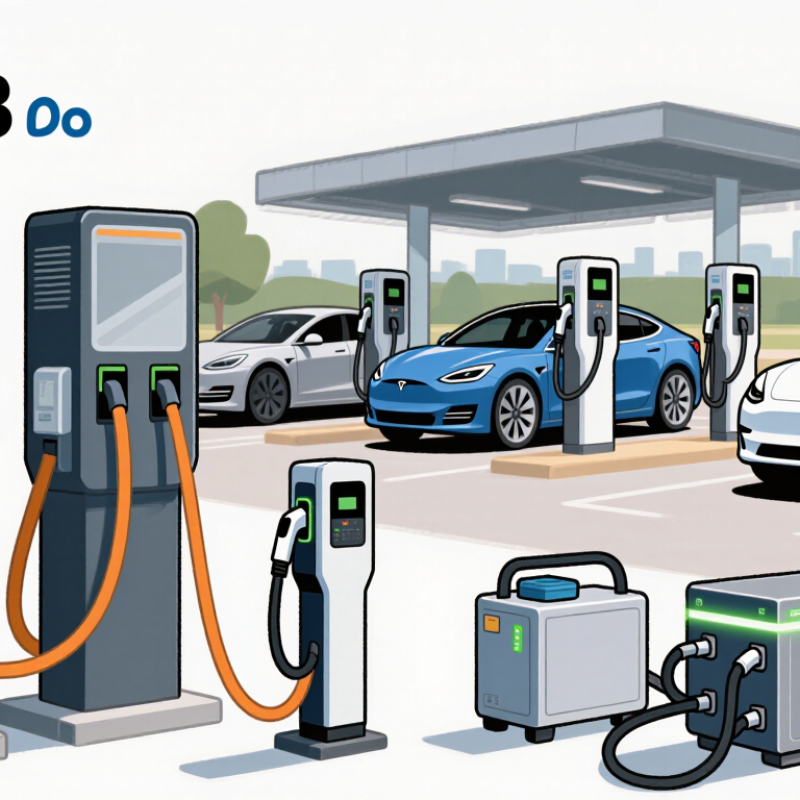
Common charger types include standalone units, modular systems with separate power cabinets and dispensers, and high-power charging hubs. Battery-buffered chargers are another option. They store electricity and release it during charging sessions, which can help sites with limited grid capacity. Yet no type is best for every location. A highway stop may prioritize rapid turnover, while an urban site may face tighter space and power limits.
This guide compares charger types by design, typical use, and practical trade-offs. It also considers connectors, output ratings, installation needs, and vehicle compatibility. A high advertised rating does not guarantee that every car will charge at that speed. Battery temperature, state of charge, and the vehicle’s charging curve can affect real-world performance. Small details matter.
The comparison has limits: charging networks and vehicle specifications vary by market, and product claims should be checked against current manufacturer documentation. Think of the “top” choice as a fit, not a universal winner. A quick stop can still take longer than expected.
Understanding Level 3 EV Charging and How It Works
Level 3 is a familiar term for high-power DC fast charging, though “DC fast charging” is more precise. Unlike home AC chargers, a fast-charging station converts grid electricity into direct current and sends it to the vehicle’s battery. This bypasses the car’s onboard AC-to-DC converter.
The connection is two-way. The vehicle’s battery-management system shares information such as temperature and charge level, helping the station adjust its power. Charging often slows as the battery fills, especially near 80%. The U.S. Department of Energy’s Alternative Fuels Data Center says a compatible EV may reach about 80% charge in 20 minutes to an hour, depending on the vehicle and equipment. That range is useful, but it can make charging times sound more predictable than they are.
Power ratings matter, but they do not tell the whole story. Battery temperature, vehicle limits, and how many vehicles share a charger can change the actual speed. The International Energy Agency’s Global EV Outlook 2024 reports that public fast-charger stock grew by 55% in 2023. More stations are arriving. Yet drivers may still need to check connector compatibility and charging curves before a trip. A large number on a charger is not a promise.
Comparing the Main Level 3 Charger Connector Standards
Level 3 usually means DC fast charging, where the charger supplies direct current to the vehicle. In 2026, connector compatibility still depends on the vehicle, region, and station. CCS1 is common across North America, while CCS2 is widely used in Europe and many other markets. Both combine a familiar AC connector with extra DC pins. That distinction matters.
CHAdeMO remains in use at some stations and supports bidirectional charging on compatible vehicles and equipment. NACS, standardized as SAE J3400, is also expanding across public charging networks. Availability varies, though. An adapter may help, but only if the vehicle and charger support that specific combination. The labels are not elegant, and even careful drivers can find them confusing.
Tips: Check the inlet shown in your vehicle manual before planning a long trip. Then confirm the station’s connector and any adapter requirements in its live listing. A plug that fits physically is not always a supported charging connection.
Exploring Power Levels and Charging Speeds in 2026
In 2026, Level 3 usually means DC fast charging, but the label covers a wide power range. The U.S. Department of Energy’s Alternative Fuels Data Center describes DC fast chargers commonly rated from 50 to 350 kW. A 50 kW unit can suit a roadside stop with more time; higher-power equipment can shorten a stop when the vehicle can accept that rate. More power is not automatically more speed.
Think of three practical bands: around 50 kW, 100–200 kW, and 250–350 kW. The DOE says many DC fast-charge sessions take about 20 minutes to one hour to reach 80 percent, depending on the vehicle and conditions. That range matters. Charging power often falls as the battery fills, and a cold battery or a busy site may slow the session. The charger’s label is only part of the story.
For a driver, the useful figure is the vehicle’s charging curve, not the charger’s peak rating alone. A car limited to 100 kW gains little from plugging into a 350 kW unit. IEA’s Global EV Outlook 2024 also tracks fast-charging growth, while highlighting that deployment and access vary by region. Real-world timing remains messy; route estimates can be optimistic. A coffee break may be enough—or not.
What Are the Top Level 3 EV Charger Types in 2026?
Power levels and charging speeds vary by charger and vehicle. The chart compares three illustrative DC fast-charging power tiers; these tiers are not a universal industry classification.
How to read it: Bars show representative charger output ratings within each tier, not guaranteed vehicle charging speeds. Actual charging power and charging time depend on the vehicle’s maximum DC intake, battery temperature and state of charge, and the charger’s available power.
Identifying Common Level 3 Charger Configurations
Level 3 chargers deliver direct current to a vehicle’s battery, so charging speed depends on more than the unit’s advertised power. Common configurations include a single cabinet with an attached cable and a central power cabinet connected to several separate dispensers. The first is compact and straightforward to install. The second can serve multiple parking bays while sharing power between vehicles.
Shared-power systems can adjust output as cars arrive or finish charging. For example, one vehicle may draw more power while another is nearing its target. Actual charging rates still depend on the vehicle, battery temperature, and state of charge. A busy site may not deliver every stall’s maximum rating at once. That detail is easy to miss.
Some installations use modular power cabinets, which can make capacity easier to expand as demand grows. Higher-output dispensers may also use cooled cables to manage heat, though they require additional equipment and maintenance. Connector types vary by region and vehicle, so compatibility deserves careful checking before installation. A tidy row of dispensers may look efficient, but the power cabinet, cable reach, and service access matter just as much. Operators should compare expected traffic patterns with available grid capacity; otherwise, an expensive charger may sit underused—or deliver less power than drivers expect.
What Are the Top Level 3 EV Charger Types in 2026? — Identifying Common Level 3 Charger Configurations
| Configuration | Typical Power Range | How It Is Set Up | Common Locations | Key Advantages | Planning Considerations | Common Connector Options |
|---|---|---|---|---|---|---|
| Integrated single-unit charger | Often about 25–150 kW; exact output varies by unit. | Power electronics, controls, and the charging cable are housed in one freestanding enclosure. | Retail sites, workplaces, parking facilities, and smaller public charging locations. | Compact installation and a straightforward layout; suitable where one or a few charging positions are needed. | Expansion may require additional complete units. Available power depends on the site’s electrical service. | CCS1, CCS2, or SAE J3400 (NACS), depending on market and equipment. |
| Split cabinet-and-dispenser system | Commonly configured from roughly 100 kW to several hundred kW per power cabinet. | A separate power cabinet supplies one or more smaller charging dispensers connected by cables. | High-traffic public sites, highway stops, and larger charging hubs. | Power equipment can be positioned away from the parking spaces, helping keep the charging area less crowded. | Requires space for the cabinet, suitable cable routing, and coordination between the cabinet’s capacity and connected dispensers. | CCS1, CCS2, or SAE J3400 (NACS), depending on market and system configuration. |
| Modular power-cabinet system | Capacity is built from power modules; total site output commonly ranges from about 100 kW to 600 kW or more. | Multiple power modules are combined in one cabinet or system and can be added or serviced as the installation changes. | Fleet depots, growing charging hubs, and sites with planned capacity expansion. | Modular design can support staged deployment and may simplify maintenance or future capacity increases. | Module count does not determine vehicle charging speed by itself; the vehicle, connection, and available site power also matter. | Connector choice depends on the system, local standards, and vehicles being served. |
| Dynamic power-sharing multi-port system | Shared cabinet capacity may range from around 100 kW to several hundred kW across multiple ports. | A central power system allocates available output among connected vehicles, sometimes adjusting allocation as charging demand changes. | Busy public hubs, fleet facilities, and sites with several charging stalls. | Can make better use of shared electrical capacity and serve multiple vehicles from a common system. | The power available to each vehicle can change with the number of active sessions and the system’s allocation rules. | May support CCS1, CCS2, or SAE J3400 (NACS); port combinations vary by installation. |
| High-power liquid-cooled cable system | Often associated with charging equipment rated around 150–350 kW or higher, subject to system and vehicle limits. | Liquid-cooled cables manage heat at high current, allowing a cable to remain more manageable than an equivalent uncooled cable at similar operating conditions. | High-power highway charging and sites designed for short charging stops. | Supports high-power delivery while helping control cable temperature and handling demands. | Liquid cooling does not guarantee a particular charging speed; vehicle capability, battery temperature, state of charge, and site capacity remain limiting factors. | Connector and cable configuration depend on the region and equipment; commonly used DC fast-charge standards include CCS and SAE J3400. |
| Legacy or mixed-standard DC fast charger | Often around 25–100 kW, though ratings vary widely by unit and installation. | May provide one or more DC connector types to serve vehicles built for different charging standards. | Existing public charging networks, older sites, and locations serving a varied vehicle fleet. | Can maintain access for vehicles using earlier connector standards where those vehicles remain in use. | Connector support and serviceability should be checked before installation; some older standards are less common in newer vehicles in certain markets. | May include CCS1 or CCS2 and, at some sites, CHAdeMO; availability is region-dependent. |
Note: “Level 3” is commonly used in North America to describe DC fast charging; terminology and connector availability vary by market. Power ranges are indicative rather than fixed categories. Actual charging speed depends on the charger, vehicle, battery temperature, state of charge, and available site power.
Matching Charger Types to Vehicles and Charging Locations
Level 3 refers to high-power DC charging, but vehicle compatibility matters more than the label. Check the vehicle’s inlet, charging standard, and maximum DC charging rate. A 150-kW charger cannot make a car accept 150 kW; battery temperature and charge level can also lower the rate. Small but important.
For highway trips, 150–350 kW chargers can suit brief stops when a vehicle supports those rates. The U.S. Department of Energy’s Alternative Fuels Data Center says DC fast chargers commonly range from 50 to 350 kW. Many vehicles can reach 80% charge in roughly 20–30 minutes. Treat that as a guide, not a promise. Real life varies.
At depots, fleet yards, and urban hubs, match charger output to parking time and available electrical capacity. Lower-output DC units may work for vehicles parked longer; high-power stalls suit faster turnover. The International Energy Agency’s Global EV Outlook 2024 reports that public fast-charger stock grew 55% in 2023. Yet local grid capacity can limit actual output. The fastest unit is not always the most useful. For overnight home parking, Level 2 is generally a more practical fit than Level 3.
