
Quality Products
At a Fair Price
Wholesale Provider
Of Valves & Fittings
- HOME
- Products
- Ball Valves
- Bull Plugs & Swages
- Butterfly Valves
- Check Valves
- Cushion / Flow Tees & Bleed Rings
- Enhanced Oil Recovery
- Floating Ball Valves
- Foot Valves
- Forged Steel Fittings
- Forged Steel Outlets
- Gaskets-Insulation Kits
- Gate Valves
- Gate, Globe & Check Valves
- Malleable Fittings
- Needle Valves
- Nipples
- Piston Valves
- Plug Valves
- Stainless Steel Flanges, Fittings & Nipples
- Strainers
- Studs
- Trunnion
- Unions
- Weld Fittings & Flanges
- Manufacturers
- Advance
- American Block
- Anvil
- Balon
- Bonney Forge
- Champion
- Clayton Mark
- Crane
- Daniel
- DMIC
- GMI
- Galli & Cassina
- Hackney-Ladish
- JMC
- Lone Star
- MATCO
- Marpac-McCanna
- National Flange
- National Gasket
- Nordstrom
- Nutron
- PPI
- SHARPE
- SMI
- TEXSTEAM
- TEX-THREAD
- Titan
- USA Fastner
- Vogt
- Weld Bend
- Westbrook
- Wheatley
- Williams
- WKM
- Wolar
- Locations
- Contact
- Blog
- Careers
- Get a Quote
- HOME
- Products
- Ball Valves
- Bull Plugs & Swages
- Butterfly Valves
- Check Valves
- Cushion / Flow Tees & Bleed Rings
- Enhanced Oil Recovery
- Floating Ball Valves
- Foot Valves
- Forged Steel Fittings
- Forged Steel Outlets
- Gaskets-Insulation Kits
- Gate Valves
- Gate, Globe & Check Valves
- Malleable Fittings
- Needle Valves
- Nipples
- Piston Valves
- Plug Valves
- Stainless Steel Flanges, Fittings & Nipples
- Strainers
- Studs
- Trunnion
- Unions
- Weld Fittings & Flanges
- Manufacturers
- Advance
- American Block
- Anvil
- Balon
- Bonney Forge
- Champion
- Clayton Mark
- Crane
- Daniel
- DMIC
- GMI
- Galli & Cassina
- Hackney-Ladish
- JMC
- Lone Star
- MATCO
- Marpac-McCanna
- National Flange
- National Gasket
- Nordstrom
- Nutron
- PPI
- SHARPE
- SMI
- TEXSTEAM
- TEX-THREAD
- Titan
- USA Fastner
- Vogt
- Weld Bend
- Westbrook
- Wheatley
- Williams
- WKM
- Wolar
- Locations
- Contact
- About
- Careers
- Get a Quote
China Top 10 Pressure Gauge Manufacturers for Global Buyers
China has become a major sourcing base for industrial measuring instruments, including Pressure Gauges used in water treatment, HVAC, oil and gas, chemical processing, and manufacturing. Its supplier network ranges from established export factories to specialized producers serving demanding process industries. However, factory scale alone does not prove product reliability. Buyers need evidence.
Recent market studies from MarketsandMarkets, Grand View Research, and IMARC Group describe steady global demand for pressure measurement equipment. Their findings connect growth with industrial automation, infrastructure investment, energy projects, and stricter process monitoring. Report boundaries differ, though. Some include digital transmitters, while others focus mainly on mechanical instruments. This makes direct market comparisons imperfect.
Quality begins with measurement control.
For global buyers, the best Chinese manufacturers usually demonstrate calibrated test equipment, traceable inspection records, stable diaphragm or Bourdon-tube production, and export experience. Relevant benchmarks may include EN 837, ASME B40.100, ISO 9001, and application-specific material requirements. Certifications still require verification. A certificate on a website is not the same as a current audit trail.
This guide examines ten China-based Pressure Gauges manufacturers from a buyer’s practical perspective. It considers product range, accuracy classes, case and wetted-part materials, customization capability, minimum order quantities, lead times, after-sales support, and documented quality systems. Rankings can never fit every project. A low-cost gauge may suit compressed air, but fail in corrosive chemical service. Buyers should therefore compare technical evidence, not promotional language. Small details matter, such as a readable dial at three meters or a seal that survives repeated temperature changes.
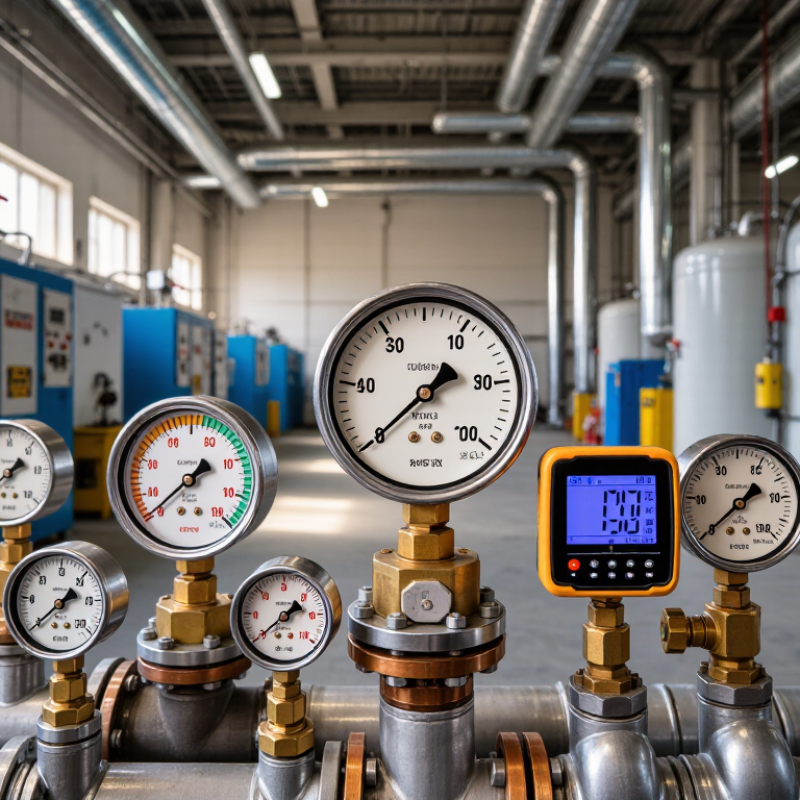
What Pressure Gauges Are and Why Global Buyers Need Reliable Suppliers
China Top 10 Pressure Gauge Manufacturers for Global Buyers
Pressure gauges measure fluid or gas pressure through a mechanical sensing element, usually a Bourdon tube, diaphragm, or capsule. The dial converts movement into readable pressure units, such as bar, psi, or MPa. A gauge may look simple, but accuracy depends on materials, calibration, temperature, vibration, and installation. Grand View Research valued the global pressure gauge market at about USD 1.3 billion in 2023. Its forecast also indicates steady growth through 2030. This demand reflects pressure monitoring in water treatment, energy, manufacturing, and process equipment.
Reliable suppliers matter because a small reading error can stop a pump or hide dangerous overpressure. Buyers should request calibration certificates, test records, material specifications, and traceable serial numbers. ISO/IEC 17025 provides a recognized framework for competent calibration laboratories. ASME B40.100 also defines important requirements for pressure gauges, including accuracy, safety, and performance testing. In practical purchasing, supplier consistency matters as much as the initial price. A low-cost gauge can become expensive after leakage, drift, or repeated replacement. I have seen specifications accepted too quickly. That mistake deserves more attention.
Tips: Check the pressure range before ordering. Keep normal operation near the middle of the scale. Confirm thread type, connection position, wetted materials, and temperature limits. Ask how often calibration is verified. Do not rely on a certificate without traceability details. A supplier should explain these points clearly, not hide them in dense paperwork.
How China’s Pressure Gauge Manufacturing Industry Has Evolved
China’s pressure gauge industry has evolved from basic assembly toward specialized, process-driven manufacturing. Earlier factories often relied on manual testing and limited material choices. Today, many facilities use CNC machining, automated leak testing, and digital calibration systems. This shift has improved repeatability for global buyers.
In practical supplier evaluations, several details reveal manufacturing maturity. Stainless steel cases resist moisture in coastal installations. Copper-alloy wetted parts suit less aggressive media. For chemical service, material compatibility still requires careful review. Modern producers also record calibration data, inspect dial printing, and control pointer movement before shipment. Some maintain ISO 9001 systems and traceable test equipment. Certification alone is not enough.
The industry is improving, but unevenly. Smaller workshops may offer attractive prices while providing incomplete test records. This creates risk for distributors and equipment integrators. Buyers should request sample inspection reports, pressure-cycle results, and clear accuracy specifications. A reliable factory explains its measurement process without vague promises. It should also identify limitations, such as temperature effects or vibration sensitivity. That honesty matters. Custom connections, dual-unit scales, and corrosion-resistant finishes now support wider applications. Yet customization can increase inspection time and introduce errors if drawings are unclear. Technical communication remains a weak point in some export projects. Careful engineering review prevents small gauge differences from becoming costly installation problems.
China Top 10 Pressure Gauge Manufacturers for Global Buyers - How China’s Pressure Gauge Manufacturing Industry Has Evolved
| No. | Evaluation Dimension | Earlier Industry Pattern | Current Export-Oriented Capability | Relevant Technical Reference |
|---|---|---|---|---|
| 1 | Measurement Technology | Production was mainly centered on mechanical Bourdon-tube pressure gauges for general industrial service. | Manufacturers commonly offer Bourdon-tube, diaphragm, capsule, differential-pressure, digital, and switch-equipped configurations for different media and pressure ranges. | GB/T 1226; ISO 5171; application-specific product specifications |
| 2 | Accuracy and Calibration | Basic industrial gauges were often selected primarily by nominal range and dial size, with limited documentation for international buyers. | Export suppliers increasingly provide defined accuracy classes, calibration certificates, test records, and traceability options for industrial procurement. | GB/T 1226; ISO/IEC 17025 for competent calibration laboratories |
| 3 | Pressure and Vacuum Ranges | Product ranges were concentrated on common positive-pressure applications, with fewer standardized options for compound, vacuum, and differential measurement. | Available configurations now cover gauge pressure, absolute pressure, vacuum, compound pressure, and differential pressure, subject to the design and application. | GB/T 1226; ISO 5171; manufacturer pressure-range and overpressure specifications |
| 4 | Materials and Media Compatibility | Copper-alloy wetted parts and painted steel cases were widely used for air, water, and other relatively non-aggressive media. | Product selections commonly include stainless-steel cases, 304 or 316 stainless-steel wetted parts, diaphragm seals, and special materials for corrosive or viscous media. | Material certificates and media-compatibility documentation should be requested for each application. |
| 5 | Process Connections | Domestic connection formats were more common, which could create fitting and installation issues for overseas projects. | Export catalogs commonly specify metric and inch threads, radial or back entry, lower or center-back connection, and threaded or flanged options. | ISO 7-1; ISO 228-1; ASME B1.20.1, where applicable |
| 6 | Environmental Protection | Standard gauges were primarily designed for indoor or relatively controlled industrial environments. | Options such as sealed cases, glycerin or silicone filling, weather-resistant enclosures, and specified ingress-protection levels are widely available for outdoor and vibrating environments. | IEC 60529 for IP ratings; product-specific temperature, vibration, and shock data |
| 7 | Hazardous-Area Applications | Pressure gauges for general service were more common than products supported by formal hazardous-area documentation. | Selected product lines can be configured for hazardous locations, but certification, marking, temperature class, and installation requirements must be verified for each model. | IEC 60079 series; ATEX requirements when applicable to the destination market |
| 8 | Digitalization and Remote Monitoring | Mechanical indication was the dominant format, with little integration into plant monitoring systems. | Digital displays, pressure transmitters, alarm contacts, data output, and selected industrial communication interfaces are now available for process-monitoring projects. | Signal and communication options vary by product; HART and Modbus should be confirmed in the technical datasheet. |
| 9 | Customization and OEM Support | Customization was often limited to dial printing, case size, or connection selection. | Many export-oriented factories support customized scales, units, dial layouts, mounting styles, seals, pressure ranges, packaging, and private-label production without identifying individual companies. | Buyer should define drawings, minimum order quantity, inspection criteria, and change-control requirements. |
| 10 | Compliance and Export Documentation | Documentation packages often focused on basic product specifications and commercial shipping records. | International buyers can request technical drawings, inspection reports, certificates, declarations, material information, packaging records, and destination-market compliance documents. | ISO 9001 quality systems; RoHS, REACH, PED, and other requirements depend on product type and destination market. |
Note: This comparison presents industry capability dimensions rather than company rankings or brand-specific performance. Applicable standards, certifications, accuracy levels, pressure ranges, and materials must be verified against the technical documentation for the selected product.
Key Criteria for Evaluating China’s Top Pressure Gauge Manufacturers
Choosing among China’s top pressure gauge manufacturers requires more than comparing prices and catalog photos. Experienced buyers inspect how each factory controls accuracy, materials, and production consistency. Ask for calibration records linked to traceable standards. Review sample readings across low, middle, and full-scale pressure.
Technical fit matters. Confirm the pressure range, dial size, connection thread, wetted materials, and operating temperature.
Stainless steel cases may suit corrosive environments, while brass components can reduce cost in cleaner systems. Check whether the manufacturer performs leak tests, overpressure tests, and pointer return tests. Request clear test methods, not only attractive certificates.
Factory experience is visible in small details. Can engineers explain accuracy limits without vague promises? Are drawings, inspection reports, and packing records easy to obtain? Export reliability also includes moisture protection, shock-resistant packaging, spare parts, and responsive technical support. A factory audit or live video inspection can reveal calibration benches, storage conditions, and operator discipline.
Do not treat a low quotation as proof of value. It may exclude testing, customized fittings, or replacement support. Even capable manufacturers can show gaps in documentation or communication. Record these weaknesses before approval. A practical supplier should accept corrective actions and provide evidence after changes. That response often says more than a polished website.
China’s Top 10 Pressure Gauge Manufacturers and Their Core Strengths
China Top 10 Pressure Gauge Manufacturers for Global Buyers
China’s top ten pressure gauge manufacturers compete through accuracy, customization, and export discipline. Grand View Research valued the global pressure gauge market at about USD 1.1 billion in 2023. Its forecast also indicates steady growth through 2030. China remains important because its factories combine machining capacity with flexible order volumes. Yet low pricing alone is not enough.
The leading ten manufacturers show different core strengths. Several specialize in stainless steel cases for chemical plants and outdoor pipelines. Others focus on diaphragm gauges for corrosive media. Some provide capsule gauges for low-pressure air systems.
Digital-focused producers offer data logging, alarm outputs, and wireless monitoring. A few maintain strong capabilities in sanitary gauges for food and pharmaceutical equipment. Custom dial printing and OEM engineering are common advantages.
One group stands out for calibration laboratories and traceable test records. Another performs well with hydraulic gauges, shock-resistant housings, and glycerin filling. Export-oriented factories usually support multiple threads, units, and certificates. Their practical strength is adaptation.
Fortune Business Insights reported continued demand for industrial pressure instruments as process automation expands. Buyers should inspect calibration intervals, overpressure limits, wetted materials, and temperature ranges. A polished catalog can hide weak documentation.
That matters. Factory audits, sample testing, and batch records provide stronger evidence than marketing claims. No ranking is absolute, because application conditions change the result. Some manufacturers still need improvement in after-sales response and digital integration. Global buyers should evaluate performance at the installation site, not only on paper.
How Global Buyers Can Select the Right Chinese Pressure Gauge Supplier
Selecting a Chinese pressure gauge supplier requires more than comparing unit prices. Global buyers should verify product experience, technical control, and communication quality before placing a large order. A supplier should explain pressure ranges, accuracy classes, connection threads, case materials, and operating temperatures clearly.
Ask for recent calibration records and sample test reports. Confirm whether each gauge receives zero-point, leak, and overpressure testing. For chemical or outdoor service, inspect details such as stainless-steel wetted parts, glycerin filling, sealing quality, and ingress protection. Small details matter. A loose thread can delay installation.
Supplier audits can reveal more than a polished catalog. Review factory production lines, inspection equipment, batch traceability, and corrective-action records. Request a sample from normal production, not a specially prepared unit. I have seen specifications look perfect while the pointer response remained inconsistent. That deserves a second test.
Reliable suppliers also understand export packaging, labeling, and documentation requirements. Confirm thread standards, certificates, spare-part support, and delivery schedules in writing. A responsive engineer is valuable when pressure conditions change during installation. Price still matters, but the cheapest gauge may create higher replacement costs. Buyers should compare total service risk, not only the quotation. Supplier selection is rarely perfect; careful records and staged orders reduce avoidable mistakes.
China Top 10 Pressure Gauge Manufacturers for Global Buyers
How Global Buyers Can Select the Right Chinese Pressure Gauge Supplier
Accuracy class indicates the maximum permissible error as a percentage of the gauge span. Lower values provide higher measurement precision. Global buyers should compare the supplier’s declared accuracy class with the requirements of the application, relevant standards, calibration documentation, materials, pressure range, and testing capability. The accuracy classes shown are commonly defined in pressure-gauge standards such as EN 837.
