
Quality Products
At a Fair Price
Wholesale Provider
Of Valves & Fittings
- HOME
- Products
- Ball Valves
- Bull Plugs & Swages
- Butterfly Valves
- Check Valves
- Cushion / Flow Tees & Bleed Rings
- Enhanced Oil Recovery
- Floating Ball Valves
- Foot Valves
- Forged Steel Fittings
- Forged Steel Outlets
- Gaskets-Insulation Kits
- Gate Valves
- Gate, Globe & Check Valves
- Malleable Fittings
- Needle Valves
- Nipples
- Piston Valves
- Plug Valves
- Stainless Steel Flanges, Fittings & Nipples
- Strainers
- Studs
- Trunnion
- Unions
- Weld Fittings & Flanges
- Manufacturers
- Advance
- American Block
- Anvil
- Balon
- Bonney Forge
- Champion
- Clayton Mark
- Crane
- Daniel
- DMIC
- GMI
- Galli & Cassina
- Hackney-Ladish
- JMC
- Lone Star
- MATCO
- Marpac-McCanna
- National Flange
- National Gasket
- Nordstrom
- Nutron
- PPI
- SHARPE
- SMI
- TEXSTEAM
- TEX-THREAD
- Titan
- USA Fastner
- Vogt
- Weld Bend
- Westbrook
- Wheatley
- Williams
- WKM
- Wolar
- Locations
- Contact
- Blog
- Careers
- Get a Quote
- HOME
- Products
- Ball Valves
- Bull Plugs & Swages
- Butterfly Valves
- Check Valves
- Cushion / Flow Tees & Bleed Rings
- Enhanced Oil Recovery
- Floating Ball Valves
- Foot Valves
- Forged Steel Fittings
- Forged Steel Outlets
- Gaskets-Insulation Kits
- Gate Valves
- Gate, Globe & Check Valves
- Malleable Fittings
- Needle Valves
- Nipples
- Piston Valves
- Plug Valves
- Stainless Steel Flanges, Fittings & Nipples
- Strainers
- Studs
- Trunnion
- Unions
- Weld Fittings & Flanges
- Manufacturers
- Advance
- American Block
- Anvil
- Balon
- Bonney Forge
- Champion
- Clayton Mark
- Crane
- Daniel
- DMIC
- GMI
- Galli & Cassina
- Hackney-Ladish
- JMC
- Lone Star
- MATCO
- Marpac-McCanna
- National Flange
- National Gasket
- Nordstrom
- Nutron
- PPI
- SHARPE
- SMI
- TEXSTEAM
- TEX-THREAD
- Titan
- USA Fastner
- Vogt
- Weld Bend
- Westbrook
- Wheatley
- Williams
- WKM
- Wolar
- Locations
- Contact
- About
- Careers
- Get a Quote
China Top Wheel Cover Injection Molding Manufacturers?
Choosing among China’s top wheel cover manufacturers requires more than comparing factory photos or quoted prices. Wheel covers must fit consistently, resist impact, and retain a clean surface after production. Small details matter: gate marks, uneven gloss, warped edges, and clips that feel too tight can all affect the finished part. Wheel Cover Injection Molding depends on sound tooling, controlled cooling, suitable resin, and repeatable inspection. A polished sample is useful, but it cannot prove long-term process stability.
Injection-molding consultant John Bozzelli is known for emphasizing process control. In paraphrase, not as a verified verbatim quotation: “Stable molding starts with control of material, temperature, pressure, and cooling.” That practical idea offers a useful lens for assessing suppliers. Ask how they manage mold trials, dimensional checks, surface defects, and production changes. Request sample parts, inspection records, and clear explanations of tooling ownership and maintenance. Then compare responses, not just brochures. A confident sales pitch is not evidence by itself.
This guide examines manufacturers through capabilities that buyers can evaluate: tooling experience, material options, quality systems, communication, and production support. It also recognizes a limitation: public information rarely reveals every shop-floor issue. Even a capable supplier may need several mold adjustments before a wheel cover meets expectations. Careful verification matters. The aim is not to name a universal winner, but to help readers identify a dependable partner for their design, volume, and quality requirements.
What Wheel Cover Injection Molding Involves
China Top Wheel Cover Injection Molding Manufacturers?
What Wheel Cover Injection Molding Involves
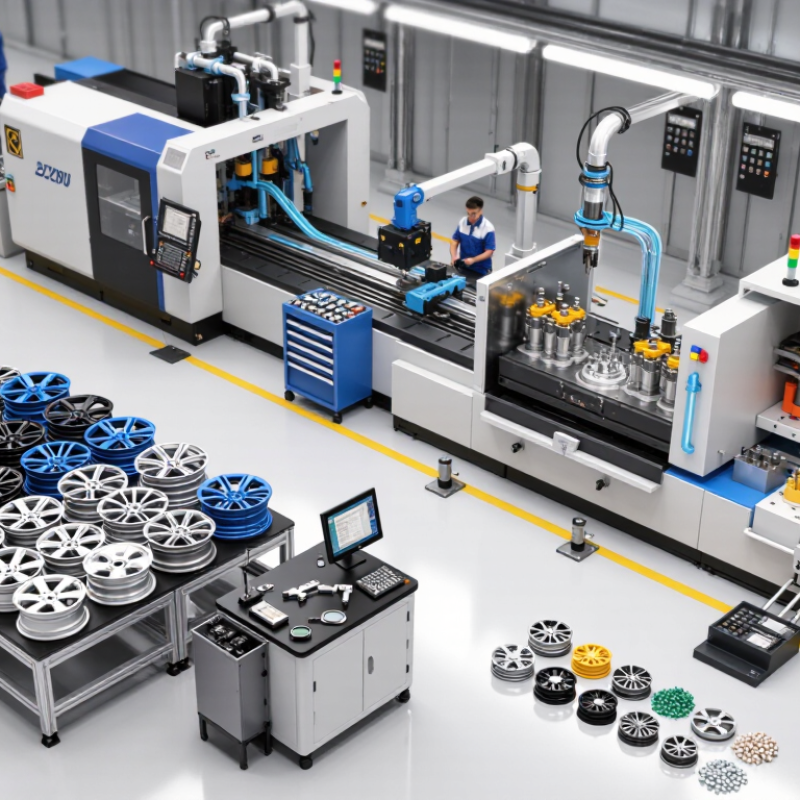
Wheel cover injection molding turns plastic pellets into a shaped, finished component. Polypropylene is often selected for its low weight and impact resistance; the exact grade depends on appearance and service conditions. Pellets are heated, pushed into a metal mold, then cooled before the part is ejected. Cooling takes patience. Uneven temperatures can cause warping, sink marks, or mismatched fit. OICA reported about 93.5 million motor vehicles produced worldwide in 2023, illustrating the scale of automotive manufacturing—not wheel-cover demand specifically (OICA, 2023 Production Statistics).
A reliable process starts well before the press runs. Engineers check the cover’s diameter, clip locations, wall thickness, and surface texture, then design mold gates and cooling channels around them. After trial shots, technicians inspect fit, color, gloss, and distortion. Small changes matter: a clip that looks fine on a screen may crack during installation. Cycle time also needs balance; pushing it too low can leave defects that cost more to fix later. Recycled content may reduce material use, but can introduce color variation, so suppliers should validate each formulation.
Tips: Ask for sample parts molded with the intended resin and color. Check clip strength and fit on the actual wheel, not just a drawing. Keep records of mold temperature and cycle settings; they make troubleshooting easier.
China Top Wheel Cover Injection Molding Manufacturers? - What Wheel Cover Injection Molding Involves
| Manufacturing area | What it involves | Relevant materials or requirements | Useful checks when evaluating a manufacturer |
|---|---|---|---|
| Product design and fitment | The cover geometry is designed to match the wheel’s nominal diameter and retention features. The part is a decorative cover, not a substitute for the structural wheel. | Fitment depends on the specific wheel design, clearances, and attachment method; nominal wheel diameter alone does not confirm compatibility. | Ask for fitment drawings, dimensional tolerances, and a sample fitted to the intended wheel. |
| Material selection | A thermoplastic is selected to balance impact performance, appearance, stiffness, weight, and cost. | Polypropylene (PP), including impact-modified or mineral-filled grades, is commonly used for molded automotive trim. The correct grade depends on the design and service conditions. | Confirm the grade, supplier data sheet, color specification, and any required recycled-content or regulatory documentation. |
| Mold and tooling | A mold forms the cover’s face, ribs, clips, and other retention features. Tool design also addresses material flow, cooling, ejection, and cosmetic surfaces. | Tool layout and steel selection depend on part size, geometry, production volume, and surface-finish requirements. | Review mold-flow or design-for-manufacture feedback, tool ownership terms, maintenance plans, and the approved surface-finish sample. |
| Injection molding | Plastic pellets are melted, injected into the closed mold, cooled, and ejected. Cycle settings are adjusted to the resin, part geometry, and machine. | Processing temperatures and pressures are grade- and equipment-specific; the resin supplier’s processing guidance is the appropriate starting point. | Check process-control records and samples for short shots, flash, sink marks, warpage, and inconsistent color or texture. |
| Surface finishing and decoration | The molded surface may be used as-is or receive a specified decorative treatment, depending on the product design. | Color, gloss, texture, coating, and any decorative inserts should be defined in the product specification. | Approve a reference sample and define inspection conditions for color, gloss, coating adhesion, and visible defects. |
| Retention and fit testing | The attachment features are checked to ensure the cover seats correctly and remains attached under the agreed use conditions. | Retention design and acceptance limits are application-specific and should be agreed with the vehicle or product requirements. | Request documented installation, removal, retention, and wheel-clearance test results for the intended wheel configuration. |
| Quality management and traceability | Production controls help maintain consistent dimensions, appearance, material identity, and batch records. | Inspection plans should reflect the customer specification, product risk, and applicable automotive requirements. | Review incoming-material checks, in-process inspection, final inspection records, nonconformance handling, and lot traceability. |
Note: Material choices, processing settings, tests, and acceptance limits vary by part design and customer specification. Confirm them with the resin supplier and the responsible product engineer before production.
Key Materials, Molds, and Production Processes
Wheel covers need materials that balance impact resistance, appearance, and outdoor durability. Polypropylene is a common choice because it is lightweight and handles everyday knocks well. ABS may suit designs that need a firmer surface or sharper detail. Small details count. Colorants and UV stabilizers can help maintain appearance in sunlight, while excessive filler may make thin clips more brittle. Material choice should reflect the cover’s shape, fastening points, and expected use—not just its quoted price.
Mold design strongly affects fit and surface quality. Even wall thickness helps reduce sink marks and warping; carefully placed ribs add stiffness without making the part unnecessarily heavy. Gate locations, vents, and cooling channels also matter. Poor venting can leave burn marks, while uneven cooling may distort the rim. Production teams typically tune melt temperature, injection speed, and holding pressure through trial runs. They should inspect clip dimensions and test mounting on representative wheels. One honest limitation: a good sample does not guarantee every production batch will fit equally well. Regular checks can catch drift before it becomes a costly pattern.
How to Evaluate Chinese Wheel Cover Manufacturers
China Top Wheel Cover Injection Molding Manufacturers?
How to Evaluate Chinese Wheel Cover Manufacturers
Evaluate a manufacturer through evidence, not polished sales claims. Ask for drawings, resin specifications, tooling details, and recent inspection records. For a wheel cover, check fit, clip strength, surface finish, and color consistency. Request sample parts from the intended production process. Measure key dimensions yourself; a good-looking sample may still fit poorly. Ask how the factory controls mold temperature, cycle time, and material changes. Specific answers matter.
Tips: Send one clear drawing and a written list of critical dimensions. Ask the supplier to mark each measurement on its inspection report. Keep the same sample for comparison later.
Visit the production floor, or request a live video walkthrough. Look for organized resin storage, maintained molds, and a repeatable inspection station. Discuss expected volumes, lead times, packaging, and who pays for tooling changes. Compare quotations line by line; a low price can omit important checks. Communication is useful evidence, too. Are questions answered clearly, with dates and numbers? I would still verify claims independently. Factory visits and sample testing take time, but skipping them can cost more.
Leading Manufacturers and Their Capabilities
China Top Wheel Cover Injection Molding Manufacturers?
Leading Manufacturers and Their Capabilities
China’s capable wheel-cover manufacturers compete through tooling control, stable molding, and dependable quality—not just low quotations. OICA reported 93.5 million motor vehicles produced worldwide in 2023, indicating the scale of the automotive supply chain. PlasticsEurope’s Plastics – the Fast Facts 2024 estimated global plastics production at 413.8 million tonnes that year. These figures describe broad markets, not wheel-cover demand specifically.
A strong supplier can mold impact-modified polypropylene with consistent wall thickness and well-filled ribs. Ask how its engineers manage shrinkage, concentricity, gate marks, and visible surface defects. Mold-flow analysis, controlled cooling, and documented trial runs help reduce warping and uneven gloss. Small defects matter. Some manufacturers also offer painting or surface finishing, but buyers should confirm process control and traceability for each step.
Factory visits reveal more than a polished sample. Check presses suited to the part’s dimensions, mold-maintenance records, and inspection equipment for fit and runout. Request test results for impact resistance and weather exposure, alongside production data from repeated runs. A sample can conceal unstable production; that gap deserves attention. Capability claims are useful, but clear evidence from actual production is more convincing.
Quality Standards and Supplier Selection Criteria
For wheel-cover injection molding, supplier selection should begin with process evidence, not a polished sample. The ISO Survey 2022 recorded 1,265,216 valid ISO 9001 certificates worldwide. Certification signals a quality-management system, but it does not prove that a specific cover will fit or survive road use. Ask for control plans, resin traceability, mold-maintenance records, and inspection results tied to the actual part.
Check fit-critical dimensions, clip retention, impact resistance, color consistency, and warpage. Ask how the supplier controls melt temperature, packing pressure, and cooling time across every cavity. For a practical review, inspect parts after hot and cold conditioning, then check whether clips still engage without cracking. Small details matter. A clean visual surface can hide weak clips or uneven wall thickness.
AIAG’s CQI-23 molding-system assessment provides a structured way to review molding controls and process discipline. Request recent capability data for critical dimensions, with sample sizes and measurement methods stated clearly. Set acceptance limits with the engineering team; a single capability number is not enough. Ask to see rejected-part records, corrective actions, and tool-change history. Not enough. A neat audit file may still miss a weak snap-fit, so verify samples under realistic assembly conditions.
