
Quality Products
At a Fair Price
Wholesale Provider
Of Valves & Fittings
- HOME
- Products
- Ball Valves
- Bull Plugs & Swages
- Butterfly Valves
- Check Valves
- Cushion / Flow Tees & Bleed Rings
- Enhanced Oil Recovery
- Floating Ball Valves
- Foot Valves
- Forged Steel Fittings
- Forged Steel Outlets
- Gaskets-Insulation Kits
- Gate Valves
- Gate, Globe & Check Valves
- Malleable Fittings
- Needle Valves
- Nipples
- Piston Valves
- Plug Valves
- Stainless Steel Flanges, Fittings & Nipples
- Strainers
- Studs
- Trunnion
- Unions
- Weld Fittings & Flanges
- Manufacturers
- Advance
- American Block
- Anvil
- Balon
- Bonney Forge
- Champion
- Clayton Mark
- Crane
- Daniel
- DMIC
- GMI
- Galli & Cassina
- Hackney-Ladish
- JMC
- Lone Star
- MATCO
- Marpac-McCanna
- National Flange
- National Gasket
- Nordstrom
- Nutron
- PPI
- SHARPE
- SMI
- TEXSTEAM
- TEX-THREAD
- Titan
- USA Fastner
- Vogt
- Weld Bend
- Westbrook
- Wheatley
- Williams
- WKM
- Wolar
- Locations
- Contact
- Blog
- Careers
- Get a Quote
- HOME
- Products
- Ball Valves
- Bull Plugs & Swages
- Butterfly Valves
- Check Valves
- Cushion / Flow Tees & Bleed Rings
- Enhanced Oil Recovery
- Floating Ball Valves
- Foot Valves
- Forged Steel Fittings
- Forged Steel Outlets
- Gaskets-Insulation Kits
- Gate Valves
- Gate, Globe & Check Valves
- Malleable Fittings
- Needle Valves
- Nipples
- Piston Valves
- Plug Valves
- Stainless Steel Flanges, Fittings & Nipples
- Strainers
- Studs
- Trunnion
- Unions
- Weld Fittings & Flanges
- Manufacturers
- Advance
- American Block
- Anvil
- Balon
- Bonney Forge
- Champion
- Clayton Mark
- Crane
- Daniel
- DMIC
- GMI
- Galli & Cassina
- Hackney-Ladish
- JMC
- Lone Star
- MATCO
- Marpac-McCanna
- National Flange
- National Gasket
- Nordstrom
- Nutron
- PPI
- SHARPE
- SMI
- TEXSTEAM
- TEX-THREAD
- Titan
- USA Fastner
- Vogt
- Weld Bend
- Westbrook
- Wheatley
- Williams
- WKM
- Wolar
- Locations
- Contact
- About
- Careers
- Get a Quote
2026 Top Carbon Paste Kneaders for Efficient Manufacturing?
The quest for efficient manufacturing in the carbon industry has led to significant advancements in technology. Carbon Paste Kneaders have become crucial in this transition. Renowned expert Dr. Michael Green, a leading figure in the field, once stated, "The future of carbon paste production lies in our ability to innovate and refine our kneading processes."
These machines are designed to enhance the mixing and processing of carbon paste, which is essential for various applications, including batteries and electrodes. With rising demand and the need for sustainability, manufacturers are rethinking their methods. The right Carbon Paste Kneaders can drastically improve efficiency and reduce waste, yet many companies still rely on outdated equipment.
Beyond just functionality, assessing the right model demands expertise and careful consideration of specific production needs. As the industry evolves, it is vital to stay informed about emerging technologies and their impact on production quality and sustainability. Acknowledging the challenges of choosing the right kneader will empower manufacturers to innovate better and take sustainability seriously.
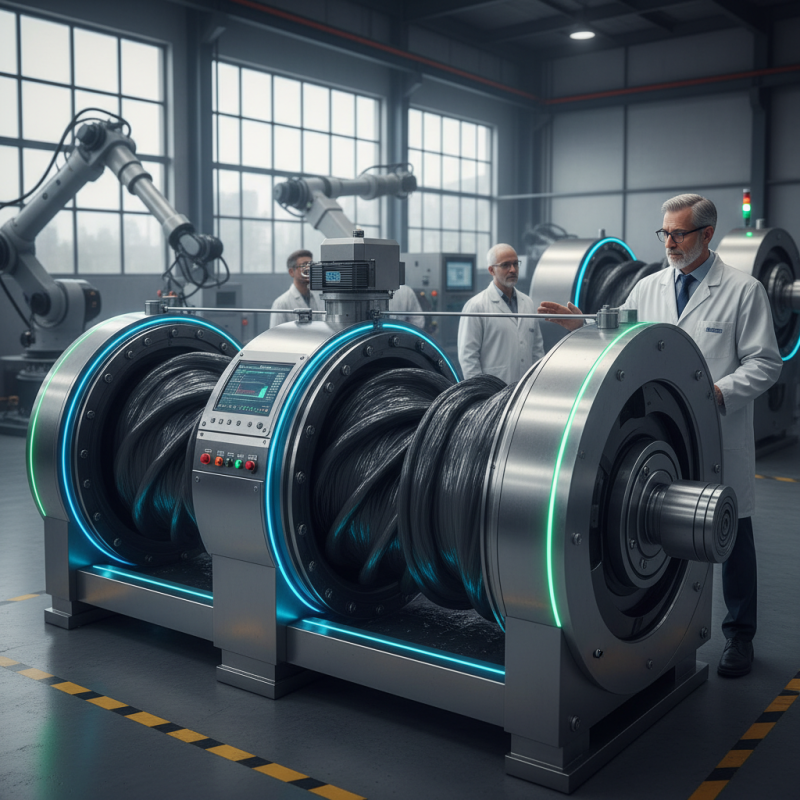
2026 Trends in Carbon Paste Kneader Technology and Innovation
The landscape of carbon paste kneader technology is evolving rapidly in 2026. Innovations focus on efficiency and sustainability. Manufacturers are now adopting advanced materials that reduce wear and tear. This shift enhances durability and performance. New designs prioritize energy saving, which lowers operational costs. These developments highlight an ongoing commitment to environmental responsibility. Small changes can lead to significant improvements over time.
However, challenges remain in optimizing these systems for diverse applications. Many manufacturers grapple with balancing quality and production speed. Integrating new technologies often requires additional training. This can slow down the transition to cutting-edge processes. Some companies struggle with the upfront costs associated with these upgrades. Nonetheless, the potential benefits could outweigh these initial hurdles.
Emerging trends reveal a shift towards automation in kneader technology. Smart systems can monitor viscosity and flow rates in real-time. This data-driven approach allows for quicker adjustments during the mixing process. Improved precision leads to higher consistency in products. Yet, there is a learning curve associated with these technologies. Some teams may resist adopting automated solutions. Navigating these transitions effectively is crucial for staying competitive in the market.
2026 Top Carbon Paste Kneaders for Efficient Manufacturing - Trends in Technology and Innovation
| Model | Mixing Capacity (kg/h) | Power Consumption (kW) | Advancements | Key Features |
|---|---|---|---|---|
| Model A | 500 | 15 | Smart Mixing Control | Energy Efficient, Automated |
| Model B | 800 | 22 | Enhanced Durability | Robust Design, Low Maintenance |
| Model C | 650 | 18 | Improved Mixing Efficiency | Compact Size, High Throughput |
| Model D | 400 | 10 | Automated Temperature Control | User-Friendly Interface |
| Model E | 900 | 30 | AI-Driven Optimization | Multi-Functionality, Adaptive Controls |
Key Features of Top Carbon Paste Kneaders for Manufacturing Efficiency
The effectiveness of carbon paste kneaders is crucial in manufacturing processes across various industries. Advanced carbon paste kneaders optimize material mixing while maintaining consistency. These machines reduce production time and energy consumption. According to recent reports, manufacturers can achieve up to 30% higher efficiency with modern kneaders.
Key features of top carbon paste kneaders include precise temperature control and variable speed options. Temperature control prevents overheating, which can degrade carbon paste quality. Variable speed mechanisms allow for adjustments based on different material viscosities. Industry data suggest that machines capable of adjusting speeds can handle a wider range of formulations.
Manufacturers should also consider the maintenance aspect of their kneaders. Regular upkeep assures operational reliability but can be overlooked. Reports indicate that neglecting maintenance can lead to up to a 15% drop in machine efficiency over time. Investing in equipment that provides maintenance alerts can help mitigate this issue, ensuring continuous improvement in production.
Analyzing Production Capacities: Top Models in Carbon Paste Kneading
The production capacities of carbon paste kneaders are critical to manufacturing efficiency. Recent studies show that high-performance models can produce up to 500 kg of carbon paste per hour. This efficiency is vital in industries such as battery manufacturing and construction materials. The design of the kneaders significantly impacts blend consistency and time efficiency.
Moreover, the energy consumption of these machines varies widely. Top-performing models can achieve energy savings of up to 30% compared to older designs. A 2023 report highlighted that many manufacturers are now prioritizing energy efficiency while maintaining high throughput. However, the initial investment in advanced machines can be substantial, deterring some companies.
Ease of maintenance is another concern. While some models boast advanced technology, they require specialized training for operators. This raises questions about workforce readiness and operational downtime. Many manufacturers may need to reconsider their training programs to adapt to new technologies. Balancing these factors is crucial for maximizing production capacities in carbon paste kneading.
Environmental Impact and Sustainability of Carbon Paste Manufacturing
The environmental impact of carbon paste manufacturing is significant. Traditional methods often generate waste and consume a lot of energy. A report from the International Energy Agency indicates that the carbon industry contributes about 8% of global CO2 emissions. This highlights the urgent need for greener alternatives.
Efficient carbon paste kneaders can help. They improve energy efficiency, reducing emissions during production. Recent advancements in technology have optimized these machines. Energy consumption can be cut by 30% with improved designs. However, not all manufacturers implement these changes. Some still rely on outdated machinery, delaying progress toward sustainability.
Tips: Consider using renewable energy sources. This can further lower the carbon footprint. Collaborating with specialists to implement cleaner technologies is crucial. Regularly review your production practices for areas of improvement. Small changes can lead to significant reductions in environmental impact.
Market Analysis: Leading Brands and Their Carbon Paste Kneader Models
In the realm of efficient manufacturing, carbon paste kneaders play a vital role in many industries. These machines are essential for blending materials to create high-quality carbon products. Market leaders offer various models, each designed to meet specific production requirements. Understanding the nuances of these models can greatly enhance operational efficiency.
When selecting a carbon paste kneader, consider factors such as capacity and mixing technology. Models with advanced mixing capabilities ensure uniformity in paste consistency. This consistency can impact product quality. Pay attention to the materials used in construction. Durable, high-quality materials can lead to longer machine life.
Tips: Regular maintenance is key to longevity. Schedule routine check-ups to prevent unexpected downtimes. Also, training operators thoroughly can optimize machine use. Consider feedback from operators. Their insights can reveal areas for improvement. Balancing technology and human expertise is crucial for achieving optimal results.
