Quality Products
At a Fair Price
Wholesale Provider
Of Valves & Fittings
- HOME
- Products
- Ball Valves
- Bull Plugs & Swages
- Butterfly Valves
- Check Valves
- Cushion / Flow Tees & Bleed Rings
- Enhanced Oil Recovery
- Floating Ball Valves
- Foot Valves
- Forged Steel Fittings
- Forged Steel Outlets
- Gaskets-Insulation Kits
- Gate Valves
- Gate, Globe & Check Valves
- Malleable Fittings
- Needle Valves
- Nipples
- Piston Valves
- Plug Valves
- Stainless Steel Flanges, Fittings & Nipples
- Strainers
- Studs
- Trunnion
- Unions
- Weld Fittings & Flanges
- Manufacturers
- Advance
- American Block
- Anvil
- Balon
- Bonney Forge
- Champion
- Clayton Mark
- Crane
- Daniel
- DMIC
- GMI
- Galli & Cassina
- Hackney-Ladish
- JMC
- Lone Star
- MATCO
- Marpac-McCanna
- National Flange
- National Gasket
- Nordstrom
- Nutron
- PPI
- SHARPE
- SMI
- TEXSTEAM
- TEX-THREAD
- Titan
- USA Fastner
- Vogt
- Weld Bend
- Westbrook
- Wheatley
- Williams
- WKM
- Wolar
- Locations
- Contact
- Blog
- Careers
- Get a Quote
- HOME
- Products
- Ball Valves
- Bull Plugs & Swages
- Butterfly Valves
- Check Valves
- Cushion / Flow Tees & Bleed Rings
- Enhanced Oil Recovery
- Floating Ball Valves
- Foot Valves
- Forged Steel Fittings
- Forged Steel Outlets
- Gaskets-Insulation Kits
- Gate Valves
- Gate, Globe & Check Valves
- Malleable Fittings
- Needle Valves
- Nipples
- Piston Valves
- Plug Valves
- Stainless Steel Flanges, Fittings & Nipples
- Strainers
- Studs
- Trunnion
- Unions
- Weld Fittings & Flanges
- Manufacturers
- Advance
- American Block
- Anvil
- Balon
- Bonney Forge
- Champion
- Clayton Mark
- Crane
- Daniel
- DMIC
- GMI
- Galli & Cassina
- Hackney-Ladish
- JMC
- Lone Star
- MATCO
- Marpac-McCanna
- National Flange
- National Gasket
- Nordstrom
- Nutron
- PPI
- SHARPE
- SMI
- TEXSTEAM
- TEX-THREAD
- Titan
- USA Fastner
- Vogt
- Weld Bend
- Westbrook
- Wheatley
- Williams
- WKM
- Wolar
- Locations
- Contact
- About
- Careers
- Get a Quote
How to Choose Stainless Steel Ball Valves?
Choosing stainless steel ball valves should begin with the process, not the product photograph. As Greg Johnson, a long-time valve-industry educator, states, “Valve selection starts with the process, not the valve.” That principle is easy to repeat. Applying it requires careful attention.
Picture the installation clearly. A valve may control clean water, compressed air, steam, chemicals, or food-grade liquid. Each medium creates different demands. Check the working pressure and temperature first. Then examine the fluid’s corrosiveness, viscosity, and cleanliness.
A polished valve is not automatically the correct valve.
Material selection matters. Grade 304 stainless steel often suits general water and many indoor applications. Grade 316 stainless steel provides stronger resistance in chloride-rich or marine environments. However, neither grade solves every compatibility problem. Concentration, temperature, pressure, and exposure time can change performance.
The sealing material also deserves attention. PTFE seats are common and offer broad chemical resistance. Yet high temperatures may require another seat material. A full-port design can reduce pressure loss in larger piping. A reduced-port design may be more compact and economical.
Connection style affects maintenance. Threaded ends work well on smaller lines. Flanged ends support heavier systems and easier removal. Sanitary connections need smooth internal surfaces and careful cleaning practices.
Do not overlook the handle or actuator. A manual lever suits simple shutoff duties. Automated systems may need pneumatic or electric actuation, position feedback, and fail-safe behavior.
Specifications can be incomplete. I have seen selections based only on pipe size, followed by leakage or difficult operation. That shortcut is tempting, but unreliable. Compare manufacturer data, installation conditions, and maintenance access before ordering. The best stainless steel ball valves match the entire system—not merely one attractive feature.
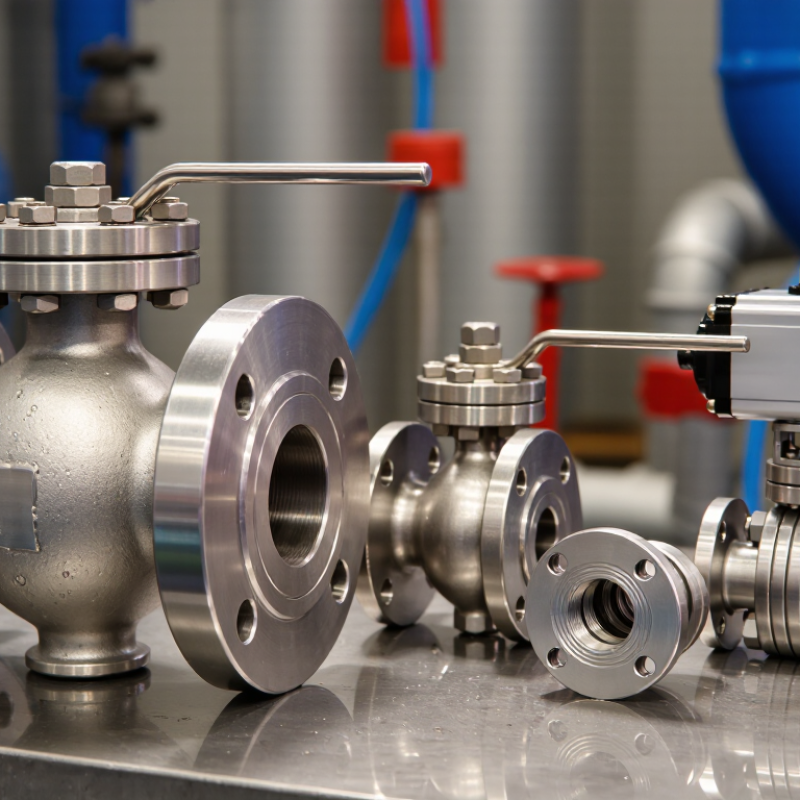
Define the Purpose and Operating Conditions of the Ball Valve
How to Choose Stainless Steel Ball Valves?
Define the Purpose and Operating Conditions of the Ball Valve
Start with the medium, not the valve size. Water, steam, solvents, oxygen, and abrasive slurries demand different materials and sealing designs. Record pressure, temperature, flow direction, cycling frequency, and required shutoff level. A valve for clean water may fail quickly with chlorides or high-temperature chemicals.
The NACE IMPACT study estimated global corrosion costs at about 3.4% of worldwide GDP. That figure makes material selection difficult to ignore. Stainless steel offers strong corrosion resistance, but it is not universally suitable. Check chloride concentration, pH, particle content, and galvanic contact. For compressed-air service, the U.S. Department of Energy reports that leaks can waste 20–30% of compressor output. Poor valve selection can quietly increase that loss.
Tips: Ask for the full operating envelope, including abnormal conditions. Compare the valve rating with the highest realistic pressure and temperature, not the daily average. Confirm seat compatibility with the medium. I have seen specifications focus heavily on body material while overlooking seals. That was a costly mistake. Also verify cycle life, actuator torque, maintenance access, and applicable requirements such as ASME B16.34 or API 608. A perfect specification is rare. Careful questioning matters.
How to Choose Stainless Steel Ball Valves? - Define the Purpose and Operating Conditions of the Ball Valve
| Application Purpose | Typical Medium | Typical Operating Temperature | Typical Pressure Requirement | Recommended Body Material | Seat Material | Design and Selection Considerations |
|---|---|---|---|---|---|---|
| General water isolation | Potable water, process water, chilled water | 5–80°C | Up to approximately 16 bar, depending on size and design | 304 stainless steel for low-chloride water; 316 stainless steel for higher chloride exposure | PTFE or reinforced PTFE | Use a full-port valve when minimizing pressure loss is important. Check the water chloride level, especially in warm systems. |
| Compressed-air control | Dry or lubricated compressed air | −20–80°C | Commonly 6–10 bar in plant air systems | 304 or 316 stainless steel | PTFE; FKM may be used where oil and higher temperature resistance are required | Confirm compatibility with compressor oil, moisture, and any cleaning chemicals. Select an actuator based on breakaway torque and safety position. |
| Mild chemical service | Dilute acids, alkalis, and cleaning solutions | Typically 5–100°C | Select according to the process pressure and valve pressure-temperature rating | Usually 316 stainless steel; alloy selection depends on concentration and chloride content | PTFE is commonly selected for broad chemical resistance | Verify the exact chemical concentration, impurities, temperature, and exposure time. Stainless steel resistance cannot be determined from chemical name alone. |
| Hydrocarbon isolation | Fuel, lubricating oil, solvents, and natural gas | −20–120°C, subject to seal selection | Commonly 10–40 bar in industrial systems; confirm the applicable rating | 316 stainless steel for corrosion exposure; 304 may suit less aggressive environments | PTFE or FKM, selected according to fluid and temperature | Check fire-safe requirements, antistatic provisions, fugitive-emission control, and seal compatibility. Do not use EPDM for most hydrocarbon service. |
| High-temperature steam | Saturated or superheated steam | Above 150°C in many systems | Determine from steam pressure, temperature, and the valve pressure class | 316 stainless steel or a higher-temperature alloy when required | Graphite or a qualified high-temperature seat; standard PTFE is generally unsuitable for high-temperature steam | Use the manufacturer’s pressure-temperature chart. Consider thermal cycling, cavity pressure relief, insulation, and burn protection. |
| Cryogenic or low-temperature service | Liquefied gases and refrigerated process fluids | Below −20°C; some applications are below −100°C | Based on the fluid’s vapor pressure and system design | 316 stainless steel with verified low-temperature toughness | Low-temperature-rated PTFE or another qualified cryogenic seat | Specify an extended bonnet when required, control moisture ingress, and confirm low-temperature impact performance and leakage limits. |
| Hygienic processing | Food, beverage, pharmaceutical, and purified-water fluids | Typically 5–140°C, including cleaning cycles | Usually low to moderate pressure; verify the process and cleaning-cycle rating | 316L stainless steel for wetted surfaces | PTFE, EPDM, or FKM according to the product and cleaning chemicals | Choose sanitary connections, smooth internal surfaces, drainability, minimal dead space, and elastomers approved for the specific process. |
| Oxygen service | Gaseous or liquid oxygen | Application-dependent; cryogenic service may be involved | Determine from the oxygen system design and applicable safety standard | 316 stainless steel is commonly considered, subject to engineering approval | Only oxygen-compatible, qualified seat and seal materials | Require oxygen cleaning, compatible lubricants, controlled particle levels, and suitable ignition-risk evaluation. Never assume a standard valve is oxygen-safe. |
Select the Appropriate Stainless Steel Grade and Valve Configuration
How to Choose Stainless Steel Ball Valves?
Select the Appropriate Stainless Steel Grade and Valve Configuration
Start with the fluid. Stainless steel grade selection should reflect chlorides, acids, temperature, and cleaning chemicals. Grade 304 often suits clean water, air, and general industrial service. Grade 316 provides better resistance in marine areas and chloride-bearing fluids. For welded systems, 316L can reduce weld-related corrosion risks. Do not guess. Confirm compatibility with a chemical resistance chart and the actual concentration.
Valve configuration affects flow, maintenance, and control. A full-port ball valve reduces pressure loss in pipelines carrying viscous liquids or suspended particles. A reduced-port design may cost less and fit compact systems. Choose two-way valves for simple isolation. Three-way valves support mixing or diverting, but their port arrangement must match the flow diagram. Floating balls suit many moderate-pressure duties, while trunnion-mounted designs can reduce operating torque in larger, higher-pressure lines.
Check more than the body material. Seat material, stem sealing, pressure rating, temperature range, and connection type must match the service conditions. Threaded ends may simplify small repairs, while welded ends reduce leakage points in permanent piping. Ask for material certificates, pressure-test records, and dimensional drawings. Standards such as ASTM and ASME provide useful references, but paperwork can still hide a poor specification. A practical review should compare the valve against the worst operating case, not the average one. Small oversights matter. Jiova
Match the Valve Size, Pressure Rating, and Connection Type
How to Choose Stainless Steel Ball Valves?
Match the valve size to the actual pipe, not the pump outlet. A larger valve may reduce pressure loss, but it can damage control accuracy. A smaller valve can restrict flow and increase velocity.
In field inspections, I often find valves selected by nominal diameter alone. That shortcut causes trouble. Check the required flow rate, medium viscosity, and operating temperature. Then compare the valve’s pressure rating with the highest working pressure, including surges. ASME B16.34 provides widely used requirements for valve pressure-temperature ratings. Never treat the normal pressure as the design limit.
Connection type matters during installation and maintenance. Threaded ends suit smaller lines and compact equipment. Flanged ends support larger pipelines and easier removal. Welded connections reduce leak paths, but they demand qualified procedures and careful heat control.
The U.S. Department of Energy reports that compressed-air leaks can waste 20–30% of compressor output. A poorly matched connection can add to that loss. Stainless steel also needs compatibility checks with chlorides, acids, and cleaning chemicals.
Tips:
Measure the pipe outside diameter. Confirm the medium and temperature. Check both pressure rating and test standard. Ask for material certificates when traceability matters. I would also inspect gasket material, actuator clearance, and access for future servicing. It is easy to overlook space. That mistake is expensive.
Evaluate Sealing Materials, Temperature Range, and Media Compatibility
How to Choose Stainless Steel Ball Valves?
Sealing materials determine whether a valve survives real service. PTFE seats typically handle about -20°C to 200°C, but pressure, cycling, and chemical exposure can reduce that range. PEEK seats may tolerate higher temperatures, sometimes near 260°C, yet steam and strong oxidizers still require verification. Elastomer seals need special care because oils, solvents, and gases can cause swelling or hardening. Check the supplier’s compound data, not only the advertised temperature limit. A small mismatch becomes a costly leak.
Media compatibility also depends on concentration, pressure, and velocity. Chloride-rich water can attack stainless steel through pitting, especially at elevated temperatures. The NACE IMPACT study estimated global corrosion costs at US$2.5 trillion annually, equal to about 3.4% of global GDP. That figure makes material selection difficult to dismiss. For gas service, ask for fugitive-emission qualification under ISO 15848-1 or API 641. For steam, confirm both seat stability and body pressure ratings under ASME B16.34. Laboratory charts are useful, but field conditions are messier. I would still request immersion-test results for unfamiliar chemicals. Ratings can look precise and remain incomplete.
Compare Actuation Methods, Quality Standards, and Maintenance Needs
Choosing a stainless steel ball valve starts with the actuator, not the price.
Manual levers suit small, accessible lines and occasional use. Pneumatic actuators respond quickly, making them practical for frequent cycling. Electric actuators offer controlled positioning, but they need reliable power and weather protection. In field inspections, undersized actuators often cause incomplete closure and premature seat wear. That mistake is easy to miss.
Quality standards provide a safer comparison.
API 608 addresses metallic ball valve design and testing, while ASME B16.34 covers pressure-temperature ratings and construction requirements. ISO 5211 helps match valve mounting dimensions with actuators.
According to Grand View Research’s industrial valves report, the global market is expected to grow at about 5% annually through 2030.
Growth does not guarantee quality. Request material certificates, pressure-test records, and cycle-test results. A 316 stainless body may still fail early if the stem, seats, or fasteners are poorly selected.
Tips: Check the medium, pressure, temperature, and cycling frequency before ordering. Inspect the stem seal for leakage, especially after thermal changes. Keep a simple maintenance log with dates, torque changes, and replacement parts. Industry maintenance guidance commonly favors planned inspection over emergency repair. Still, I would not treat every schedule as fixed. A valve handling clean water may need little attention, while abrasive slurry can demand frequent checks. Review the actual service conditions every few months.
Related Posts
-
How to Choose Stainless Steel Ball Valves in 2026?
-
How to Choose the Right Stainless Steel Ball Valves for Your Application
-
How to Choose the Right Flanges and Fittings for Your Project
-
How to Choose the Right Flange Gasket for Your Industrial Needs
-
Top 10 Stainless Flanges: Why You Need Them for Your Projects
-
Exploring the Best Sharpe Ball Valves in China for Optimal Performance?