
Quality Products
At a Fair Price
Wholesale Provider
Of Valves & Fittings
- HOME
- Products
- Ball Valves
- Bull Plugs & Swages
- Butterfly Valves
- Check Valves
- Cushion / Flow Tees & Bleed Rings
- Enhanced Oil Recovery
- Floating Ball Valves
- Foot Valves
- Forged Steel Fittings
- Forged Steel Outlets
- Gaskets-Insulation Kits
- Gate Valves
- Gate, Globe & Check Valves
- Malleable Fittings
- Needle Valves
- Nipples
- Piston Valves
- Plug Valves
- Stainless Steel Flanges, Fittings & Nipples
- Strainers
- Studs
- Trunnion
- Unions
- Weld Fittings & Flanges
- Manufacturers
- Advance
- American Block
- Anvil
- Balon
- Bonney Forge
- Champion
- Clayton Mark
- Crane
- Daniel
- DMIC
- GMI
- Galli & Cassina
- Hackney-Ladish
- JMC
- Lone Star
- MATCO
- Marpac-McCanna
- National Flange
- National Gasket
- Nordstrom
- Nutron
- PPI
- SHARPE
- SMI
- TEXSTEAM
- TEX-THREAD
- Titan
- USA Fastner
- Vogt
- Weld Bend
- Westbrook
- Wheatley
- Williams
- WKM
- Wolar
- Locations
- Contact
- Blog
- Careers
- Get a Quote
- HOME
- Products
- Ball Valves
- Bull Plugs & Swages
- Butterfly Valves
- Check Valves
- Cushion / Flow Tees & Bleed Rings
- Enhanced Oil Recovery
- Floating Ball Valves
- Foot Valves
- Forged Steel Fittings
- Forged Steel Outlets
- Gaskets-Insulation Kits
- Gate Valves
- Gate, Globe & Check Valves
- Malleable Fittings
- Needle Valves
- Nipples
- Piston Valves
- Plug Valves
- Stainless Steel Flanges, Fittings & Nipples
- Strainers
- Studs
- Trunnion
- Unions
- Weld Fittings & Flanges
- Manufacturers
- Advance
- American Block
- Anvil
- Balon
- Bonney Forge
- Champion
- Clayton Mark
- Crane
- Daniel
- DMIC
- GMI
- Galli & Cassina
- Hackney-Ladish
- JMC
- Lone Star
- MATCO
- Marpac-McCanna
- National Flange
- National Gasket
- Nordstrom
- Nutron
- PPI
- SHARPE
- SMI
- TEXSTEAM
- TEX-THREAD
- Titan
- USA Fastner
- Vogt
- Weld Bend
- Westbrook
- Wheatley
- Williams
- WKM
- Wolar
- Locations
- Contact
- About
- Careers
- Get a Quote
How to Choose a Circular Knitting Machine?
A Circular knitting machine can produce jersey, rib, and other knitted fabrics at industrial speeds. But choosing one is not simply a matter of buying the fastest model. The right choice depends on fabric structure, yarn, gauge, production volume, and the skill available to operate and maintain it. Small mismatches matter. A fine-gauge machine, for example, may not suit a coarse yarn or the fabric a mill needs to deliver.
The market context is changing, too. Textile Exchange’s 2024 Materials Market Report estimates that global fiber production reached 124 million tonnes in 2023, up from 116 million tonnes in 2022, and projects 160 million tonnes by 2030. These are fiber-production figures, not forecasts for knitting-machine sales. Still, they underline why mills need to consider material efficiency and production flexibility alongside output.
David J. Spencer, author of Knitting Technology, describes knitting as “the process of forming a fabric by the intermeshing of loops of yarn.” That basic principle has practical consequences: yarn behavior, stitch formation, and machine settings must work together. A specification sheet cannot tell you everything. A sample swatch can reveal uneven stitches, unwanted curling, or a hand feel that misses the mark. This guide explains how to compare machine type, diameter, gauge, feeder count, automation, and service support. No single specification wins. And a high output claim deserves a closer look: changeover time, fabric quality, and operator experience can alter the real result.
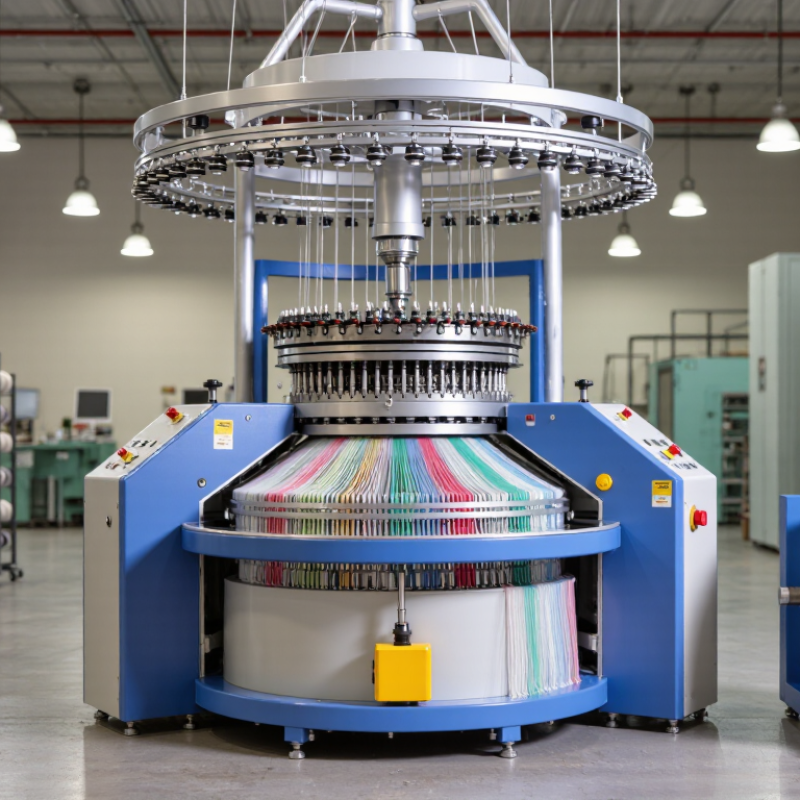
Define Your Knitting Goals and Project Types
Before choosing a circular knitting machine, decide what you want to make most often. A hat, a narrow sleeve, and a wide sweater body place different demands on needle count and working diameter. Write down your usual project sizes, yarn weights, and preferred fabrics. Small tubes are not the same as large panels. Fit matters.
For socks or fine accessories, check whether the machine’s gauge suits thin yarn and close stitches. For chunky hats or scarves, a coarser setup may be more practical. Match the machine’s needle spacing to the yarn recommended for it; forcing bulky yarn through a fine gauge can cause dropped stitches or strain. Make a test swatch. It may look uneven at first, and that is useful information.
Also consider whether you want continuous tubes, flat pieces, or both. Some machines are better suited to tube knitting, while others allow flat panels with a change in technique. Think about how much shaping your projects need, too. A simple beanie is forgiving; fitted sleeves require more planning and finishing. If your goals are still changing, choose for the projects you can clearly picture, not every project you might someday attempt. I would leave room to revise that plan. Your first swatch may surprise you.
How to Choose a Circular Knitting Machine: Define Your Knitting Goals and Project Types
Use needle count as a starting point: more needles allow more stitches in each round. These representative capacities are commonly found in circular knitting machines; project suitability also depends on yarn, stitch tension, and fabric stretch.
A compact 22-needle machine is suited to narrower tubes and small accessories. Machines with around 40–48 needles offer more stitches per round for larger hats, cowls, and other wider tubular projects. Check the machine’s yarn range and test a swatch before choosing.
Compare Machine Diameter, Gauge, and Needle Count
A circular knitting machine’s diameter sets the approximate width of the tube it can produce. Match that width to the item, allowing for the fabric’s stretch and the fit you want. For a beanie, a smaller cylinder may work well; for a roomy cowl, a wider one can reduce the need for shaping. Measure a washed swatch before deciding. Yarn can relax more than expected.
Gauge describes needle spacing and affects which yarns and stitch sizes the machine can handle. A finer gauge suits thinner yarn and creates a denser fabric, while a coarser gauge generally accommodates thicker yarn. Check the machine’s stated gauge against your yarn and a test swatch, not just the yarn label. Labels are only a starting point. Tension, fiber, and stitch structure change the result.
Needle count works alongside diameter and gauge: more needles around the cylinder can create a wider tube, finer stitches, or both, depending on the machine’s design. Compare the actual needle count, cylinder diameter, and gauge together rather than treating any one figure as decisive. If possible, knit a short tube and measure its relaxed circumference. I once assumed a higher needle count meant a larger garment; it did not. The cylinder dimensions mattered more.
Check Yarn Compatibility and Essential Features
Before choosing a circular knitting machine, check the yarn against its recommended weight range and needle size. A smooth cotton yarn may feed evenly, while a fuzzy wool blend can catch around the feeder. Feel the yarn first. Then knit a small test swatch and watch for dropped stitches, uneven loops, or strain on the needles. If the machine struggles, the yarn may be too thick, too elastic, or too textured for that setup.
Fiber variety makes compatibility worth checking. Textile Exchange’s Materials Market Report 2024 estimates that global fiber production reached 124 million tonnes in 2023. That figure does not measure machine fit, but it reflects the wide range of fibers and yarn constructions a knitter may encounter. Also check essential features: adjustable stitch size, a stable clamp, clear needle access, and readily available replacement needles. ASTM International’s D2256/D2256M standard describes a method for testing yarn tensile properties; for home use, you can still inspect a strand for stretch and breakage by hand. I still find yarn texture easy to overlook. A tiny snag can matter. Choose a machine that suits the yarn you actually plan to use, not only the projects in its product photos.
How to Choose a Circular Knitting Machine? - Check Yarn Compatibility and Essential Features
| Selection Factor | What to Check | Practical Guidance | Why It Matters |
|---|---|---|---|
| Yarn weight and thickness | Confirm the machine’s stated yarn range and recommended needle or cylinder setup. | Compare the yarn label and actual yarn thickness with the machine instructions. If no clear range is provided, test a small swatch before starting a project. | Yarn that is too thick may not pass smoothly through the needles; yarn that is too fine may produce loose, unstable stitches. |
| Yarn construction | Check whether the yarn is smooth, evenly spun, plied, fuzzy, or textured. | Smooth, consistent yarn is generally easier to feed. Very fuzzy, slubby, loosely spun, or novelty yarn may require slower operation and careful testing. | Uneven yarn can snag, split, or create inconsistent stitches and missed loops. |
| Fiber and elasticity | Consider the fiber content, stretch, and recovery of the yarn. | Wool, cotton, acrylic, and blended yarns can behave differently. Check the machine guidance and knit a test swatch, especially when using inelastic cotton or springy yarn. | Different fibers feed and relax differently, affecting stitch consistency, fabric size, and finished fit. |
| Needle count and machine gauge | Look for the number of needles and the manufacturer’s gauge or stitch-size information. | Choose a setup suited to the fabric you want. Needle count and spacing affect the fabric’s stitch density; they do not, by themselves, guarantee compatibility with a particular yarn. | A suitable yarn-and-gauge pairing helps produce an even fabric without excessive strain on the needles. |
| Project size and diameter | Check the knitting circumference, cylinder diameter, or supported flat-panel width. | Match the machine’s working dimensions to the project. Small circumferences suit narrow tubes; larger dimensions provide more room for wider tubular work. | The machine’s dimensions limit the circumference or width of the fabric it can produce. |
| Stitch patterns and shaping | Review supported stitch types, needle selection, and whether shaping is manual or automated. | Check whether the machine can make the ribbing, plain fabric, or pattern structure your project requires. Some designs need hand manipulation or additional equipment. | Not every circular machine can create every stitch structure or garment shape. |
| Yarn feeding and tension | Inspect the yarn guide, feeder, tension adjustment, and compatibility with the yarn package format. | Look for smooth, adjustable feeding and follow the recommended yarn path. Keep yarn feeding freely from a stable holder rather than pulling directly from a tangled skein. | Steady yarn delivery reduces tension changes, dropped stitches, and uneven fabric. |
| Speed and control | Check operating speed, speed adjustment, and whether the machine is hand-operated or powered. | For beginners or unfamiliar yarns, prioritize easy speed control and clear operating instructions over maximum production speed. | Controlled operation makes it easier to spot feeding problems before they affect a large section of fabric. |
| Needle access and maintenance | Check how needles are inspected, cleaned, replaced, and lubricated, if lubrication is required. | Review the maintenance instructions and confirm that replacement needles and routine-care guidance are available. | Damaged or dirty needles can cause recurring stitch defects and interruptions. |
| Test swatch and finished fabric | Assess stitch consistency, fabric stretch, and gauge after knitting and finishing the sample as directed. | Use the actual yarn and intended machine settings to make a sample. Measure it after any washing or blocking appropriate for the yarn. | A swatch is the most reliable way to check how a specific yarn behaves on a specific machine and to estimate finished dimensions. |
Note: Yarn compatibility depends on the machine design, needle setup, yarn construction, and operating tension. Treat general guidance as a starting point and follow the machine instructions; a test swatch is recommended before committing to a full project.
Assess Ease of Use, Maintenance, and Available Support
A circular knitting machine should feel understandable before it feels fast. Check whether the yarn path is visible and easy to follow, and whether tension controls have clear markings. Try threading it and knitting a small swatch. A useful test is changing yarn or adjusting tension without losing track of the setup. Small details matter. A cramped handwheel or vague instructions can turn a simple adjustment into guesswork. It is easy to overvalue a smooth first demo; repeated setup tells you more.
Maintenance deserves the same attention. Look for clear guidance on cleaning lint from the needle bed and caring for moving parts. Follow the manual rather than assuming every machine needs oil. Ask how easily needles and other wear parts can be replaced, and whether basic tools are included. Then check available support: readable troubleshooting guides, reachable service staff, and access to replacement parts can save time when a stitch starts dropping. Ask a practical question before buying, such as how to correct uneven tension. The quality of the answer is useful evidence. Support may vary, and even a well-built machine can need patience. That is not nothing.
Balance Your Budget, Space, and Long-Term Needs
Before comparing circular knitting machines, set a spending limit that includes more than the machine itself. Needles, yarn guides, replacement parts, and a sturdy table can add to the cost. A basic model may suit occasional hats or scarves, while frequent projects may call for easier adjustments and maintenance. A higher price does not guarantee a better fit. Check what is included and whether commonly replaced parts are available.
Measure your workspace before choosing a machine. A shelf may look wide enough until the yarn cone, crank, and knitted tube are all in place. Measure twice. Consider how you will store the machine between projects, too.
Then think beyond your next project: check the machine’s supported yarn weights, stitch options, and fabric width against what you realistically hope to make. Some machines are less flexible than their photos suggest. That matters. It is tempting to buy for an ambitious future project, but an unfamiliar setup can sit unused. Choose a machine you can operate comfortably now, with enough room in its capabilities for your likely next steps. A little compromise is normal; the right balance depends on your budget, available space, and knitting habits.
