How to Choose the Right Cascade Retort for Your Needs?
Choosing a Cascade Retort is not just a question of buying the largest vessel that fits your budget. The right system should match your product, package, production rate, and available utilities. A retort designed for flexible pouches may not suit rigid trays or cans equally well. Package shape and loading pattern can affect how water flows around each container. Small details count.
Start with the process you need to run. Consider product viscosity, fill weight, package dimensions, target throughput, and how often recipes change. Then review the retort’s temperature controls, water circulation, loading method, and data-recording features. Ask how the equipment handles your actual container and product, not only a standard test load. A supplier should be able to explain the system’s operating limits and support process assessment with qualified specialists. This is especially important when uniform heating and repeatable results matter.
Factory capacity is only part of the decision. Check installation space, water and steam requirements, cleaning access, maintenance needs, and operator training. Request clear information about routine service and replacement parts. If possible, compare a proposed cycle with representative production conditions before making a final choice. Real production rarely behaves exactly like a spreadsheet. I have seen equipment comparisons become less clear once package changes and peak shifts enter the discussion. That uncertainty is worth acknowledging. A careful selection process helps you identify trade-offs early and choose a Cascade Retort that fits today’s operation without overlooking future needs.
Understanding How a Cascade Retort Works
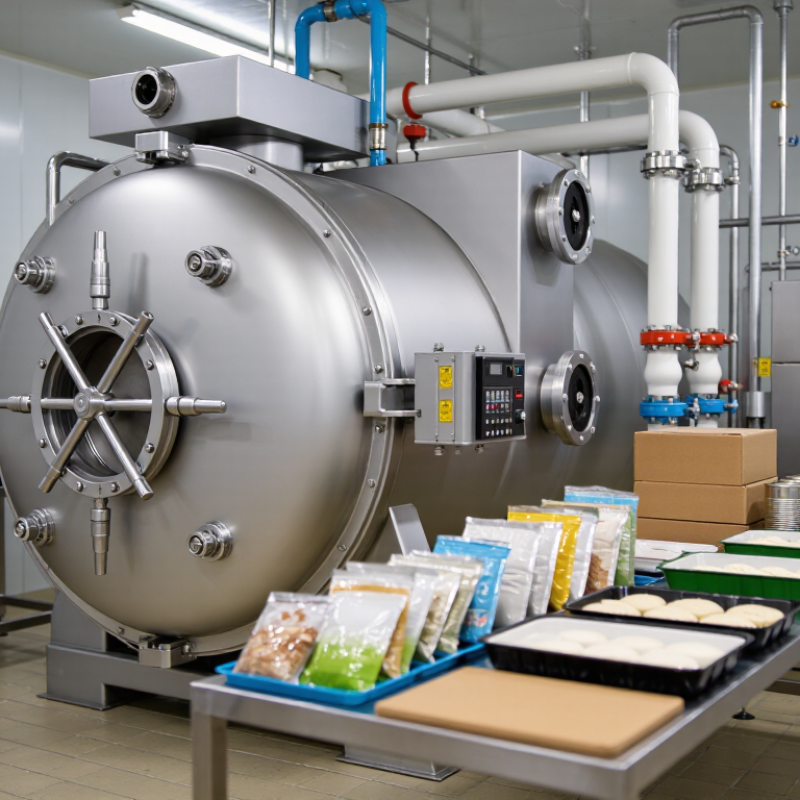
A cascade retort heats sealed food packages by circulating heated water through a closed pressure vessel. A pump lifts water to a distribution system above the load. It then flows downward over trays and containers, creating a moving blanket of heat. The water collects at the bottom and returns through the heating loop. Simple in principle. In practice, flow paths matter: tightly packed trays, blocked drains, or uneven loading can make some packages heat more slowly. Controls track temperature, pressure, and process time, while sensors help verify that the programmed cycle is followed.
During processing, the vessel reaches a specified temperature and holds it for a scheduled period. Pressure is controlled to protect packages from swelling, distortion, or seal stress, especially when flexible packaging is used. After heating, circulating water cools the load in a controlled way. The exact cycle depends on the product, container, fill weight, and validated process—not on the retort alone. When evaluating a system, ask how evenly water reaches the actual production load and whether its records support repeatable operation. A neat spray pattern can look convincing. It is not proof of uniform heating, a distinction that is easy to overlook, even for experienced teams.
Identifying Product and Packaging Requirements
Choosing a cascade retort starts with the product, not the equipment brochure. Record its consistency, fill weight, starting temperature, and largest solid pieces. A thick stew transfers heat differently from a clear soup. Large chunks or uneven filling can slow heating near the package center. Small details matter. Check whether the product settles or traps air during filling, since either can affect heat transfer. Use realistic batch variations, not only the ideal recipe.
Packaging shapes how heat and circulating water reach the product. Note the package material, dimensions, closure type, headspace, and flexibility. A tall, tightly filled container may heat differently from a shallow package of equal volume. Check seals and package shape throughout heating and cooling. Basket spacing and package orientation matter, too. Leave room for water circulation. Before selecting retort capacity or cycle features, test the actual product in its intended packaging and have the thermal process reviewed by a qualified specialist. One successful run is not enough. Production is rarely that tidy; changes in fill height or recipe may call for more testing.
How to Choose the Right Cascade Retort: Consider Package Dimensions
Nominal dimensions for three common U.S. can size codes, converted from inches to millimeters. Package geometry can affect retort loading and heat penetration; confirm the actual container and closure specifications, product properties, and validated process before selecting a retort.
Matching Retort Capacity to Production Needs
How to Choose the Right Cascade Retort for Your Needs?
Matching Retort Capacity to Production Needs
A retort’s rated volume does not tell you how much product it can process per shift. Usable output depends on container size, basket layout, loading time, and the full heating and cooling cycle. Numbers can mislead. A densely packed basket may hold more containers, but poor spacing can affect heat distribution and process consistency.
Estimate capacity from the actual product and packaging. For example, record how many filled containers fit safely in each basket, then divide that batch quantity by the complete cycle time. Include loading, unloading, and changeovers. Test the real load. A small difference in cooling time can reduce daily output when several batches are scheduled. The first estimate is rarely exact, and that is worth admitting.
Compare the result with normal and peak production, not just an ideal day. Allow practical room for maintenance, product changes, and occasional delays, but avoid paying for capacity your line cannot feed. Check that utilities and upstream equipment can support the planned pace. Before committing, review loading patterns and process data with qualified retort specialists. A trial using representative containers and a realistic basket arrangement can reveal bottlenecks that a specification sheet will miss. Just as important, confirm that the intended process remains validated at the chosen load.
Evaluating Process Controls, Utilities, and Safety
How to Choose the Right Cascade Retort for Your Needs?
Evaluating Process Controls, Utilities, and Safety
A cascade retort should match the product, package, and required thermal process, not just the production target. Check how the system controls temperature, pressure, and water circulation throughout each cycle. Ask for data showing temperature distribution under realistic loading conditions. Empty-chamber results can be misleading. Small details matter.
Review the control interface and recorded cycle data. Operators should be able to spot deviations, retrieve batch records, and understand alarms without guesswork. Confirm that sensors can be calibrated and that critical settings are protected from casual changes. A polished screen is not proof of reliable control; maintenance routines and staff training matter too. Some facilities overlook this until a shift gets busy.
Utilities can limit performance. Compare the retort’s peak demands for steam, water, electricity, and compressed air with your site’s actual capacity. Check drainage, cooling-water availability, and the space needed for service access. For safety, examine door interlocks, pressure-release arrangements, emergency stops, and procedures for isolation before maintenance. Have a qualified process authority review the proposed process and its validation needs. A machine can fit the room and still be the wrong choice.
Comparing Options and Validating the Final Choice
A cascade retort should fit your products, packages, and production rhythm—not just your target capacity. Compare vessel size, basket layout, loading time, and utility needs. Check that the system can handle your actual container mix, including different sizes or materials. A crowded basket can affect water circulation, so usable capacity matters more than the number of containers listed on a specification sheet.
Tips: Ask for a sample loading plan. Check water coverage, circulation paths, cooling needs, and data-recording features. Small details matter.
Before committing, validate the preferred option with a qualified thermal-process specialist. Test representative loads, including the largest or most difficult package configuration. Temperature-distribution and heat-penetration studies can show whether the process reaches its targets consistently. Review how the retort records temperatures and handles alarms; clear records make routine checks easier. No comparison table catches every awkward loading pattern, and plans sometimes need revision after testing. That is useful evidence, not a failure. Keep the validation conditions aligned with real production, then document any operating limits and required checks.