
Quality Products

At a Fair Price

Wholesale Provider

Of Valves & Fittings

  • Corporate Office: 1301 Greengrass Drive Houston, TX 77008
  • 1-800-237-2512

Quality Products

At a Fair Price

Wholesale Provider

Of Valves & Fittings

How to Choose the Right Aluminium Casting Mold?

Choosing the right Aluminium Casting Mold affects dimensional accuracy, surface quality, cycle time, and production cost. It also influences how consistently each casting performs after machining, coating, or assembly. A mold may look excellent during its first trial, yet fail after repeated thermal shocks. That detail is easy to underestimate.

John Campbell, a respected casting researcher and author, stated, “The filling of the mould is the most critical stage in the production of a casting.” His observation remains highly relevant when selecting an Aluminium Casting Mold. The design must support controlled metal flow, stable temperature distribution, effective venting, and reliable solidification. Engineers should examine the alloy, casting size, wall thickness, production volume, and expected surface finish before choosing mold steel or construction methods. H13 tool steel may suit demanding die-casting cycles, while other applications may require different materials or cooling arrangements.

Small details matter. Check draft angles. Inspect cooling channels. Measure cavity wear. Review previous trial data. A mold that reduces cycle time may still create porosity or uneven shrinkage. That trade-off deserves careful testing.

There is no perfect mold choice. I have seen designs that worked well in low-volume production but became expensive under continuous operation. A sound decision combines simulation, hands-on trials, maintenance planning, and supplier experience. This guide explains those factors clearly, helping manufacturers choose an Aluminium Casting Mold that remains dependable beyond the first successful casting.
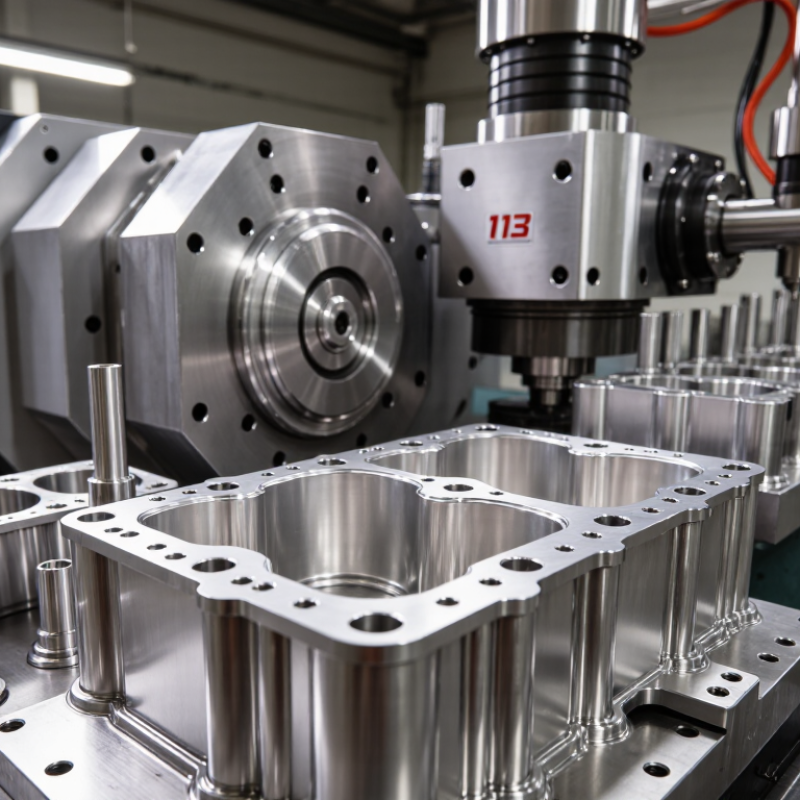
How to Choose the Right Aluminium Casting Mold?

Define Alloy, Part Geometry, and Volume Before Selecting a Mold

How to Choose the Right Aluminium Casting Mold?

Define Alloy, Part Geometry, and Volume Before Selecting a Mold

Alloy selection comes before mold selection. Different aluminium alloys show different fluidity, shrinkage, strength, and die-soldering risks. A thin wall may fill well with one alloy but create cold shuts with another. Check the alloy’s casting data sheet, not only its tensile strength. The U.S. Geological Survey reported about 70 million tonnes of primary aluminium production worldwide in 2023. That scale shows the material is common, but its grades are not interchangeable.

Part geometry then controls the mold’s internal design. Review wall thickness, draft angles, ribs, undercuts, and cooling paths. Sharp corners can concentrate stress and trap heat. Uneven sections may produce porosity or distortion. NADCA’s Product Specification Standards for Die Castings recommends designing around process capability, rather than forcing the mold to repair weak geometry. A practical shop lesson is simple: mold complexity often begins in the drawing.

Volume decides whether that complexity is financially sensible. Low-volume parts may suit a simpler sand or permanent mold, especially when geometry changes remain possible. High-volume parts can justify hardened tooling, multiple cavities, automated ejection, and controlled cooling. The International Aluminium Institute reports that recycled aluminium uses roughly 5% of the energy required for primary aluminium. Therefore, alloy recovery and scrap separation should influence production planning. A neat spreadsheet can still mislead. Actual cycle time, maintenance, rejected castings, and design revisions may change the calculation.

How to Choose the Right Aluminium Casting Mold?

Define the alloy, part geometry, and expected production volume before selecting a mold. The chart shows typical annual production ranges for common aluminium casting processes.

Alloy: Sand and permanent-mold casting accommodate a broad range of aluminium alloys, while high-pressure die casting is commonly selected for highly castable alloys such as A380-type alloys. Wrought alloys such as 6061 are generally not preferred for conventional casting.

Part geometry: Sand molds suit large or complex parts, permanent molds provide improved surface finish and repeatability, and die casting is best for thin-wall parts with detailed features.

Volume: Low production volumes usually favor sand or investment molds because tooling costs are lower. Permanent molds and die-casting molds become more economical as production volume increases.

Match the Mold Process to Aluminum’s 660.3°C Melting Point

How to Choose the Right Aluminium Casting Mold?

Match the Mold Process to Aluminum’s 660.3°C Melting Point

Pure aluminum melts at 660.3°C, but common alloys melt across a lower temperature range. Your mold must handle heat, flow, and rapid cooling without distortion.

For repeated parts, permanent metal molds provide consistent dimensions and cleaner surfaces. Preheating the mold reduces thermal shock and helps aluminum fill thin sections. However, excessive preheating can slow solidification and increase shrinkage defects. This balance is easy to underestimate.

Die casting suits high-volume components with detailed shapes. It requires strong tooling, controlled injection speed, and effective cooling channels. Sand molds work better for larger parts, prototypes, and lower production volumes. Their permeability allows gases to escape, although surface finish usually becomes rougher.

Inspect the first castings closely. Look for cold shuts, pinholes, flash, and uneven wall thickness. I have found that a small temperature log often explains defects better than visual inspection alone. Melt temperature, mold temperature, pouring speed, and holding time should be recorded for each trial.

Do not select a mold from melting point alone. Consider alloy chemistry, part geometry, production quantity, and dimensional tolerance. A mold that performs well for one alloy may fail with another. Even experienced teams sometimes overvalue speed and overlook maintenance access. That mistake becomes expensive.

Compare Sand, Permanent, and Die Molds by Tolerance and Volume

How to Choose the Right Aluminium Casting Mold?

Choosing an aluminium casting mold starts with tolerance and production volume.

Sand molds suit prototypes, repairs, and low-volume parts. They require simpler tooling, but surfaces are rougher and dimensions vary more. Typical tolerances may range from ±0.5 to ±3 mm, depending on part size and process control. A rough flange or oversized machining allowance may be acceptable here. Not every part needs precision.

Permanent molds provide better repeatability and smoother surfaces.

They fit medium-volume production, especially for housings, brackets, and repeated structural parts. Tolerances commonly fall near ±0.25 to ±1 mm. Metal mold cooling can improve consistency, but draft angles and thicker walls remain important. I have seen designs fail because engineers treated permanent molding like machining. That assumption costs time.

Die molds support high volumes and tighter dimensions, often around ±0.05 to ±0.2 mm for suitable features.

They fill thin sections quickly and reduce finishing work. However, tooling costs are high, and the mold design must match the planned quantity. Use die casting when thousands of repeatable parts justify the investment. For short runs, the economics can become uncomfortable. No method is perfect.

Check critical dimensions, alloy behavior, surface requirements, and annual demand together.

A tolerance on paper means little without stable temperature, metal flow, and inspection controls. Leave realistic machining stock where accuracy matters most. The cheapest mold may create the highest total cost.

Design Gating and Cooling for Die-Casting Pressures of 30–150 MPa

How to Choose the Right Aluminium Casting Mold?

Design Gating and Cooling for Die-Casting Pressures of 30–150 MPa

Choosing an aluminium die-casting mold starts with pressure, not appearance. At 30–150 MPa, the gating system must fill the cavity quickly without creating excessive turbulence. A gate that is too narrow can freeze early. A gate that is too wide may increase trimming work and air entrapment. I prefer reviewing filling speed, wall thickness, and alloy temperature together. Simulation helps, but it cannot replace trial shots and sectioned samples.

Cooling channels need balanced heat removal around the gate, cores, and thick sections. Uneven cooling can cause shrinkage, soldering, distortion, or premature die failure. Keep channels close enough to control hot spots, but not so close that the mold wall loses strength. High-pressure areas also require robust inserts and careful support. Water flow should be measured, not guessed. Small temperature differences matter.

Tips: Record cavity temperatures after repeated cycles. Check vents for blocked passages. Inspect the first and last castings from each run. A useful design may still need revision. My early molds often focused too heavily on filling speed. Later tests showed that stable cooling reduced defects more effectively. That lesson remains important: pressure increases production demands, but thermal balance controls consistency.

Validate Porosity, Cycle Time, Tool Life, and Total Mold Cost

Choosing the right aluminium casting mold requires more than checking the purchase price. Porosity, cycle time, tool life, and total mold cost must be evaluated together. A mold that fills quickly may still create trapped air or weak sections. That is a costly surprise.

Start by validating porosity risks with filling and solidification studies. Confirm the results through X-ray inspection, sectioned samples, or pressure testing. Watch areas near thick ribs, sharp corners, and isolated hot spots. Cooling channels should remove heat evenly, not simply as fast as possible. In production reviews, small temperature differences often explain inconsistent casting quality. No simulation is perfect.

Cycle time should include filling, cooling, ejection, trimming, and cleaning. A shorter cycle is not always better. Excessive speed can increase thermal stress and flash. For tool life, examine die material, surface treatment, thermal fatigue, erosion, and maintenance access. Record cracking around gates and inserts early. These details matter.

Calculate total mold cost across its working life. Include machining, spare inserts, repairs, energy, rejected castings, and downtime. A low-cost mold can become expensive after repeated repairs. Conversely, an advanced design may not pay back in low-volume production. Review real production data after the first runs, then adjust the design. This step is often missed.

How to Choose the Right Aluminium Casting Mold? - Validate Porosity, Cycle Time, Tool Life, and Total Mold Cost

Typical industry ranges for aluminium castings produced in medium-volume applications. Actual results vary with alloy, part geometry, wall thickness, casting size, machine settings, cooling design, inspection method, and maintenance practice. Costs are indicative tooling costs in USD and exclude casting machines, furnaces, robotics, and production labor.
Mold or Casting Process Typical Production Volume Porosity Risk and Validation Typical Cycle Time Expected Tool Life Initial Mold Cost Maintenance Cost Over Tool Life Total Mold Cost Consideration
Expendable Sand Mold
Green sand or chemically bonded sand
Prototype to approximately 50,000 parts, depending on part size and pattern reuse Medium to high risk
Typical porosity: approximately 2–8% by volume. Validate with radiography, computed tomography, or sectioning. Control moisture, permeability, venting, and melt cleanliness.
2–10 minutes per casting, including mold preparation and shakeout Pattern: approximately 500–10,000 cycles
Mold itself: one casting
$1,000–$15,000 for pattern and tooling Approximately 10–30% of initial tooling cost for pattern repair and dimensional adjustments Lowest initial cost and flexible design, but labor and recurring mold-making costs can dominate at higher volumes
Gravity Permanent Mold
Reusable steel or cast-iron mold
Approximately 5,000–100,000 parts Medium risk
Typical porosity: approximately 1–4% by volume. Validate with density index testing, radiography, or CT. Improve results with controlled filling, risers, vents, and proper preheating.
1–5 minutes per casting Approximately 20,000–100,000 cycles $15,000–$80,000 Approximately 20–50% of initial tooling cost for coating renewal, inserts, vents, and repairs Good balance for medium volumes; compare tooling amortization with labor, alloy yield, and casting-cycle costs
Low-Pressure Permanent Mold
Controlled filling from a sealed furnace
Approximately 10,000–150,000 parts Low to medium risk
Typical porosity: approximately 0.5–2% by volume. Validate with radiography, CT, leak testing, and density measurements. Monitor pressure profile, filling speed, hydrogen level, and solidification.
2–8 minutes per casting Approximately 30,000–150,000 cycles $30,000–$150,000 Approximately 25–60% of initial tooling cost for mold refurbishment, seals, coatings, and pressure-system maintenance Higher tooling investment can be justified by improved yield, lower turbulence, and reduced porosity in safety-critical or pressure-tight parts
High-Pressure Die Casting
Cold-chamber steel die
Approximately 50,000–1,000,000+ parts Medium risk
Typical porosity: approximately 0.5–3% by volume, mainly gas entrapment and shrinkage. Validate with CT, radiography, leak testing, and metallographic sections. Use vacuum assistance where structural integrity is required.
30–120 seconds per shot Approximately 50,000–500,000 shots, depending on alloy, die steel, thermal loading, and cooling design $50,000–$300,000+ Approximately 40–100% of initial die cost over the die life for inserts, welding, polishing, heat checking, and dimensional restoration Usually the lowest mold cost per part at high volume, but scrap, trimming, shot-end maintenance, and porosity-related restrictions must be included
Squeeze Casting Mold
Permanent mold with applied pressure during solidification
Approximately 10,000–100,000 parts Low risk
Typical porosity: often below 1% by volume when process control is stable. Validate with CT, radiography, density testing, and mechanical-property testing.
1–5 minutes per casting Approximately 20,000–100,000 cycles $40,000–$180,000 Approximately 30–70% of initial tooling cost for die surfaces, hydraulic components, ejectors, and cooling-system maintenance Suitable when high strength, low porosity, and heat-treatment capability justify higher equipment and tooling costs
Investment Casting Mold
Wax pattern and ceramic shell system
Prototype to approximately 50,000 parts, depending on part size and complexity Medium risk
Typical porosity: approximately 1–5% by volume. Validate with radiography, CT, and sectioning. Control shell permeability, wax quality, pouring temperature, and vacuum or inert-gas practice.
4–24 hours per batch, including wax, shell building, dewaxing, firing, and casting Wax die: approximately 5,000–100,000 patterns; ceramic shell: one casting $5,000–$100,000 for the wax die, depending on complexity Approximately 10–40% of initial die cost for wax-die repair and dimensional correction High detail and near-net shape can reduce machining cost, but recurring ceramic-shell and labor costs make it less suitable for very high volumes
Top
error: Content is protected !!