
Quality Products
At a Fair Price
Wholesale Provider
Of Valves & Fittings
- HOME
- Products
- Ball Valves
- Bull Plugs & Swages
- Butterfly Valves
- Check Valves
- Cushion / Flow Tees & Bleed Rings
- Enhanced Oil Recovery
- Floating Ball Valves
- Foot Valves
- Forged Steel Fittings
- Forged Steel Outlets
- Gaskets-Insulation Kits
- Gate Valves
- Gate, Globe & Check Valves
- Malleable Fittings
- Needle Valves
- Nipples
- Piston Valves
- Plug Valves
- Stainless Steel Flanges, Fittings & Nipples
- Strainers
- Studs
- Trunnion
- Unions
- Weld Fittings & Flanges
- Manufacturers
- Advance
- American Block
- Anvil
- Balon
- Bonney Forge
- Champion
- Clayton Mark
- Crane
- Daniel
- DMIC
- GMI
- Galli & Cassina
- Hackney-Ladish
- JMC
- Lone Star
- MATCO
- Marpac-McCanna
- National Flange
- National Gasket
- Nordstrom
- Nutron
- PPI
- SHARPE
- SMI
- TEXSTEAM
- TEX-THREAD
- Titan
- USA Fastner
- Vogt
- Weld Bend
- Westbrook
- Wheatley
- Williams
- WKM
- Wolar
- Locations
- Contact
- Blog
- Careers
- Get a Quote
- HOME
- Products
- Ball Valves
- Bull Plugs & Swages
- Butterfly Valves
- Check Valves
- Cushion / Flow Tees & Bleed Rings
- Enhanced Oil Recovery
- Floating Ball Valves
- Foot Valves
- Forged Steel Fittings
- Forged Steel Outlets
- Gaskets-Insulation Kits
- Gate Valves
- Gate, Globe & Check Valves
- Malleable Fittings
- Needle Valves
- Nipples
- Piston Valves
- Plug Valves
- Stainless Steel Flanges, Fittings & Nipples
- Strainers
- Studs
- Trunnion
- Unions
- Weld Fittings & Flanges
- Manufacturers
- Advance
- American Block
- Anvil
- Balon
- Bonney Forge
- Champion
- Clayton Mark
- Crane
- Daniel
- DMIC
- GMI
- Galli & Cassina
- Hackney-Ladish
- JMC
- Lone Star
- MATCO
- Marpac-McCanna
- National Flange
- National Gasket
- Nordstrom
- Nutron
- PPI
- SHARPE
- SMI
- TEXSTEAM
- TEX-THREAD
- Titan
- USA Fastner
- Vogt
- Weld Bend
- Westbrook
- Wheatley
- Williams
- WKM
- Wolar
- Locations
- Contact
- About
- Careers
- Get a Quote
2026 How to Choose the Best Wheeled Excavator for Your Needs?
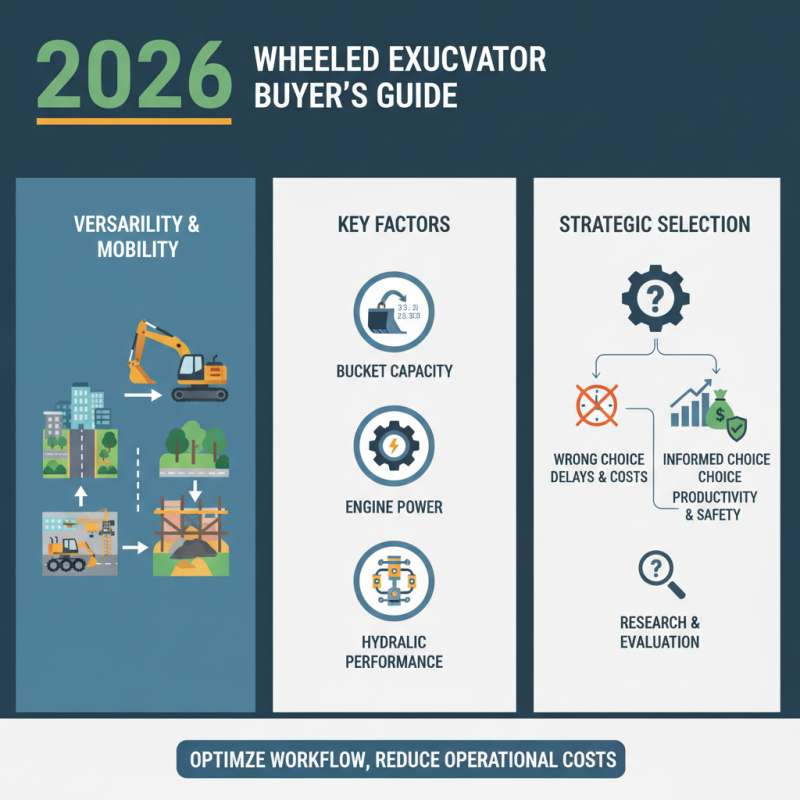
In the construction industry, choosing the right Wheeled Excavator is crucial for project success. According to a recent report by XYZ Industry Analysts, the demand for wheeled excavators is projected to grow by 8% annually through 2026. This growth is fueled by their versatility and efficiency in urban environments. Industry expert John Smith emphasizes, "Selecting the right Wheeled Excavator can optimize workflow and reduce operational costs."
Wheeled Excavators offer a unique combination of mobility and power. They are ideal for projects requiring quick movement between job sites. However, not all models are created equal. Factors such as bucket capacity, engine power, and hydraulic performance must be considered. An informed choice can enhance productivity and ensure safety on the job.
It's essential to reflect on specific project needs before making a decision. The wrong Wheeled Excavator can lead to delays and increased expenses. Carefully evaluating your options may reveal both strengths and weaknesses in various models. Relying solely on brand reputation may not be sufficient; thorough research is necessary.
Understanding Wheeled Excavators: Key Features and Types
Wheeled excavators are versatile machines. They can maneuver easily in tight spaces. Their unique design allows for quick movement on various terrains. These machines are essential for urban construction and landscaping.
When choosing a wheeled excavator, consider its features. Hydraulic systems are crucial for efficient operation. A powerful engine provides the necessary strength for demanding tasks. The weight of the excavator affects mobility and stability. A lighter model may be easier to move but could sacrifice digging power.
Types of wheeled excavators vary significantly. Some are suited for residential projects, while others handle larger, industrial jobs. Compact excavators fit well in smaller areas. However, they might lack the power for heavy-duty tasks. On the other hand, larger models excel in productivity but require more space and careful management. Balancing size and capability is vital in your decision-making process.
Assessing Your Specific Project Requirements for Excavation
Choosing the right wheeled excavator involves understanding your project’s specific needs. Projects vary, so assessing your requirements carefully is crucial. For example, site conditions can significantly impact your decision. According to industry reports, excavation tasks often differ in terrain, access, and load capacity. A wheeled excavator suited for urban areas may not be ideal for rural projects.
Factors such as potential digging depth should be considered. Reports indicate that about 60% of projects require depths of at least 10 feet. If your project calls for deeper excavation, this must influence your selection. Additionally, consider the weight capacity. The average wheeled excavator can lift up to 10 tons. However, some jobs may require handling heavier loads. These demands can change operational efficiency and safety standards.
Always reflect on the fuel efficiency and maintenance aspects as well. Industry insights suggest that lighter models tend to consume less fuel. This choice reduces the project’s overall costs. Yet, every project has trade-offs. A more powerful machine may accommodate complex tasks better. Balancing these elements ensures a wiser purchasing decision tailored to your needs. Take the time to evaluate them all.
Evaluating Engine Power and Performance Metrics
When choosing a wheeled excavator, evaluating engine power and performance metrics is crucial. Engine size matters significantly. For example, a 100-horsepower engine can handle lighter tasks efficiently, while 200-horsepower engines are suited for heavy-duty work. According to industry reports, performance metrics like torque and power-to-weight ratio impact overall efficiency. Higher torque ensures better digging force, while a favorable power-to-weight ratio enhances maneuverability on various terrains.
Tips: Focus on the type of tasks you will perform. This helps in selecting the right power class. Understand that a higher horsepower rating doesn’t always translate to better performance for your specific needs.
Fuel efficiency is another factor to consider. Machines with advanced technology emphasize fuel consumption metrics. Reports indicate that operators can save up to 15% in fuel costs with certain engine technologies. However, be aware that high-performance engines may require more maintenance. Regular checks and servicing become essential to avoid unexpected downtimes.
Tips: Analyze the cost of ownership, including fuel and maintenance. Don’t overlook these hidden costs, as they can add up significantly over time.
Comparing Stability and Maneuverability of Different Models
When choosing a wheeled excavator, stability and maneuverability are critical factors to consider. A stable machine can handle heavy loads without tipping. Look for a model with a wide wheelbase for enhanced stability. Wider wheels distribute weight more evenly. This can be especially beneficial on uneven terrain.
On the other hand, maneuverability is essential for tight spaces. A model with a shorter turning radius can navigate crowded job sites effectively. Consider models with articulated steering for increased agility. This feature allows for smoother movements around obstacles.
Tips: Always test the machine on-site. This can reveal potential issues with stability or ease of movement. Also, reflect on your specific tasks. Some jobs may demand more stability, while others require superior maneuverability. Assess your needs thoroughly before making a decision.
Budget Considerations: Cost vs. Features in Wheeled Excavators
When selecting a wheeled excavator, budget plays a vital role. An analysis from the Equipment Leasing and Finance Association (ELFA) shows that over 70% of contractors prioritize cost when making purchasing decisions. However, this can lead to compromises on essential features.
For instance, basic models may cost around $100,000, while advanced versions can exceed $300,000. Yet, investing in specialized features can enhance productivity significantly. Data from the American Society of Civil Engineers (ASCE) suggests that equipment with versatile attachments can increase efficiency by up to 25%, making the higher initial cost worthwhile in the long run.
Consider maintenance costs alongside the purchase price. Annual upkeep can range from 5% to 15% of the equipment's value. Many contractors overlook this, leading to budget overruns. It's crucial to evaluate the long-term impact of each model's features, weighing immediate costs against potential savings and productivity gains.
