How to Choose Rugged Display for Harsh Environments?
When selecting a Rugged Display for harsh environments, expertise is crucial. According to John Smith, a leading authority in rugged display technology, "Choosing the right display can make or break your operations in extreme conditions." This statement highlights the importance of understanding unique environmental challenges.
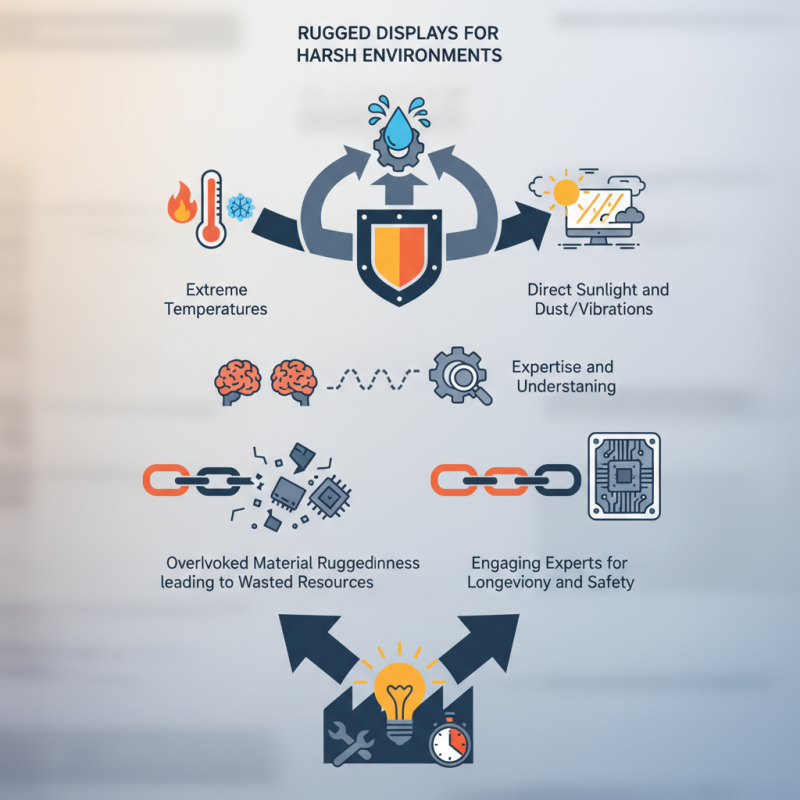
Rugged displays must withstand extreme temperatures, moisture, and physical impacts. For instance, screens designed for military use need to resist harsh vibrations and dust while providing clear visibility in direct sunlight. Industry professionals often face difficult decisions, navigating through specifications that may seem overwhelming.
Reflecting on the complexities of this choice, many overlook how the ruggedness of materials affects performance and longevity. This oversight can lead to wasted resources and compromised safety. Thus, engaging with experts can clarify these nuances. Ultimately, the right rugged display not only meets operational needs but also optimizes productivity in unforgiving environments.
Factors to Consider When Selecting Rugged Displays for Harsh Environments
Choosing the right rugged display for harsh environments is critical. Protective casings, display brightness, and temperature resistance are key factors to consider. A display's resilience, especially in industrial or outdoor applications, directly influences usability. Research indicates that up to 75% of electronic failures in severe conditions stem from inadequate display specifications.
Brightness is crucial. Effective sunlight readability can enhance productivity by 30% in field operations. Moreover, displays should sustain extreme temperatures, often ranging from -20°C to 60°C. A report from the International Journal of Electronics highlights that devices operating beyond recommended temperatures can fail up to twice as often.
Selecting the right touch technology is also vital. Resistive touch systems work well with gloves, while capacitive displays offer higher accuracy. Yet, they may underperform in wet conditions. A balance between sensitivity and durability shapes the user experience. It's essential to examine the specific needs of the intended environment for optimal performance.
Key Features of Rugged Displays for Enhanced Durability and Performance
When selecting a rugged display for harsh environments, durability is paramount. Key features include impact resistance, moisture sealing, and thermal stability. These elements ensure the display can withstand drops, water, and extreme temperatures commonly found in industrial settings. A high-grade glass cover can further enhance screen protection, preventing scratches and cracks.
Performance should also be a priority. Brightness and contrast ratios need to meet outdoor demands. A display with high sunlight readability ensures visibility even in direct sunlight. Additionally, touch functionality must remain effective, even when operators wear gloves or are in wet conditions. Evaluating these features can prevent costly errors in the long run.
It's crucial to remember that rugged displays, while impressive, may not be perfect. Some displays might struggle with color accuracy under extreme conditions. Others may have slower response times, impacting tasks requiring quick interactions. Regular testing in real-world scenarios can help identify these imperfections, leading to more informed decisions when choosing the right display for specific environments.
Understanding Environmental Conditions: Temperature, Humidity, and More
When selecting a rugged display for harsh environments, it’s vital to understand the environmental conditions. Temperature extremes can severely impact performance. Many devices fail to operate in frigid or scorching situations. Displays may crack or malfunction when they exceed their specified limits. High-quality rugged displays should function within a wide temperature range. Look for products designed to withstand both cold and heat effectively.
Humidity poses another challenge. Excess moisture can lead to fogging or electrical failures. Condensation on screens might ruin visibility. Manufacturers often use special coatings to enhance resistance to humidity and moisture. This detail is crucial for environments like marine settings or regions with heavy rainfall.
Consider other factors like dust and vibration. High dust levels can obstruct functionality. If a display cannot resist dust ingress, it may short-circuit. Vibration can loosen components inside. These problems often arise in industrial settings or vehicle-mounted displays. A reliable rugged display should provide detailed specifications on environmental tolerance, cutting through marketing jargon. Investigating user experiences can also be beneficial. Not all devices perform as promised. Always seek reviews on real-world usage, not just theoretical resilience.
Evaluating Industry Standards and Certifications for Rugged Displays
When selecting a rugged display for harsh environments, understanding industry standards is crucial. These standards dictate how resistant a display is to extreme temperatures, moisture, dust, and impacts. Familiarize yourself with ratings such as IP (Ingress Protection) and MIL-STD (Military Standard). These certifications indicate durability and operational limits. A display with IP67 rating can withstand dust and immersion in water, ensuring productivity in adverse conditions.
Consider the type of environment your display will face. For construction sites or manufacturing plants, a rugged display must endure physical stress. Look for certifications that emphasize resistance to vibration and shock. Additionally, displays should maintain functionality in varying light conditions and temperatures. Testing against these standards helps ensure operational reliability.
However, the specifications alone are not enough. Evaluating real-world performance is vital. User experiences can reveal limitations not covered by technical documents. Engage with users who have faced different scenarios. Their insights can shed light on the display's resilience and usability. A display's robustness might meet standards but fail in practical applications. Balancing specifications with firsthand accounts leads to informed choices. This reflective approach can greatly enhance your selection process.
Comparing Different Types of Rugged Displays: LCD vs. OLED
When selecting a rugged display for harsh environments, choosing between LCD and OLED is crucial. LCDs are typically more durable. They handle impacts and vibrations well, making them ideal for industrial settings. However, their visibility in direct sunlight can be a challenge. This is where OLED displays shine. They offer vibrant colors and deeper blacks. The contrast is often superior to LCDs.
Despite their advantages, both technologies have drawbacks. LCDs can suffer from slower refresh rates. This affects animations and rapid movements. In contrast, OLEDs might be more susceptible to burn-in, especially when displaying static images over time. Users must consider these factors based on their specific needs.
Lightweight and thin, rugged OLEDs are appealing for portable applications. Yet, their sensitivity to the elements raises flags for extreme environments. On the other hand, LCDs, while bulkier, tend to have better long-term stability and lifespan. Each type requires careful evaluation of the environment and intended use. Decisions should focus on practical needs and real-world scenarios, not just technical specifications.
How to Choose Rugged Display for Harsh Environments? - Comparing Different Types of Rugged Displays: LCD vs. OLED
| Feature | LCD | OLED |
| Brightness | Up to 1000 nits | Up to 600 nits |
| Contrast Ratio | 1000:1 | Infinite |
| Response Time | 5-10 ms | 0.1 ms |
| Power Consumption | Higher | Lower |
| Viewing Angles | Limited | Wide |
| Durability | Moderate | High |
| Sunlight Readability | Good | Better |
| Cost | Lower | Higher |