
Quality Products

At a Fair Price

Wholesale Provider

Of Valves & Fittings

  • Corporate Office: 1301 Greengrass Drive Houston, TX 77008
  • 1-800-237-2512

Quality Products

At a Fair Price

Wholesale Provider

Of Valves & Fittings

How to Choose the Right Black Rubber Conveyor Belt for Your Needs?

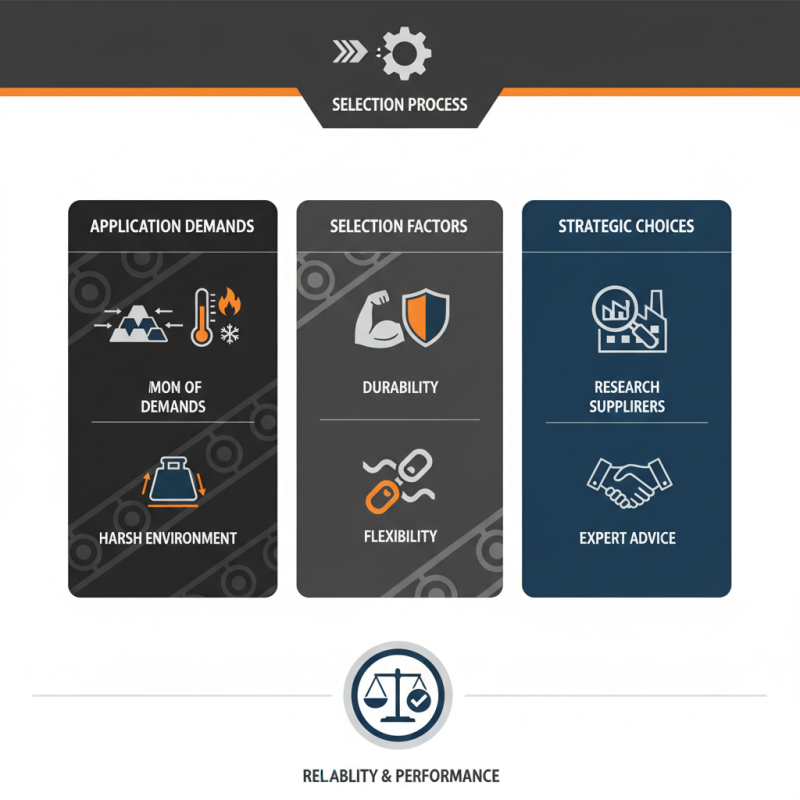
Choosing the right Black Rubber Conveyor Belt is crucial for various industries. The ideal belt must match specific requirements, such as load capacity and environmental conditions. Many factors influence this selection, including the belt's durability and flexibility.

Understanding your application's unique demands can help narrow your options. For instance, consider the materials being transported and the operating environment. Will the belt face extreme temperatures or abrasive materials? These questions guide your choice effectively.

Moreover, not every supplier offers the same quality. Researching manufacturers and seeking expert advice can lead to better outcomes. Each selection process carries some uncertainty, so weigh options carefully, focusing on reliability and performance.
How to Choose the Right Black Rubber Conveyor Belt for Your Needs?

Understanding the Different Types of Black Rubber Conveyor Belts

When selecting a black rubber conveyor belt, it’s crucial to understand the different types available in the market. Black rubber conveyor belts typically fall into two main categories: solid and fabric-reinforced. Solid belts are suitable for heavy-duty applications and offer excellent abrasion resistance. They can handle rough materials without significant wear and tear. On the other hand, fabric-reinforced belts are often lighter and more flexible, making them ideal for lighter loads and intricate applications. According to industry reports, approximately 36% of businesses prefer solid belts for industrial handling due to their robustness.

Durability and heat resistance are vital factors to consider. Many black rubber conveyor belts are designed to withstand extreme temperatures and harsh environments. For example, belts intended for mining or construction must endure high friction and resist cuts. Data from recent market analyses indicates that heat-resistant belts have become more popular, reflecting a growing demand for versatile solutions. Companies need to weigh their specific conditions against available options carefully. Not all belts excel in every environment.

Choosing the right type goes beyond just material. Experts suggest evaluating factors like load capacity and environment. Some belts perform better in wet conditions, while others may struggle. Inaccurate choices can lead to increased maintenance and operational downtime. Regular assessments are necessary to ensure the selected belt meets ongoing operational needs. A thoughtful approach increases efficiency and reduces costs, ultimately leading to smoother operations.

Evaluating the Specific Requirements for Your Application

Choosing the right black rubber conveyor belt requires careful evaluation of your application’s specific requirements. Factors such as load capacity, belt width, and environmental conditions are crucial. According to industry reports, around 75% of conveyor belt failures stem from mismatched specifications. This statistic highlights the importance of assessing your unique needs before making a decision.

Material handling applications vary widely. For instance, food processing demands belts that resist oil and dirt, while mining applications might require belts with higher abrasion resistance. Ensure the belt meets those specific standards. Tips: Always request technical data sheets. Check for compliance with industry standards like ISO or ASTM. This guarantees reliability and safety.

Temperature extremes can also impact performance. Selecting a belt with appropriate heat or cold resistance is essential. In fact, studies show that belts designed for specific temperature ranges last 20% longer in harsh conditions. Consider consulting with a technical expert to validate your selections. Tips: Test belts in real conditions when feasible. Don't rush this process; it impacts long-term ROI.

Considerations for Load Capacity and Durability

When selecting a black rubber conveyor belt, load capacity and durability are crucial factors. Research indicates that the average load capacity of rubber belts typically ranges from 300 to 1,500 pounds per linear foot, depending on belt width and construction material. Choosing the right load capacity ensures effective transportation of materials without compromising safety or causing excessive wear on the belt.

Durability is influenced by the belt's construction and its exposure to environmental factors. Many industry reports suggest that belts made from high-quality rubber compounds can resist abrasion, tears, and temperature fluctuations. For instance, a belt with a tensile strength of 2000 psi generally performs better in demanding applications. Despite this, some users may overlook the importance of regular inspections and maintenance, leading to premature failure.

**Tips:** Always match the belt's specifications with the material to be transported. Consider environmental conditions, such as heat or chemicals. Inadequate attention to proper tension can also result in increased wear over time. Taking these precautions can greatly extend the life of your conveyor belt.

How to Choose the Right Black Rubber Conveyor Belt for Your Needs? - Considerations for Load Capacity and Durability

Belt Type Load Capacity (lbs) Thickness (mm) Durability Rating Temperature Range (°F)
Standard Black Rubber 2000 6 Medium -10 to 180
Heavy-Duty Black Rubber 5000 10 High -30 to 220
Oil-Resistant Black Rubber 3000 8 Medium -20 to 200
Chemical-Resistant Black Rubber 4000 7 High -10 to 250

Selecting the Right Width and Length for Your Conveyor System

When selecting the right width and length for your rubber conveyor belt, precision is vital. The width of the belt directly affects its load capacity and efficiency. As a rule of thumb, a narrower belt may be suitable for lighter products, while wider belts are necessary for bulkier loads. According to a report by the International Rubber Study Group, belts wider than 1000 mm significantly improve throughput for industrial applications.

Length is another crucial aspect. Longer belts can cover more extensive distances and allow for flexible layout designs. However, excessive length may lead to increased wear and tear. A study indicates that belts over 300 meters in length require careful monitoring for tension and alignment issues. The belt's operating environment also plays a role. Heat, moisture, and heavy loads can all affect performance.

Consulting with industry experts can provide insights tailored to specific use cases. However, many users overlook this step. A common mistake is failing to account for the operational context, such as temperature variations or chemical exposure. Balancing belt width and length based on these factors can maximize efficiency and prolong service life. Don’t underestimate the complexity in making these selections; it requires a blend of practical experience and technical knowledge.

Assessing the Cost vs. Quality of Black Rubber Conveyor Belts

When choosing a black rubber conveyor belt, assessing cost versus quality is crucial. A lower-priced belt may seem appealing at first. However, it often comes with hidden costs. Frequent replacements lead to increased downtime. This can disrupt your operations and hurt productivity.

Investing in high-quality conveyor belts pays off in the long run. They generally offer better durability and performance. For example, belts made from high-grade rubber resist wear and tear more effectively. They also perform well under extreme conditions. These factors contribute to a lower total cost of ownership.

Not all suppliers are created equal. Some prioritize profit over quality. Researching suppliers is essential. Look for those with a proven track record in the industry. Ask for client testimonials or case studies. This will give you insight into their reliability and the performance of their products. Balancing cost and quality requires careful consideration. Make choices that reflect both your budget and operational needs.

Cost vs. Quality Assessment of Black Rubber Conveyor Belts

Top
error: Content is protected !!