
Quality Products
At a Fair Price
Wholesale Provider
Of Valves & Fittings
- HOME
- Products
- Ball Valves
- Bull Plugs & Swages
- Butterfly Valves
- Check Valves
- Cushion / Flow Tees & Bleed Rings
- Enhanced Oil Recovery
- Floating Ball Valves
- Foot Valves
- Forged Steel Fittings
- Forged Steel Outlets
- Gaskets-Insulation Kits
- Gate Valves
- Gate, Globe & Check Valves
- Malleable Fittings
- Needle Valves
- Nipples
- Piston Valves
- Plug Valves
- Stainless Steel Flanges, Fittings & Nipples
- Strainers
- Studs
- Trunnion
- Unions
- Weld Fittings & Flanges
- Manufacturers
- Advance
- American Block
- Anvil
- Balon
- Bonney Forge
- Champion
- Clayton Mark
- Crane
- Daniel
- DMIC
- GMI
- Galli & Cassina
- Hackney-Ladish
- JMC
- Lone Star
- MATCO
- Marpac-McCanna
- National Flange
- National Gasket
- Nordstrom
- Nutron
- PPI
- SHARPE
- SMI
- TEXSTEAM
- TEX-THREAD
- Titan
- USA Fastner
- Vogt
- Weld Bend
- Westbrook
- Wheatley
- Williams
- WKM
- Wolar
- Locations
- Contact
- Blog
- Careers
- Get a Quote
- HOME
- Products
- Ball Valves
- Bull Plugs & Swages
- Butterfly Valves
- Check Valves
- Cushion / Flow Tees & Bleed Rings
- Enhanced Oil Recovery
- Floating Ball Valves
- Foot Valves
- Forged Steel Fittings
- Forged Steel Outlets
- Gaskets-Insulation Kits
- Gate Valves
- Gate, Globe & Check Valves
- Malleable Fittings
- Needle Valves
- Nipples
- Piston Valves
- Plug Valves
- Stainless Steel Flanges, Fittings & Nipples
- Strainers
- Studs
- Trunnion
- Unions
- Weld Fittings & Flanges
- Manufacturers
- Advance
- American Block
- Anvil
- Balon
- Bonney Forge
- Champion
- Clayton Mark
- Crane
- Daniel
- DMIC
- GMI
- Galli & Cassina
- Hackney-Ladish
- JMC
- Lone Star
- MATCO
- Marpac-McCanna
- National Flange
- National Gasket
- Nordstrom
- Nutron
- PPI
- SHARPE
- SMI
- TEXSTEAM
- TEX-THREAD
- Titan
- USA Fastner
- Vogt
- Weld Bend
- Westbrook
- Wheatley
- Williams
- WKM
- Wolar
- Locations
- Contact
- About
- Careers
- Get a Quote
How to Choose Cold Rolled Coil Suppliers in 2026?
Choosing a Cold Rolled Coil supplier in 2026 requires more than comparing quoted prices. Steel markets move quickly, and a small specification error can affect an entire production run. Lakshmi Mittal, chairman of ArcelorMittal, once described steel as “the backbone of modern civilization.” That idea remains practical. The right supplier supports product quality, delivery stability, and business continuity.
Begin with the coil itself. Check grade, thickness, width, surface finish, yield strength, tensile strength, and dimensional tolerances. Request recent mill test certificates and confirm that laboratory results match the ordered material. A reliable supplier should explain the production mill, coating or oiling process, packaging method, and traceability system. Photographs can reveal loose wrapping, damaged edges, or poor moisture protection. They cannot replace an audit.
Delivery performance matters.
Ask for realistic lead times, not optimistic promises. Review warehouse capacity, export experience, inspection procedures, and complaint handling. A trial order can expose problems before they become expensive. It should include clear acceptance criteria and a documented inspection plan. Certifications are useful, but they are not proof of every shipment’s quality. Verify them carefully.
Price still matters. It should not control the decision alone. A cheaper Cold Rolled Coil may create slitting waste, surface defects, or unexpected delays. I have seen purchasing teams focus heavily on discounts and overlook packaging details. That approach deserves reconsideration. No supplier is perfect. The strongest partner communicates early, admits limitations, and improves after a failed delivery. In 2026, choose evidence over impressive promises.
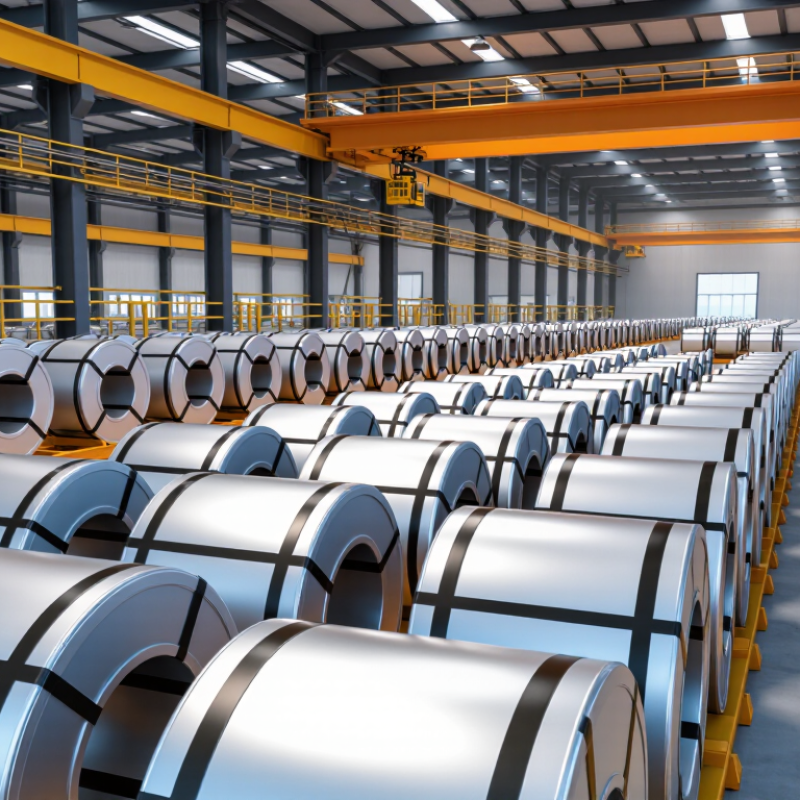
Define Your Cold Rolled Coil Requirements and Quality Standards
Choosing a cold rolled coil supplier starts with a precise specification, not a price request. Define steel grade, thickness, width, coil weight, inner diameter, surface finish, oiling, and edge condition. State allowable tolerances clearly. For example, EN 10130 covers cold rolled low-carbon steel for forming, while ASTM A1008 supports defined commercial and drawing-quality grades. Ask for yield strength, tensile strength, elongation, hardness, and dimensional results on every mill test certificate. Small gaps matter.
A practical specification also reflects your production line. A stamping plant may need stable r-values and excellent surface quality; a roll-forming line may prioritize flatness and consistent width. World Steel Association data recorded about 1.89 billion tonnes of global crude steel production in 2024. Large output does not guarantee suitable coil quality. The OECD Steel Outlook 2024 also highlights continuing capacity pressure, making traceability and process control more important. Request heat numbers, inspection records, packing photos, and sample coils before signing a long-term contract. Verify certificates through an independent laboratory when the application is safety-sensitive. ISO 9001 certification helps, but it is not proof of every coil’s performance. I have seen specifications copied between projects. That shortcut can hide unsuitable tolerances, so review real production data instead of relying only on polished documents.
Evaluate Supplier Certifications, Production Capacity, and Technology
How to Choose Cold Rolled Coil Suppliers in 2026?
Certification should be checked beyond a logo on a website. Ask for current ISO 9001 certificates, accredited issuing bodies, and scopes covering rolling, annealing, inspection, and testing. ISO 14001 and ISO 45001 can also indicate controlled environmental and workplace systems. Verify certificate numbers directly. A certificate alone proves little.
Production capacity needs practical evidence. The World Steel Association reported 1,884.6 million tonnes of global crude steel production in 2024. This scale shows market pressure, not supplier reliability. Request audited nameplate capacity, monthly output, line utilization, and backup arrangements. Compare these figures with your required gauge, width, surface finish, and delivery schedule. A supplier producing millions of tonnes may still lack your exact specification.
Technology matters on the coil line. Look for automated thickness gauges, laser flatness measurement, surface-defect cameras, controlled annealing, and traceable heat records. The International Energy Agency identifies steelmaking as responsible for roughly 7% to 9% of global energy-related emissions, making efficient equipment increasingly relevant. Ask for recent inspection records and sample data, not promotional claims. I would also inspect edge quality and oil consistency on physical samples. Small defects become expensive during stamping. That lesson is easy to overlook. Suppliers should explain calibration intervals, nonconformance handling, and corrective actions with clear evidence. Perfect records are unlikely, but unexplained gaps deserve caution.
Compare Coil Specifications, Pricing, Lead Times, and Logistics
How to Choose Cold Rolled Coil Suppliers in 2026?
Choosing a cold rolled coil supplier starts with specifications, not attractive prices. Confirm grade, thickness tolerance, width tolerance, surface finish, coil weight, and oiling requirements. Ask for mill test certificates and recent inspection records. The World Steel Association’s October 2024 outlook estimated global finished-steel demand at about 1.77 billion tonnes in 2025. Demand shifts can influence both availability and premiums. Compare prices using the same currency, delivery term, payment basis, and thickness. Otherwise, the cheapest quotation may be misleading. Numbers need context.
Lead time deserves equal attention. Request separate dates for production, quality inspection, port handling, and inland delivery. UNCTAD’s Review of Maritime Transport 2024 notes that maritime shipping carries over 80% of global trade by volume. A delayed vessel can therefore disrupt a factory schedule quickly. Check the loading port, transshipment risk, container or bulk method, insurance, and backup routes. Suppliers with clear logistics updates are easier to manage, even when delays occur. A perfect forecast does not exist.
Tips: Build a comparison sheet with delivered cost per tonne, not only the coil price. Require a written tolerance table and sample approval before volume orders. Test a small shipment when surface quality is critical. I would also review past delivery performance, because one late order can reveal more than a polished presentation. Recheck forecasts monthly; steel markets change faster than many purchasing plans.
Verify Supplier Reliability Through Audits, Samples, and References
Choosing cold rolled coil suppliers in 2026 requires evidence, not polished presentations. The World Steel Association reported 1.892 billion tonnes of crude steel production in 2023. This scale makes supplier screening essential. Request an on-site audit, or appoint an independent inspection team. Check rolling lines, annealing furnaces, coating controls, warehouse conditions, and calibration records. Review ISO 9001 certification scope, not only the certificate number. The ISO Survey 2022 recorded over 1.2 million ISO 9001 certificates worldwide, so certification alone proves limited capability.
Samples should represent normal production, not selected showcase coils. Test thickness, width, surface roughness, yield strength, tensile strength, elongation, and oiling condition. Match every result with the mill test certificate and heat number. Ask for three recent production lots. Compare results across lots. A clean sample can still hide process variation.
I learned this the hard way.
Tips: Contact at least three recent customers. Ask about delivery accuracy, claims, packaging damage, and corrective-action speed. Request anonymized inspection reports and shipment records. Confirm whether references bought the same grade and thickness. Keep one retained sample from every trial order. Small details matter. A supplier that resists traceability deserves deeper questioning. References may also be biased, so verify dates, quantities, and actual purchasing relationships before approval.
Select a Supplier Using Risk, Sustainability, and Long-Term Value Criteria
How to Choose Cold Rolled Coil Suppliers in 2026?
Select a Supplier Using Risk, Sustainability, and Long-Term Value Criteria
Choosing a cold rolled coil supplier should begin with evidence, not attractive pricing. The World Steel Association reported global crude steel production of 1.89 billion tonnes in 2023. This scale creates opportunities, but also uneven quality and capacity risks. Request recent mill test certificates, coating records, dimensional tolerances, and batch traceability before approving a supplier. Check whether coils arrive with dry packaging, protected edges, and consistent surface finish. Small rust marks can become expensive production problems.
Supplier resilience deserves equal attention. Review raw material sources, backup mills, port exposure, inventory levels, and realistic lead times. Ask for documented corrective actions after quality failures. A supplier that hides one complaint may hide a larger weakness. I would also compare payment terms, claims handling, and emergency allocation policies. The cheapest coil may not be the lowest-cost option.
Sustainability must be measurable. The International Energy Agency estimates that iron and steel create about 7% of global energy-related emissions. Therefore, request verified emissions data, electricity sources, recycled-content evidence, and progress toward lower-carbon production. Prefer suppliers using recognized environmental reporting and independent audits. Do not accept vague “green steel” language. The data may still be incomplete, and that deserves honest discussion. Build a scorecard covering risk, carbon intensity, quality stability, delivery performance, and total landed cost. Reassess it annually, because long-term value can change faster than a contract.
How to Choose Cold Rolled Coil Suppliers in 2026? - Select a Supplier Using Risk, Sustainability, and Long-Term Value Criteria
Supplier evaluation framework based on documented quality, supply-chain resilience, environmental evidence, compliance, and total cost of ownership.
| Evaluation Dimension | Weight | Evidence to Request | Objective Benchmark for 2026 | Scoring Guidance |
|---|---|---|---|---|
| Product Quality and Specification Control | 20% | Mill test certificates, inspection records, dimensional capability data, coating or surface-finish records, and conformity declarations. | Material must be supplied to the agreed standard, such as EN 10130, ASTM A1008/A1008M, or ISO 3575, with traceability from coil to certificate. | 5 = complete traceability and consistent capability data; 3 = partial evidence; 1 = undocumented or inconsistent control. |
| Delivery Reliability and Capacity | 15% | Historical on-time-in-full performance, production capacity statement, rolling forecast process, allocation policy, and logistics contingency plan. | Use at least 12 months of shipment data where available; require documented escalation procedures and an approved secondary logistics route. | 5 = transparent performance data and tested contingency plan; 3 = basic planning; 1 = no measurable delivery controls. |
| Financial and Commercial Risk | 12% | Audited financial information where legally available, payment terms, price-adjustment formula, credit references, and contract risk allocation. | Pricing should identify the index, adjustment frequency, validity period, currency exposure, and treatment of freight and energy surcharges. | 5 = transparent and balanced commercial terms; 3 = moderate uncertainty; 1 = material financial or contractual opacity. |
| Sustainability and Carbon Evidence | 15% | Product carbon footprint or verified environmental product declaration, system boundary, allocation method, energy data, recycled-content evidence, and emissions-reduction plan. | Data should be prepared consistently with ISO 14067, ISO 14025, the GHG Protocol, or applicable EPD program rules; the reporting boundary must be clearly stated. | 5 = independently verified product-level data; 3 = site-level data with limitations; 1 = unsupported environmental claims. |
| Environmental Management | 8% | Current environmental-management certification, permits, energy and water objectives, waste records, and significant environmental-aspect register. | An ISO 14001-certified management system is a strong indicator of structured controls, but certification must be checked for scope, validity, and site coverage. | 5 = certified, site-specific, and performance-oriented; 3 = documented controls without full certification; 1 = weak or unverifiable controls. |
| Responsible Sourcing and Compliance | 10% | Supplier code of conduct, human-rights policy, conflict-minerals statement where relevant, sanctions screening, anti-bribery controls, and subcontractor oversight. | Require documented legal compliance and risk-based due diligence covering the supplier’s own operations and relevant upstream sources. | 5 = audited, risk-based due diligence; 3 = policy-based controls; 1 = no formal compliance process. |
| Occupational Health and Safety | 5% | Safety-management certification, lost-time injury data, emergency procedures, contractor controls, and corrective-action records. | ISO 45001 certification or equivalent independently audited controls should cover the production site used for the proposed supply. | 5 = audited system and transparent trend data; 3 = basic safety program; 1 = incomplete or unavailable records. |
| Technical Service and Corrective Action | 5% | Engineering support contacts, nonconformance procedure, root-cause analysis examples, response-time commitments, and change-notification process. | Require documented corrective action using a recognized method, such as 8D or equivalent, with containment, root cause, action owner, and verification. | 5 = structured and measurable response process; 3 = informal support; 1 = no defined escalation route. |
| Total Cost of Ownership | 10% | Quoted price, freight, duties, inspection, packaging, inventory carrying cost, defect cost, payment terms, and carbon-data administration cost. | Compare landed cost and quality-adjusted cost rather than unit price alone; include expected scrap, claims, delays, and compliance documentation effort. | 5 = lowest credible lifecycle cost; 3 = competitive unit price with moderate hidden costs; 1 = low quote with high risk exposure. |
Risk Gate Before Scoring
| Gate | Minimum Requirement | Decision |
|---|---|---|
| Legal and Sanctions Screening | No unresolved sanctions, export-control, forced-labor, bribery, or material legal-compliance red flags in the relevant supply chain. | Fail = exclude or escalate |
| Specification Acceptance | Supplier confirms the required grade, dimensions, tolerances, surface condition, packaging, and inspection documentation in writing. | Fail = do not shortlist |
| Traceability | Coil identification must link the physical product to the mill test certificate and applicable inspection records. | Fail = corrective action required |
| Environmental-Claim Integrity | Any recycled-content or carbon claim must state its boundary, methodology, data period, and verification status. | Fail = claim not accepted |
Weighted Score Interpretation
| Weighted Result | Supplier Status | Recommended Action |
|---|---|---|
| 4.20–5.00 | Preferred strategic supplier | Consider a multi-year agreement, joint improvement plan, and periodic performance review. |
| 3.40–4.19 | Approved with monitoring | Use a corrective-action plan and review weak dimensions before increasing allocation. |
| Below 3.40 | High-risk or development-stage supplier | Limit exposure, require remediation, or retain only as a qualified backup source. |
