
Quality Products
At a Fair Price
Wholesale Provider
Of Valves & Fittings
- HOME
- Products
- Ball Valves
- Bull Plugs & Swages
- Butterfly Valves
- Check Valves
- Cushion / Flow Tees & Bleed Rings
- Enhanced Oil Recovery
- Floating Ball Valves
- Foot Valves
- Forged Steel Fittings
- Forged Steel Outlets
- Gaskets-Insulation Kits
- Gate Valves
- Gate, Globe & Check Valves
- Malleable Fittings
- Needle Valves
- Nipples
- Piston Valves
- Plug Valves
- Stainless Steel Flanges, Fittings & Nipples
- Strainers
- Studs
- Trunnion
- Unions
- Weld Fittings & Flanges
- Manufacturers
- Advance
- American Block
- Anvil
- Balon
- Bonney Forge
- Champion
- Clayton Mark
- Crane
- Daniel
- DMIC
- GMI
- Galli & Cassina
- Hackney-Ladish
- JMC
- Lone Star
- MATCO
- Marpac-McCanna
- National Flange
- National Gasket
- Nordstrom
- Nutron
- PPI
- SHARPE
- SMI
- TEXSTEAM
- TEX-THREAD
- Titan
- USA Fastner
- Vogt
- Weld Bend
- Westbrook
- Wheatley
- Williams
- WKM
- Wolar
- Locations
- Contact
- Blog
- Careers
- Get a Quote
- HOME
- Products
- Ball Valves
- Bull Plugs & Swages
- Butterfly Valves
- Check Valves
- Cushion / Flow Tees & Bleed Rings
- Enhanced Oil Recovery
- Floating Ball Valves
- Foot Valves
- Forged Steel Fittings
- Forged Steel Outlets
- Gaskets-Insulation Kits
- Gate Valves
- Gate, Globe & Check Valves
- Malleable Fittings
- Needle Valves
- Nipples
- Piston Valves
- Plug Valves
- Stainless Steel Flanges, Fittings & Nipples
- Strainers
- Studs
- Trunnion
- Unions
- Weld Fittings & Flanges
- Manufacturers
- Advance
- American Block
- Anvil
- Balon
- Bonney Forge
- Champion
- Clayton Mark
- Crane
- Daniel
- DMIC
- GMI
- Galli & Cassina
- Hackney-Ladish
- JMC
- Lone Star
- MATCO
- Marpac-McCanna
- National Flange
- National Gasket
- Nordstrom
- Nutron
- PPI
- SHARPE
- SMI
- TEXSTEAM
- TEX-THREAD
- Titan
- USA Fastner
- Vogt
- Weld Bend
- Westbrook
- Wheatley
- Williams
- WKM
- Wolar
- Locations
- Contact
- About
- Careers
- Get a Quote
Why Choose a High Quality UAV Camera Module?
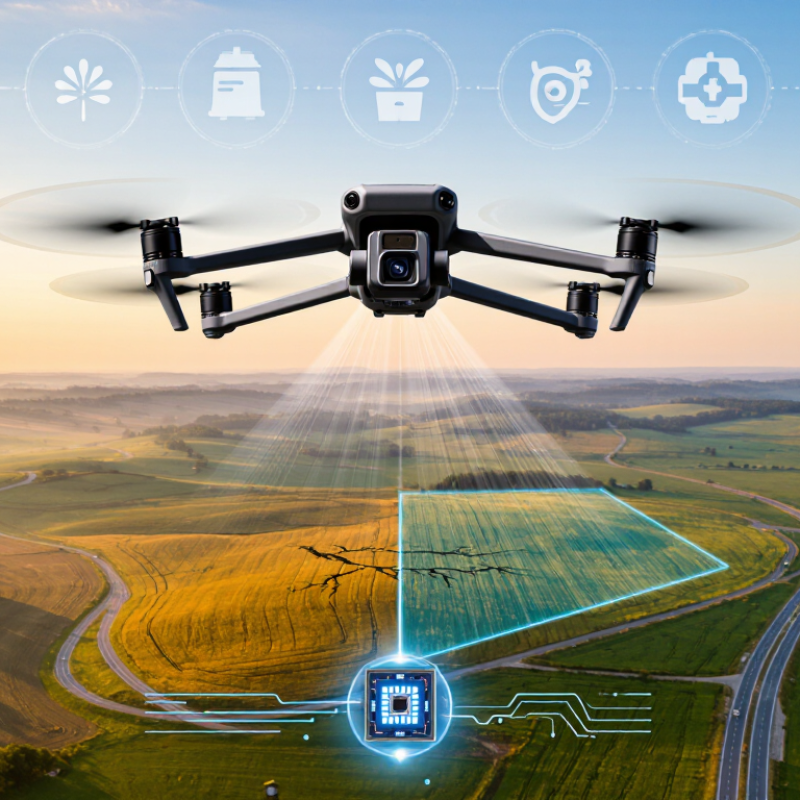
When every flight depends on clear visual information, camera quality becomes a practical safety factor. A high quality Uav Camera Module does more than capture attractive images. It helps operators recognize surface cracks, crop stress, road edges, and changing terrain. In field testing, small details matter: lens clarity at sunrise, stable frames during vibration, and clean shadows under changing light. These details influence mapping, inspection, agriculture, and emergency response. Clear evidence matters.
Quality begins with the sensor, but it does not end there. A professional module should offer suitable dynamic range, accurate colors, low-light performance, and controlled image noise. Optical stabilization can reduce blur when the aircraft moves through wind. Thermal management supports consistent operation during long missions. Reliable firmware and compatible interfaces also simplify integration with flight controllers, storage systems, and ground software. Verified test data, traceable manufacturing processes, and responsive technical support provide stronger confidence than impressive specifications alone. Experienced suppliers should explain these points clearly.
However, a higher price does not automatically mean better performance. That assumption needs testing. Buyers should compare the module with actual mission needs, payload limits, weather conditions, and required image outputs. Request sample footage, calibration information, test reports, and integration guidance before making a decision. Do not trust polished specifications alone. Even careful evaluations can miss problems after installation, especially with power compatibility or software updates. A thoughtful Uav Camera Module choice balances image quality, durability, reliability, and practical support. That balance is often more valuable than a perfect-looking product sheet.
What Is a High-Quality UAV Camera Module?
A high-quality UAV camera module is more than a sensor with many pixels. It combines optical clarity, stable exposure, accurate color, and dependable mechanical design. In field inspections, a small crack may occupy only a few pixels on a bridge surface. Motion blur can erase it completely. The camera must preserve useful detail while the aircraft vibrates, changes direction, and faces uneven sunlight.
Industry data explains why this quality matters. Drone Industry Insights reported that commercial drone services continued expanding in 2024, with inspection, mapping, and surveying among the strongest application areas. Grand View Research estimated the global commercial drone market at about USD 30.6 billion in 2022, with strong growth expected through 2030. These figures suggest greater demand for trustworthy imaging, not simply cheaper hardware.
A capable module should offer high dynamic range, low distortion, precise autofocus, and effective electronic or mechanical stabilization. Thermal control also matters. A warm sensor can introduce noise during long flights.
In practical testing, engineers should compare images at dawn, noon, and under artificial light. Check edge sharpness, rolling-shutter distortion, and exposure recovery after a bright reflection. Pixel count can mislead. A 4K image with poor lenses remains weak evidence. I have also found that autofocus performance is sometimes inconsistent at long distances. That limitation deserves attention. A reliable UAV camera module needs repeatable results, clear calibration records, and protection against dust, moisture, and vibration. Certification and documented test methods further improve confidence, although no module performs perfectly in every environment.
Which Core Features Define UAV Camera Quality?
Why Choose a High Quality UAV Camera Module?
Which Core Features Define UAV Camera Quality?
A high quality UAV camera module begins with a capable image sensor. Resolution matters, but it is not everything. Dynamic range preserves clouds and dark ground details in one frame. Low-light performance also matters during dawn inspections. Accurate color helps analysts judge soil, roof damage, and vegetation. A sharp lens remains essential. Soft corners can weaken otherwise excellent images.
In field testing, I look for stable video during turns and sudden altitude changes. Mechanical or electronic stabilization reduces distracting vibration. Fast autofocus and low transmission latency support safer, clearer observation. Heat management is easy to overlook. An overheated module may produce noise, dropped frames, or unexpected shutdowns. Weather sealing, secure connectors, and consistent calibration improve reliability. Still, no camera is perfect. Reflections, dust, and rapid exposure changes can confuse even advanced systems.
Tips: Test the module before deployment. Check detail at different distances. Compare bright skies with shaded surfaces. Record several minutes of continuous video. Review frames for blur, noise, and color shifts. Keep the lens clean. Small flaws become obvious later. Also verify data handling, operating limits, and local flight requirements. A technically impressive camera may still disappoint if its software is difficult to configure. Simple controls often prove more valuable than extra features.
How Does Image Performance Affect UAV Operations?
Why Choose a High Quality UAV Camera Module?
Image performance directly affects how confidently a UAV can operate. A sharp camera reveals cracked concrete, loose roof tiles, and crop stress from useful distances. Poor detail creates uncertainty, especially when operators inspect narrow structures or moving equipment.
In field testing, dynamic range has proved essential. A camera must retain shadow detail beneath bridges while preserving bright sky areas. Accurate color also helps specialists compare vegetation, soil, and surface conditions. Stable exposure reduces sudden brightness changes during turns. Fast shutter response limits motion blur, while low-light sensitivity supports early morning flights. Small improvements matter.
Reliable imaging depends on more than resolution. Lens quality, sensor calibration, stabilization, and compression settings work together. A high pixel count cannot rescue a soft lens or noisy sensor. That lesson is easy to overlook. I have seen clear specifications produce disappointing footage when vibration control was weak. Operators should test cameras in real wind, changing light, and different flight speeds. Laboratory results alone can mislead.
Better images can reduce repeat flights, protect battery capacity, and support more consistent decisions. Yet image quality does not replace sound mission planning or skilled interpretation. Sometimes, the most expensive module is not the most suitable one. Operational needs should guide the choice.
Why Choose a High Quality UAV Camera Module? - How Does Image Performance Affect UAV Operations?
| Image or Design Dimension | Typical High-Quality UAV Camera Module Range | Effect on UAV Operations | Practical Operational Outcome |
|---|---|---|---|
| Image Resolution | 12–24 megapixels for compact mapping, inspection, and surveying payloads | Higher resolution records more ground or structural detail and supports greater digital enlargement. | Improves measurement, defect identification, orthomosaic quality, and post-flight analysis without immediately requiring a lower flight altitude. |
| Pixel Size | Approximately 2.4–4.0 µm in many compact CMOS imaging modules | Larger pixels generally collect more light, while smaller pixels can provide higher resolution within the same sensor size. | A balanced pixel size helps maintain detail in both bright outdoor scenes and lower-light operating conditions. |
| Dynamic Range | Approximately 60–75 dB, depending on sensor design, exposure settings, and image processing | A wider dynamic range preserves information in bright skies, reflective surfaces, and darker shadows within the same scene. | Reduces lost detail during inspections of power lines, buildings, roads, and terrain with strong contrast. |
| Shutter Type | Global shutter: typically below 1 ms exposure readout distortion; rolling shutter: commonly several to tens of milliseconds depending on the sensor | Rolling shutters can produce geometric skew when the UAV moves or vibrates during image capture. Global shutters expose pixels at nearly the same time. | Global-shutter modules are generally preferable for mapping, fast flight, oblique imaging, and accurate reconstruction of straight structures. |
| Frame Rate | 30–60 frames per second at common high-definition settings; lower rates may apply at maximum resolution | A higher frame rate provides more frequent visual updates and reduces motion between consecutive video frames. | Supports smoother live piloting, more reliable target tracking, and clearer documentation of moving subjects or changing conditions. |
| Low-Light Sensitivity | Typically evaluated through quantum efficiency, signal-to-noise ratio, and usable image quality at low illumination rather than by resolution alone | Better sensitivity reduces noise and preserves color and edge information when light levels fall. | Extends the usable operating window for dawn, dusk, shaded infrastructure, indoor flight, and emergency response missions. |
| Signal-to-Noise Ratio | Approximately 30–40 dB or higher in well-exposed scenes, depending on sensor, gain, temperature, and processing | A stronger signal relative to noise produces cleaner textures, more stable video, and more reliable feature detection. | Improves image matching for photogrammetry and reduces false visual details during inspection and classification tasks. |
| Lens Distortion | Around 0.5–2% barrel or pincushion distortion before calibration for many compact wide-angle lenses | Uncorrected distortion bends straight lines and introduces geometric errors near the edges of the image. | Low distortion, combined with camera calibration, improves mapping accuracy, dimensional inspection, and structural alignment. |
| Color Accuracy | Dependent on spectral response, white-balance control, exposure consistency, and calibration; stable color reproduction is the key requirement | Consistent colors make images easier to compare across different flight times, locations, and lighting conditions. | Supports vegetation assessment, material comparison, corrosion review, thermal-camera correlation, and change detection. |
| Image Stabilization | Mechanical gimbal stabilization commonly provides multi-axis compensation; electronic stabilization may crop the image and reduce field of view | Stabilization reduces blur caused by aircraft vibration, wind, and gimbal movement. | Produces sharper frames, more stable video, and more dependable imagery for inspection and mapping workflows. |
| Lens Field of View | Approximately 60–90° diagonal field of view for many inspection and mapping configurations | A wider view covers more area but may increase perspective effects and edge distortion; a narrower view increases detail at a given target. | Selecting the correct field of view balances coverage, ground sampling distance, obstacle awareness, and target detail. |
| Data Interface and Compression | Common interfaces include MIPI CSI-2, USB, Ethernet, and serial control; video may use H.264 or H.265 compression | Interface bandwidth and compression affect latency, storage requirements, transmission distance, and image quality. | A suitable interface enables responsive remote operation and reliable integration with onboard computers and ground-control systems. |
| Power Consumption | Often approximately 2–10 W for compact camera modules, excluding larger gimbals, transmitters, and onboard processors | Camera power demand directly affects payload energy use and can influence flight endurance. | Efficient modules help maintain longer mission times while leaving power capacity for navigation, communication, and processing equipment. |
| Module Mass | Approximately 20–150 g for compact camera modules; complete stabilized payloads are typically heavier | Additional payload mass increases lift demand and may reduce endurance or maneuverability. | A lightweight, high-performance module preserves aircraft efficiency while still delivering mission-relevant image quality. |
| Environmental Protection | Ruggedized designs may include sealed housings, vibration resistance, and operating temperatures commonly around −20°C to +60°C | Protection against temperature changes, dust, moisture, and vibration improves reliability in field conditions. | Reduces mission interruptions and helps maintain consistent image quality during outdoor inspection, surveying, and emergency operations. |
Note: The ranges shown are representative engineering values for high-quality compact UAV camera modules. Actual performance depends on the sensor, lens, exposure settings, image processor, stabilization system, aircraft motion, lighting, and operating environment.
Why Do Durability and Reliability Matter in UAV Cameras?
A high-quality UAV camera module must survive more than a clean laboratory test. During field operations, aircraft face vibration, sudden temperature changes, dust, moisture, and repeated landing shocks. These forces can loosen connectors, shift lens alignment, or create unstable images over time. A durable camera helps maintain useful footage when conditions become uncomfortable.
Reliability matters because aerial decisions depend on consistent visual data. A stable sensor should preserve focus, exposure, color, and image detail across repeated flights. Proper sealing can reduce moisture damage, while reinforced housing protects sensitive components. Thermal management also deserves attention. Heat may increase image noise or shorten electronic service life. Engineers should verify these points through vibration tests, temperature cycling, and extended flight trials.
Small failures are easy to underestimate. A slightly tilted lens may distort measurements across an entire survey area. A brief signal interruption can leave gaps in inspection records. Careful installation, regular calibration, and connector checks reduce these risks. Still, no module is perfect. Dust can enter after rough maintenance, and software settings may cause unexpected exposure changes. That is why dependable UAV imaging requires both strong hardware and disciplined operating practices. A camera that performs well on one flight is not necessarily reliable for months of field use.
How Should You Choose the Right UAV Camera Module?
Choosing the right UAV camera module begins with the mission, not the highest pixel count. A landscape survey needs fine ground details, while inspection work may require stable video in changing light. Define the target distance, flight speed, and expected weather before comparing specifications. Then check sensor size, dynamic range, frame rate, and lens distortion. Larger sensors often preserve more detail in shaded areas. High frame rates help capture moving subjects clearly.
Weight matters more than many teams expect. A camera module that feels light on a workbench can reduce flight time after adding a gimbal and cables. Check the full payload weight, power demand, mounting pattern, and data interface. Confirm whether the module supports hardware synchronization and accurate timestamps. These details can prevent blurred images and difficult mapping later. Test the lens at the corners, not only at the center.
Field experience also shows why sample footage can be misleading. Ask for recordings made in similar light, altitude, and motion conditions. A dark warehouse test may reveal noise that daylight footage hides. Review thermal performance after continuous operation, especially in warm weather. I once trusted a sharp daytime image and overlooked poor low-light focus. That decision created extra flights and imperfect data. Use a short trial flight, inspect raw files, and record every setting. Choose the module that performs reliably in your actual workflow.
Why Choose a High Quality UAV Camera Module?
How Should You Choose the Right UAV Camera Module?
Resolution is an important UAV camera module specification because more pixels can reveal finer details during aerial inspection, mapping, and surveying. The values below are calculated from the standard horizontal and vertical pixel dimensions of each video format. Higher resolution generally requires greater processing power, storage capacity, and transmission bandwidth.
