2026 How to Choose the Best Usb Charger Socket for Your Needs?
When it comes to selecting the right Usb Charger Socket, making an informed choice can be overwhelming. Renowned expert in electrical engineering, Dr. Emily Carter, once stated, "A quality USB charger socket can greatly enhance your device's efficiency." This emphasizes the critical role these charging solutions play in our daily tech interactions.
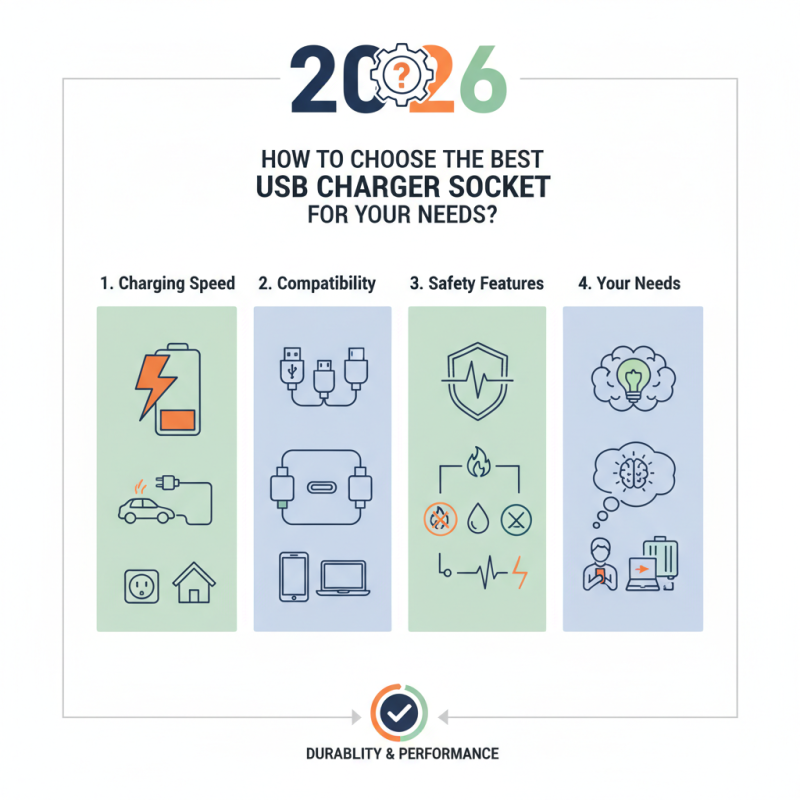
USB charger sockets are everywhere today, from homes to vehicles. Their importance lies in their ability to provide quick and reliable power. However, not all USB charger sockets are created equal. Factors like charging speed, compatibility, and safety features should be considered.
Choosing the best USB charger socket requires understanding your specific needs. It can be a daunting task. Users often overlook important details, which can lead to poor choices. Reflecting on these elements can guide you to the most suitable option. Ultimately, investing time in this selection process pays off in durability and performance.
Understanding the Different Types of USB Charger Sockets Available
When choosing a USB charger socket, it’s essential to understand the different types available. USB-A sockets are the most common. They are often found in older devices and are suitable for basic charging needs. USB-C ports offer faster charging capabilities and can work with a wider range of devices. Many modern smartphones and tablets now use USB-C connections, which can also support data transfer.
In addition to these, some sockets come with multiple ports. Multi-port chargers allow you to charge several devices simultaneously. This can be handy in a home or office environment where multiple users need power. However, be cautious. Not every multi-port charger distributes power equally. Some devices may charge slowly if too many devices are connected.
The power output of a USB socket is another critical factor. Different devices require different wattages. A phone may need 5W, while a tablet might require 10W or more. Choosing an underpowered charger can lead to frustration. It’s crucial to match the charger’s output with your devices’ requirements to ensure efficient charging. Always pay attention to power ratings.
Key Features to Consider When Choosing a USB Charger Socket
When selecting a USB charger socket, key features play a significant role. Consider the number of ports available. A model with multiple ports allows you to charge several devices simultaneously. This is more efficient, especially in a busy household or an office. A socket with fast charging capability can significantly reduce wait times for your devices. Look for specifications that indicate the charging speed.
Safety features cannot be overlooked. Overcurrent protection, short-circuit prevention, and surge protection ensure that your devices remain safe while charging. A reliable charger socket should also comply with regulatory certifications. This adds a layer of trust to your purchase.
Finally, pay attention to design and installation options. Some models fit seamlessly into walls, while others are portable. Consider where and how you will use the socket. A versatile charger socket can adapt to different environments, making it more useful. Balance your needs with available options. Sometimes, the best choice isn’t the one with the most features but the one that aligns with your requirements.
Assessing Compatibility with Your Devices and Charging Needs
When selecting a USB charger socket, compatibility is critical. Different devices have varied charging requirements. For instance, smartphones typically need 5V at 1-3A, while tablets may require 5V at 2.1A or higher. It's essential to evaluate how much power your devices consume. A study by the International Telecommunication Union found that mismanaged charging could waste up to 30% of energy.
Some chargers come with multiple ports. This feature can be tempting but can result in slower charging speeds if not designed properly. Research shows that a charger’s efficiency drops when multiple devices are connected. If one port is used, the power output can meet the quicker charging demands. It's worth considering the number of devices you plan to charge simultaneously.
Another factor is the longevity of the charger. Not all chargers are made to support fast charging over time. Frequent power surges can degrade performance. A survey by the Consumer Electronics Association found that over 15% of users replace their chargers within a year due to failure. Choosing a high-quality charger might seem costly, but it can save money and hassle in the long run.
Evaluating Safety Standards and Certifications for USB Charger Sockets
When choosing a USB charger socket, safety standards and certifications are crucial. A reliable charger should comply with established regulations. Look for certifications like UL, CE, or FCC. These signify that the product meets safety requirements. Ignoring this aspect could lead to overheating or electrical fires.
Examine the build quality as well. A sturdy design is essential for durability and safety. Poor construction can lead to issues like loose connections. Opt for products with quality materials. Check user reviews to gauge performance under real-world conditions.
Be wary of overly cheap options. These might lack essential safety features. Research extensively before committing to a purchase. Safety should never be an afterthought. Prioritize reliable sources of information to guide your choice.
Comparing Price Points and Brands for Value and Reliability
When choosing a USB charger socket, price and brand reliability are crucial. Many consumers tend to focus solely on the price tag. However, a cheaper option may sacrifice quality or safety. It’s essential to compare various price points to find a balance between affordability and performance.
Look for sockets that offer multiple charging ports. This feature adds convenience for users with multiple devices. Some models provide fast charging capabilities, which can be a significant advantage. Pay attention to the specifications detailed by manufacturers. Many consumers overlook the importance of this information.
Research brand reputation. A well-rated brand usually indicates greater reliability. However, don't dismiss lesser-known brands too quickly. Some offer innovative features at a fraction of the cost. Read customer reviews for insights, but be wary of overly positive or negative experiences. Personal testimonies can sometimes mislead. Balance your choices with product specifications and reviews to make an informed decision.