
Quality Products
At a Fair Price
Wholesale Provider
Of Valves & Fittings
- HOME
- Products
- Ball Valves
- Bull Plugs & Swages
- Butterfly Valves
- Check Valves
- Cushion / Flow Tees & Bleed Rings
- Enhanced Oil Recovery
- Floating Ball Valves
- Foot Valves
- Forged Steel Fittings
- Forged Steel Outlets
- Gaskets-Insulation Kits
- Gate Valves
- Gate, Globe & Check Valves
- Malleable Fittings
- Needle Valves
- Nipples
- Piston Valves
- Plug Valves
- Stainless Steel Flanges, Fittings & Nipples
- Strainers
- Studs
- Trunnion
- Unions
- Weld Fittings & Flanges
- Manufacturers
- Advance
- American Block
- Anvil
- Balon
- Bonney Forge
- Champion
- Clayton Mark
- Crane
- Daniel
- DMIC
- GMI
- Galli & Cassina
- Hackney-Ladish
- JMC
- Lone Star
- MATCO
- Marpac-McCanna
- National Flange
- National Gasket
- Nordstrom
- Nutron
- PPI
- SHARPE
- SMI
- TEXSTEAM
- TEX-THREAD
- Titan
- USA Fastner
- Vogt
- Weld Bend
- Westbrook
- Wheatley
- Williams
- WKM
- Wolar
- Locations
- Contact
- Blog
- Careers
- Get a Quote
- HOME
- Products
- Ball Valves
- Bull Plugs & Swages
- Butterfly Valves
- Check Valves
- Cushion / Flow Tees & Bleed Rings
- Enhanced Oil Recovery
- Floating Ball Valves
- Foot Valves
- Forged Steel Fittings
- Forged Steel Outlets
- Gaskets-Insulation Kits
- Gate Valves
- Gate, Globe & Check Valves
- Malleable Fittings
- Needle Valves
- Nipples
- Piston Valves
- Plug Valves
- Stainless Steel Flanges, Fittings & Nipples
- Strainers
- Studs
- Trunnion
- Unions
- Weld Fittings & Flanges
- Manufacturers
- Advance
- American Block
- Anvil
- Balon
- Bonney Forge
- Champion
- Clayton Mark
- Crane
- Daniel
- DMIC
- GMI
- Galli & Cassina
- Hackney-Ladish
- JMC
- Lone Star
- MATCO
- Marpac-McCanna
- National Flange
- National Gasket
- Nordstrom
- Nutron
- PPI
- SHARPE
- SMI
- TEXSTEAM
- TEX-THREAD
- Titan
- USA Fastner
- Vogt
- Weld Bend
- Westbrook
- Wheatley
- Williams
- WKM
- Wolar
- Locations
- Contact
- About
- Careers
- Get a Quote
China Top 10 Floating Ball Manufacturers for Global Buyers
China’s floating ball manufacturing sector has become a practical sourcing destination for oil, gas, water, chemical, and general process industries. Buyers now examine more than price. They check materials, pressure ratings, testing records, traceability, and after-sales support.
Industry reports support this shift. The MarketsandMarkets Industrial Valves Market report identifies Asia-Pacific as a major growth region, supported by expanding energy, water treatment, and manufacturing projects. Grand View Research also highlights rising demand for corrosion-resistant valves and automated flow-control equipment. These trends make Chinese manufacturers increasingly relevant to global procurement teams.
The details matter.
A floating ball valve should provide reliable shutoff under changing pressure. Its ball, seats, stem, body, and seals must work together. Valve engineer Richard W. Greene states, “A floating ball succeeds only when sealing performance remains stable under real operating conditions.” That principle deserves attention, although supplier claims still require independent verification.
This guide reviews China’s top 10 floating ball manufacturers for global buyers. It considers production experience, certifications, machining capability, pressure testing, export records, customization, and technical communication. Factory photographs can help, but they do not replace inspection reports. ISO 9001 certification is useful, yet it does not automatically prove product quality.
A ranking is never absolute. The best supplier for a refinery may not suit a municipal water project. Buyers should compare API 6D or relevant standard compliance, fire-safe testing, low-emission design, delivery control, and replacement-part availability. Clear drawings and documented test results often reveal more than polished marketing language. Some suppliers may look similar on paper. Their field performance may differ considerably.
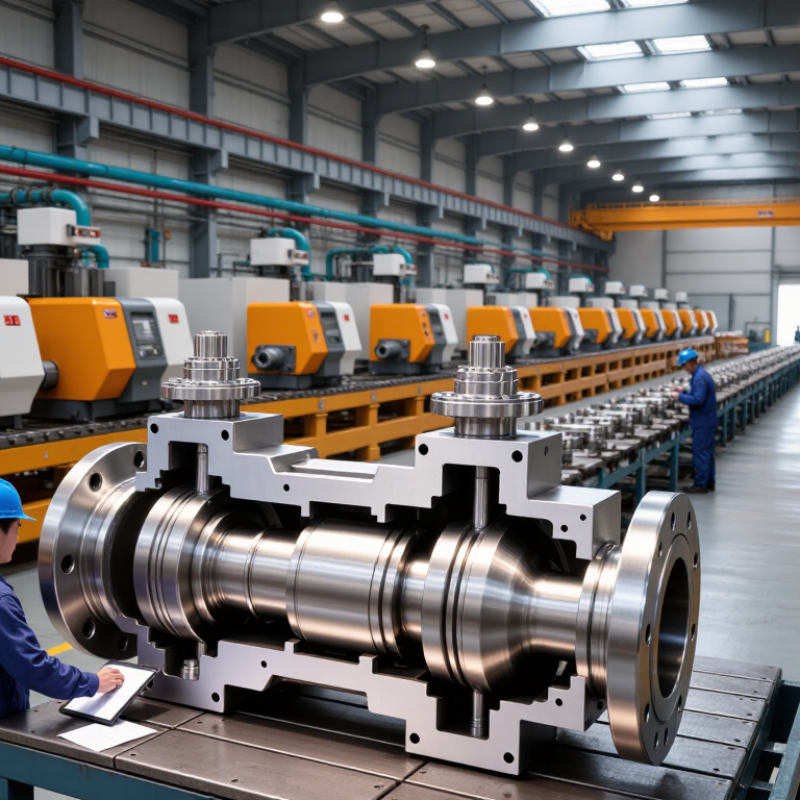
What Are Floating Ball Valves and How Do They Work?
A floating ball valve uses a hollow sphere that is not fixed on a lower trunnion. The stem turns the ball through 90 degrees. When the bore aligns with the pipeline, fluid passes with limited obstruction. When closed, upstream pressure pushes the ball toward the downstream seat. That contact creates the seal. Simple, but not effortless.
This design suits water, oil, gas, and many process lines. It usually offers compact construction and quick shutoff. However, higher pressure can increase seat loading and operating torque. Poor alignment, dirty media, or unsuitable seat materials may cause leakage. Field technicians should verify pressure class, temperature range, fire-safe requirements, and end connections against API 6D, ISO 17292, and ASME B16.34. The 2024 Grand View Research industrial valves report estimated the global market at about USD 78 billion in 2023, with continued growth through 2030. That figure covers many valve types, not floating balls alone. This distinction matters. Buyers should not treat broad market data as proof of one valve’s performance. A practical inspection should include shell testing, seat testing, material certificates, and cycle testing. Small details decide reliability.
How the Top 10 Manufacturers Were Selected
Selecting the top 10 floating ball manufacturers requires more than checking online visibility. We used a weighted review of manufacturing capacity, export experience, quality systems, and product evidence. Grand View Research estimated the global industrial valves market at USD 78.7 billion in 2023, showing strong competition and buyer choice. Market size alone, however, cannot prove engineering reliability.
Each manufacturer was assessed against documented pressure-test procedures, material traceability, and production consistency. We examined test certificates, inspection records, machining controls, and sample delivery performance.
Compliance with API 6D, ASME B16.34, and ISO 5208 was treated as a practical benchmark. ISO 5208 leakage classifications helped us compare shutoff performance under controlled conditions.
We also reviewed corrosion-resistant materials, seat design, pressure ratings, and support for customized dimensions.
Field experience matters.
We contacted manufacturers about lead times, replacement parts, and technical responses. A prompt answer is useful, but it is not enough. We gave higher scores to suppliers that could provide clear evidence rather than polished claims.
Some production data remained confidential, so the ranking cannot be perfectly neutral. Regional freight conditions and changing steel prices also affect comparisons. That limitation deserves attention. The final selection therefore combines published industry data, standards-based checks, factory capability, and buyer-focused verification.
Profiles of China’s Top 10 Floating Ball Manufacturers
China’s top ten floating ball manufacturers serve different buyer requirements, from standard water valves to demanding oil, gas, and chemical applications. Their profiles should be judged by production depth, inspection discipline, and documented export experience. A large machining facility may offer speed, but capacity alone does not prove reliability.
Several manufacturers focus on stainless steel floating balls for corrosive media. Their workshops commonly use CNC lathes, automated polishing, and material traceability records. Others specialize in carbon steel or alloy steel components, supporting larger valve assemblies and lower-temperature service. Some suppliers maintain in-house heat treatment, while others rely on approved subcontractors. That difference affects consistency. Buyers should request furnace records, hardness results, and sample inspection reports.
The strongest profiles usually show stable dimensional control, clean sealing surfaces, and practical testing procedures. Pressure testing should match the agreed standard and operating conditions. Packaging also matters, especially when machined surfaces must survive long ocean transport. A few manufacturers appear impressive online but provide limited evidence beyond catalog photographs. That is a warning sign. Factory audits, video inspections, and third-party testing can reveal gaps before payment. Even experienced purchasers may overlook communication quality, which often predicts how quickly technical problems are handled. A supplier that accepts reasonable questions is easier to assess. Perfect claims deserve caution. Real manufacturing includes occasional defects, corrective actions, and lessons from field feedback.
Comparing Product Quality, Certifications, and Production Capacity
China Top 10 Floating Ball Manufacturers for Global Buyers
When comparing China’s top ten floating ball manufacturers, product quality should begin with traceable materials. Ask for heat numbers, mill certificates, and positive material identification reports. For stainless steel bodies, inspect surface finish, casting repair records, and dimensional tolerances. Ball roundness matters because small deviations can increase seat wear and operating torque. Each valve should also pass shell and seat tests under documented procedures.
Certifications provide useful evidence, but they are not automatic proof of consistent quality. ISO 9001 supports process control, while API 6D may indicate suitability for pipeline service. ISO 15848 testing can help assess fugitive emissions performance. Verify certificate scope, issuing body, expiry date, and manufacturing site. A copied certificate is worthless. Request recent inspection records and sample test videos when possible.
Production capacity needs practical verification. Review monthly output, machining equipment, assembly stations, testing benches, and available skilled technicians. A factory may advertise thousands of valves monthly but rely heavily on subcontractors. That can affect traceability and delivery control. Check whether the supplier can maintain pressure ratings, sizes, and materials across repeated orders. Lead times should include testing and export documentation. Smaller batches may receive better attention, though this is not always true. Capacity figures can mislead. A site audit, independent inspection, and clear quality agreement remain valuable safeguards.
China Top 10 Floating Ball Manufacturers for Global Buyers - Comparing Product Quality, Certifications, and Production Capacity
| Rank | Anonymous Manufacturer ID | Primary Product Focus | Typical Size Range | Pressure Classes | Common Materials | Quality Indicators | Typical Certifications | Estimated Annual Capacity | Testing Capabilities | Export Readiness | Best Fit for Buyers |
|---|---|---|---|---|---|---|---|---|---|---|---|
| 1 | Manufacturer 01 | Industrial and pipeline floating ball valves | DN15–DN600 / ½–24 in | Class 150–600; PN10–PN100 | Carbon steel, stainless steel, duplex stainless steel | ISO 5211 mounting, anti-static design, fire-safe construction options | ISO 9001, API 6D or API 608, CE/PED options | Approximately 18,000–30,000 units/year | Hydrostatic shell, seat leakage, pneumatic and low-pressure tests | Strong OEM support and export packaging | Oil, gas, water treatment and general process industries |
| 2 | Manufacturer 02 | API-compliant two-piece and three-piece valves | DN8–DN500 / ¼–20 in | Class 150–600; PN16–PN63 | 316/316L stainless steel, carbon steel, forged brass | Investment and precision casting, traceable pressure testing | ISO 9001, API 608, CE, ISO 15848 options | Approximately 12,000–22,000 units/year | Shell, seat, torque, dimensional and fugitive-emission testing | Multi-language documentation and customized markings | Distributors, skid builders and industrial OEM projects |
| 3 | Manufacturer 03 | High-pressure forged floating ball valves | DN15–DN300 / ½–12 in | Class 300–1500; PN40–PN250 | Forged carbon steel, alloy steel, stainless steel | Forged bodies, fire-safe options, conductive stem designs | ISO 9001, API 6D, API 607, NACE MR0175 options | Approximately 6,000–12,000 units/year | High-pressure hydrostatic, gas seat and fire-safe testing | Suitable for project documentation and third-party inspection | Upstream oil and gas, petrochemical and power applications |
| 4 | Manufacturer 04 | Stainless-steel sanitary and process valves | DN15–DN200 / ½–8 in | PN10–PN40; Class 150–300 | 304/304L and 316/316L stainless steel | Low-roughness internal surfaces and polished flow passages | ISO 9001, CE, FDA-compatible sealing options, 3-A options | Approximately 8,000–16,000 units/year | Pressure, cleanliness, surface-finish and seat-leakage inspection | Small-batch customization and export certificates available | Food, beverage, pharmaceutical and clean-water systems |
| 5 | Manufacturer 05 | Large-bore flanged floating ball valves | DN50–DN800 / 2–32 in | Class 150–600; PN16–PN100 | Ductile iron, carbon steel, stainless steel | Heavy-duty castings, replaceable seats and extended service options | ISO 9001, API 6D, CE/PED options | Approximately 5,000–10,000 units/year | Large-valve hydrostatic, seat, coating and dimensional testing | Experienced with containerized and project shipments | Water transmission, mining, power and industrial utilities |
| 6 | Manufacturer 06 | Compact threaded and socket-weld ball valves | DN8–DN100 / ¼–4 in | Class 150–1000; PN16–PN63 | Brass, carbon steel, stainless steel | Automated machining, consistent thread control and batch testing | ISO 9001, CE, RoHS options for selected product lines | Approximately 25,000–45,000 units/year | Air, water, shell-pressure and seat-leakage tests | High-volume private-label and standard-product support | HVAC, compressed air, plumbing and light industrial systems |
| 7 | Manufacturer 07 | Low-temperature and cryogenic service valves | DN15–DN300 / ½–12 in | Class 150–600; PN16–PN100 | Austenitic stainless steel and nickel-alloy trim | Extended bonnet designs, low-temperature seals and controlled cleaning | ISO 9001, CE/PED, API 608 options | Approximately 3,000–7,000 units/year | Cryogenic, helium, shell, seat and vacuum-related inspections | Project-based engineering and inspection-document support | LNG, industrial gases, refrigeration and low-temperature processes |
| 8 | Manufacturer 08 | Corrosion-resistant valves for chemical service | DN15–DN400 / ½–16 in | Class 150–600; PN16–PN100 | 316L, duplex, super duplex and alloy trim | Material traceability, PMI inspection and specialized seat combinations | ISO 9001, CE/PED, NACE and ISO 15848 options | Approximately 4,000–9,000 units/year | PMI, hydrostatic, seat, coating and fugitive-emission testing | Supports MTRs, inspection plans and third-party witness testing | Chemical processing, marine systems and desalination plants |
| 9 | Manufacturer 09 | Actuated floating ball valve packages | DN15–DN300 / ½–12 in | Class 150–600; PN16–PN100 | Carbon steel, stainless steel and ductile iron | ISO 5211 interfaces, actuator sizing and packaged functional testing | ISO 9001, CE, ATEX options for selected actuator assemblies | Approximately 7,000–14,000 valve packages/year | Pressure, torque, electrical continuity and actuator cycle testing | Integrated valve-and-actuator documentation for export projects | Water treatment, HVAC, automation and process-control systems |
| 10 | Manufacturer 10 | Customized OEM floating ball valves | DN8–DN500 / ¼–20 in | Class 150–600; PN10–PN100 | Brass, carbon steel, stainless steel and lined options | Flexible drawings, custom materials and lot-based inspection plans | ISO 9001, CE, API 608 options depending on configuration | Approximately 10,000–20,000 units/year | Shell, seat, pneumatic, dimensional and coating tests | Suitable for private-label orders and mixed-container shipments | Importers, distributors and equipment manufacturers |
How Global Buyers Can Choose the Right Manufacturer
Choosing among China’s top floating ball manufacturers requires more than comparing online rankings. A suitable supplier must match your service conditions, not merely offer a low quotation. Share media type, pressure class, temperature range, port size, end connection, and operating frequency. Ask whether the valve suits pipeline isolation, storage systems, or another duty. These details expose weak assumptions early. A polished catalog cannot replace engineering discussion.
Request material certificates, dimensional drawings, pressure-test records, and serial-number traceability. For critical pipeline service, confirm applicable standards such as API 6D, ISO 5208, or your project specification. Check how the manufacturer controls casting, machining, assembly, and final inspection. Independent inspection can verify results before shipment. I have found that clear test procedures often reveal more than impressive factory photographs. Ask to see corrective-action records, too. No supplier has a perfect history.
Evaluate communication during sampling. Do engineers answer directly, identify design risks, and explain deviations in writing? Confirm spare-part availability, warranty terms, packaging protection, and realistic lead times. A factory that accepts every request may avoid technical responsibility. That is a warning sign. Compare sample units using the same criteria, including torque, leakage, coating quality, and documentation accuracy. If price drives the decision, the evaluation is incomplete. Leave room to revise specifications after field feedback. Real operating data may challenge the original selection.
China Top 10 Floating Ball Manufacturers for Global Buyers – How Global Buyers Can Choose the Right Manufacturer
Use pressure-class capability as one objective screening factor when evaluating floating ball valve manufacturers. The chart shows reference pressure ratings for ASTM A216 WCB carbon steel at 100°F (38°C), based on ASME B16.34 class designations.
Reference values: ASME B16.34 pressure-temperature rating tables. Actual allowable pressure depends on body material, temperature, valve design, size, end connection, testing requirements, and applicable standards. Buyers should request the manufacturer’s pressure-temperature chart, material certificates, test records, and compliance documentation.
Related Posts
-
How to Choose the Right Floating Ball for Your Industrial Applications
-
Best Floating Ball Suppliers for Your Needs?
-
Top 10 Fittings and Valves Buyers Need to Know?
-
How to Choose the Right Stainless Steel Ball Valves for Your Application
-
Top 10 Needle Valves for Global Buyers
-
What is a Steel Flange and How is it Used?
