What Are the Best Water Supply Tanks Made in China?
Choosing the best Water Supply Tanks made in China requires more than comparing prices or polished product photos. Tank performance depends on material quality, fabrication accuracy, storage conditions, and after-sales support. Stainless steel, galvanized steel, polyethylene, and sectional panel tanks each serve different projects. A rooftop tank may need lightweight construction, while an industrial installation may require reinforced panels and stronger connections.
Reliable evaluation begins with practical evidence. Check the manufacturer’s production experience, factory inspection records, welding procedures, and material certificates. Ask whether the tank has passed leak testing, pressure checks, and dimensional inspections. For drinking water applications, confirm suitable sanitary materials and recognized compliance documentation for the intended market. These details matter when water remains inside the tank for long periods. A trustworthy supplier should explain cleaning access, inlet design, drainage, overflow protection, and maintenance requirements clearly.
Look closely.
The “best” option is not always the largest or cheapest model. It should match local climate, water quality, installation space, expected service life, and available technical support. Photographs can help, but they cannot replace factory audits or sample inspections. Some specifications may also be incomplete, especially when suppliers use different testing methods. That uncertainty deserves attention. Buyers should compare several quotations, request drawings, and verify every critical claim before placing an order. This guide examines Chinese Water Supply Tanks through these practical standards, focusing on durability, hygiene, customization, quality control, and long-term value rather than marketing language alone.
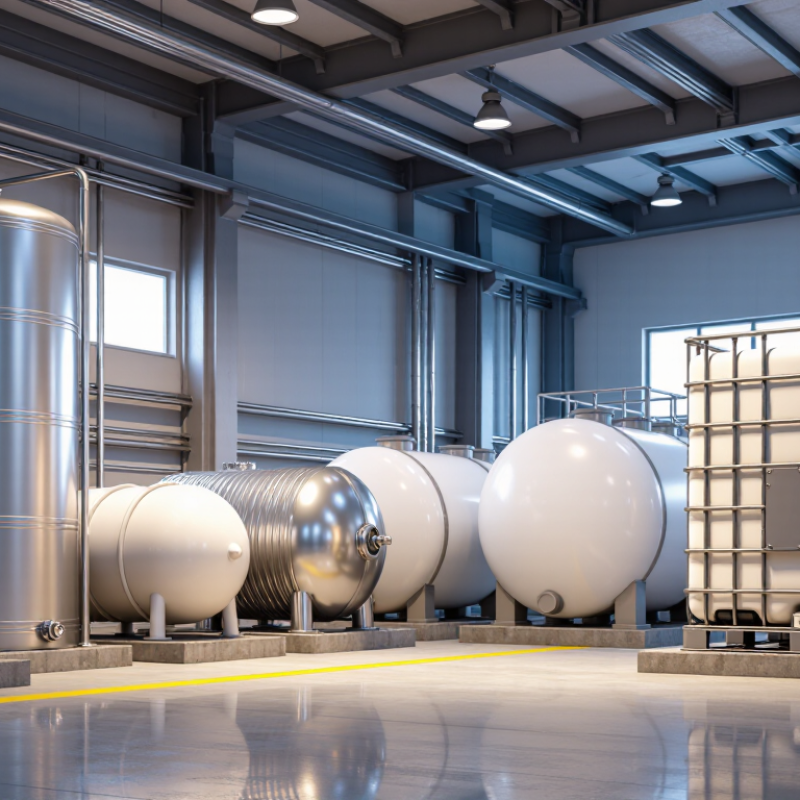
Chinese Water Tank Types: HDPE, FRP, Stainless Steel, and Concrete
What Are the Best Water Supply Tanks Made in China?
Chinese water tank manufacturing covers four practical choices: HDPE, FRP, stainless steel, and concrete. Each material behaves differently under sunlight, chemicals, temperature changes, and installation pressure. Choosing by price alone often creates expensive repairs later.
HDPE tanks are lightweight, corrosion-resistant, and suitable for many domestic and agricultural uses. Their smooth inner walls help reduce sediment buildup. However, strong sunlight can affect some grades, so UV protection matters. FRP tanks offer good strength with low weight and resist many chemicals. They need careful inspection around joints, flanges, and support frames. Small installation errors can cause cracking or leakage.
Stainless steel tanks provide a clean surface and strong durability for drinking water, commercial buildings, and food-related facilities. The steel grade and welding quality deserve close attention. Ask for weld records, leak-test results, and material documentation. Concrete tanks suit large underground or fixed-volume systems. They can handle substantial capacity, but curing, waterproofing, and foundation design are critical. Concrete is not automatically safer. I would not treat a thicker wall as proof of quality. Before ordering from China, compare drawings, water-contact documents, inspection records, and after-sales repair plans. The best tank depends on water quality, site conditions, budget, and maintenance access.
Capacity Design Under China’s GB 50015-2019 Water-Supply Standard
What Are the Best Water Supply Tanks Made in China?
Capacity Design Under China’s GB 50015-2019 Water-Supply Standard
The best water supply tank is not the largest one. It is the tank sized for verified demand, peak flow, and operating conditions. GB 50015-2019 requires designers to assess building use, supply pressure, fixture demand, and storage functions. It does not provide one universal tank volume. That distinction matters.
China’s 2023 Water Resources Bulletin reported national water use of approximately 590.7 billion cubic meters. Domestic use represented about 14% of the total. These figures show why demand assumptions need local verification. A residential tower, hospital, and factory cannot share one capacity formula. Engineers should calculate average demand, hourly peaks, required reserve, and refill time. Then, they should test the result against actual occupancy.
Keep the calculation visible.
For a rooftop tank, engineers should check structural loading, effective volume, dead storage, overflow, drainage, and cleaning access. A 20-cubic-meter tank may look adequate on paper, yet fail during morning demand peaks. A tank that refills too slowly creates the same problem. Fire water storage must be separated or coordinated with applicable fire codes, including GB 50974 where relevant. The China Urban Construction Statistical Yearbook also shows continuing expansion of urban water infrastructure, increasing the need for maintainable systems. In practice, I would request hydraulic calculations, material certificates, weld inspection records, and a commissioning report. One uncomfortable truth remains: many capacity designs rely on guessed occupancy. That shortcut deserves review.
Potable-Water Safety: GB/T 17219-1998 and NSF/ANSI 61 Compliance
What Are the Best Water Supply Tanks Made in China?
For potable water, tank selection should begin with sanitary safety, not price or appearance. GB/T 17219-1998 evaluates the safety of materials and components contacting drinking water. NSF/ANSI 61 addresses the potential health effects of drinking-water system components. These standards are related, but they are not interchangeable. A responsible buyer should request the exact test report, material specification, production date, and scope of approval.
In practical inspections, details often reveal more than polished brochures. Check stainless-steel welds for smooth finishing and trapped residue. Examine polyethylene or fiberglass surfaces for cracks, odors, and uneven internal coatings. Gaskets, valves, outlets, and access covers also require suitable potable-water documentation. Ask whether the complete tank assembly was tested, or only a raw material sample. That difference matters.
Cleanability matters every day. A tank should allow safe inspection, drainage, and disinfection without hidden dead zones. Installation records should identify water-contact materials and cleaning procedures. Keep the paperwork.
A certificate is not a magic shield. Testing may reflect one formulation, while factory changes can affect another batch. I have seen buyers focus on the tank shell and overlook the outlet gasket. That mistake deserves a second look. Confirm current requirements with an accredited testing organization and the local authority before purchase, especially when the tank will serve homes, hospitals, schools, or food facilities.
Supplier Comparison: ISO 9001, Pressure Testing, Warranty, and Total Cost
China-made water supply tanks should be compared by evidence, not catalog photos. ISO’s 2022 Survey recorded 1,265,216 ISO 9001 certificates worldwide. That certificate indicates a managed quality system, but it does not certify every weld or liner. Request the current certificate, scope, audit status, material traceability, and inspection records. Without these documents, the logo is only decoration.
Pressure performance needs sharper questions. For a pressurized tank, ask for the design code, hydrostatic test pressure, holding time, calibrated gauge record, and signed report. Do not accept a generic “pressure-tested” statement. Test requirements depend on design, working pressure, temperature, and local approval rules. UNICEF and WHO’s JMP 2023 report says 2.2 billion people lacked safely managed drinking water in 2022. That context makes hygiene, drainage, access covers, and replacement parts practical buying issues. A cheaper tank may become expensive after one failed fitting.
Tips: Compare at least three quotations using the same capacity and duty cycle. Separate tank price, inland transport, export packing, installation, cleaning, and spare parts. Calculate total cost over ten years, not just the invoice. Check warranty exclusions for corrosion, seals, fittings, and labor. A longer warranty can hide narrow coverage. I have seen buyers overvalue warranty length and undervalue inspection evidence. That judgment can be wrong. Ask for a sample test dossier before paying a deposit.