10 Best Spring Tensioners for Industrial Applications?
Selecting the 10 Best Spring Tensioners for Industrial Applications requires more than comparing prices or catalog photographs. A reliable choice must control belt tension, absorb vibration, and survive repeated movement. It should also fit the machine’s available space without creating difficult maintenance access.
Dr. Robert L. Norton, a respected mechanical-design author, stated, “There are no right answers, only better answers.” That principle suits every Spring Tensioner selection. A unit operating beside a dusty conveyor needs different protection than one installed inside a clean packaging machine. Load direction, travel length, spring rate, temperature, corrosion exposure, and adjustment range all deserve close attention. Small errors matter. A tensioner that appears strong on a workbench may lose performance after thousands of cycles.
This guide examines ten practical options for industrial environments. The comparison considers construction quality, tension consistency, installation flexibility, service life, and maintenance demands. Real equipment rarely operates under perfect conditions. Misalignment, belt wear, oil mist, and sudden starts can expose weaknesses quickly. Even a well-designed tensioner may underperform when the spring is over-compressed or the mounting bracket lacks stiffness.
The ranking is useful, but not absolute. Application data should lead the final decision. Check the manufacturer’s load curves and installation instructions before purchase. That extra step may prevent a hot bearing, a slipping belt, or an avoidable production stop. Performance is never guaranteed by appearance alone.
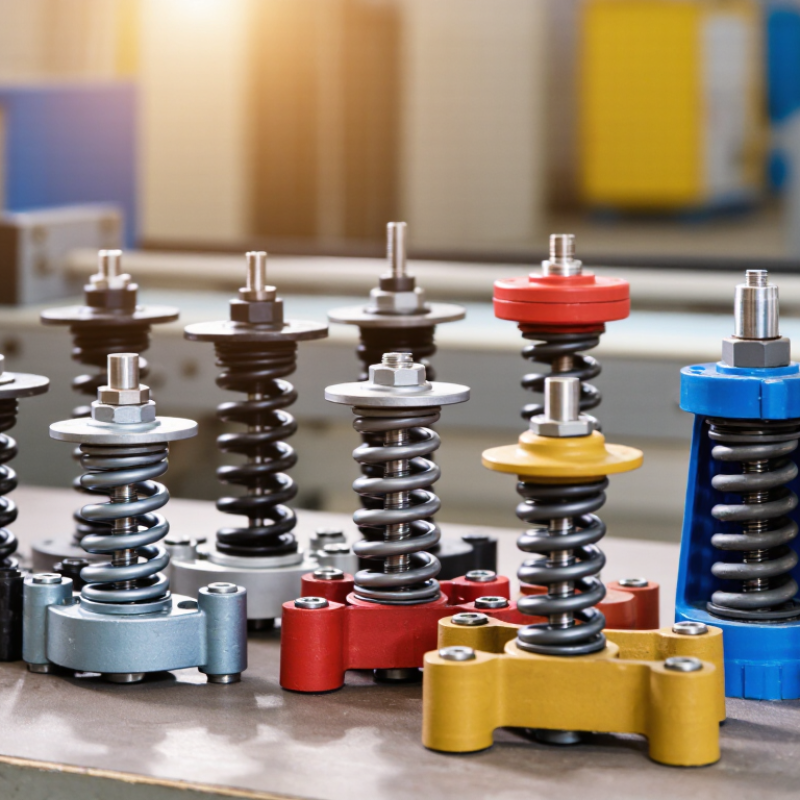
What Are Spring Tensioners and How Do They Work?
What Are Spring Tensioners and How Do They Work?
Spring tensioners maintain controlled force on belts, chains, cables, and conveyor components. A compressed or extended spring stores mechanical energy. It releases that energy as the driven part changes position. Most units combine a spring, pivoting arm, pulley, and adjustable mounting point. The basic relationship is F = kx, where force rises with spring deflection.
When a belt stretches, the arm moves and preserves contact pressure. It also absorbs minor vibration, thermal expansion, and sudden load changes. This prevents slip, tooth skipping, and uneven wear. In a factory, a correctly adjusted tensioner should move smoothly, not jerk against its stop. Small travel matters. Excessive force can overload bearings and shafts.
The U.S. Department of Energy’s Operations and Maintenance Best Practices Guide reports that preventive maintenance can reduce breakdowns by 70–75%. It also links preventive programs with maintenance-cost reductions of 12–18%. Spring tensioners support that approach, but they are not foolproof. Field checks should include spring corrosion, pulley alignment, arm travel, and unusual noise. A simple load test can reveal fatigue before failure becomes obvious. The calculation is simple, but reality is messier. Temperature, contamination, and operator adjustments can change performance. Designers should select spring rate from measured operating loads, not guesswork. ISO 15243 also emphasizes identifying failure patterns, including fatigue, contamination, and misalignment, before replacing components.
How to Evaluate Load, Size, Material, and Operating Conditions
Selecting one of the 10 best spring tensioners starts with the real load, not the catalog rating. Record static force, peak force, stroke, cycle frequency, and safety margin. A tensioner rated for 500 newtons may fail when vibration creates repeated shock. I have seen clean installations loosen because the measured load ignored start-up torque.
Size must match the assembly. Check compressed length, extended length, mounting clearance, and alignment. Keep the spring near its working range; constant coil contact creates heat and fatigue. The U.S. Department of Energy reports that motor-driven systems consume about 70% of industrial electricity. That figure makes friction and poor alignment worth investigating, even in a small tensioning device.
Material selection follows the environment. Carbon steel suits dry indoor equipment, while stainless steel handles moisture and washdown better. Plated surfaces can still deteriorate under chemicals or salt exposure. ISO 20816 vibration guidance supports monitoring machine vibration, but it does not replace site testing. Measure temperature, dust, humidity, and vibration during normal production. Then repeat measurements during cold starts and overloads. A neat selection can still be wrong. Leave room for doubt. Recheck the spring after its first maintenance interval, because real operating cycles rarely match the design spreadsheet.
10 Best Spring Tensioners for Industrial Applications
Spring tensioners are practical safeguards for conveyors, packaging lines, textile equipment, and power transmission systems. The 10 best spring tensioners for industrial applications usually share three traits: stable preload, corrosion resistance, and simple inspection access. A well-sized tensioner keeps belts engaged without excessive bearing pressure. In practice, I look for visible spring deflection, guarded moving parts, and adjustment marks that technicians can read under poor lighting.
The U.S. Department of Energy reports that motor-driven systems consume roughly 60–70% of industrial electricity. Efficient tensioning therefore supports broader energy-control efforts. McKinsey’s industrial analytics research also indicates that predictive maintenance can reduce downtime by 30–50% and maintenance costs by 20–30%. A tensioner cannot deliver those savings alone. It can, however, reveal belt stretch, pulley misalignment, and abnormal vibration before failure. Small clues matter.
Application conditions decide the best design. Food-processing areas need cleanable surfaces and suitable materials. Steel mills demand heat tolerance and protection from abrasive dust. Outdoor conveyors need sealed pivots and resistance to moisture. Spring force must match the belt’s operating load, not just its nominal rating. That is where selection often goes wrong. Engineers should record belt width, speed, ambient temperature, startup torque, and maintenance history before ordering. ISO 17359 condition-monitoring guidance supports combining visual checks with vibration and temperature data. Even experienced teams sometimes over-tension belts, believing tighter means safer. It usually means faster wear.
10 Best Spring Tensioners for Industrial Applications
The chart compares representative nominal tension capacities calculated from spring rate × working travel. These brand-neutral reference values cover common industrial uses such as conveyors, chain drives, belt systems, packaging equipment, and material-handling machinery. Final selection should also consider fatigue life, temperature, corrosion resistance, alignment, and safety factors.
Installation, Maintenance, and Safety Considerations
10 Best Spring Tensioners for Industrial Applications?
Spring tensioners keep belts, chains, and conveyor components under controlled pressure. During installation, confirm the tensioner’s load range, mounting direction, and available travel. A unit that fits physically may still be unsuitable for dynamic loads. Clean the mounting surface, check shaft alignment, and tighten fasteners with a calibrated torque wrench. Do not guess the preload. Follow the equipment specification, even when the setting seems excessive.
Safety begins before adjustment. Isolate electrical, pneumatic, and hydraulic energy, then verify zero movement. Springs store energy. A sudden release can crush fingers or throw metal fragments. Use guards around rotating parts and keep hands outside pinch points. Wear eye protection, cut-resistant gloves, and suitable footwear. Short pause. Recheck the lockout.
Maintenance teams should inspect tensioners during scheduled shutdowns. Look for cracked springs, uneven wear, corrosion, loose bolts, and polished contact marks. Measure belt or chain deflection at the same location each time. Record the reading, operating temperature, and visible changes. A simple trend can reveal fatigue before failure. However, inspection records are not perfect; vibration and dirt can hide early damage. Clean carefully, without forcing debris into bearings or seals.
Replace damaged components with parts matching the original load, geometry, and temperature rating. Never stretch a spring beyond its approved travel. After servicing, run the machine at low speed and observe tracking, noise, and vibration. Stop immediately if the tensioner oscillates or heats quickly. Clearance can change after installation. Recheck it.