
Quality Products
At a Fair Price
Wholesale Provider
Of Valves & Fittings
- HOME
- Products
- Ball Valves
- Bull Plugs & Swages
- Butterfly Valves
- Check Valves
- Cushion / Flow Tees & Bleed Rings
- Enhanced Oil Recovery
- Floating Ball Valves
- Foot Valves
- Forged Steel Fittings
- Forged Steel Outlets
- Gaskets-Insulation Kits
- Gate Valves
- Gate, Globe & Check Valves
- Malleable Fittings
- Needle Valves
- Nipples
- Piston Valves
- Plug Valves
- Stainless Steel Flanges, Fittings & Nipples
- Strainers
- Studs
- Trunnion
- Unions
- Weld Fittings & Flanges
- Manufacturers
- Advance
- American Block
- Anvil
- Balon
- Bonney Forge
- Champion
- Clayton Mark
- Crane
- Daniel
- DMIC
- GMI
- Galli & Cassina
- Hackney-Ladish
- JMC
- Lone Star
- MATCO
- Marpac-McCanna
- National Flange
- National Gasket
- Nordstrom
- Nutron
- PPI
- SHARPE
- SMI
- TEXSTEAM
- TEX-THREAD
- Titan
- USA Fastner
- Vogt
- Weld Bend
- Westbrook
- Wheatley
- Williams
- WKM
- Wolar
- Locations
- Contact
- Blog
- Careers
- Get a Quote
- HOME
- Products
- Ball Valves
- Bull Plugs & Swages
- Butterfly Valves
- Check Valves
- Cushion / Flow Tees & Bleed Rings
- Enhanced Oil Recovery
- Floating Ball Valves
- Foot Valves
- Forged Steel Fittings
- Forged Steel Outlets
- Gaskets-Insulation Kits
- Gate Valves
- Gate, Globe & Check Valves
- Malleable Fittings
- Needle Valves
- Nipples
- Piston Valves
- Plug Valves
- Stainless Steel Flanges, Fittings & Nipples
- Strainers
- Studs
- Trunnion
- Unions
- Weld Fittings & Flanges
- Manufacturers
- Advance
- American Block
- Anvil
- Balon
- Bonney Forge
- Champion
- Clayton Mark
- Crane
- Daniel
- DMIC
- GMI
- Galli & Cassina
- Hackney-Ladish
- JMC
- Lone Star
- MATCO
- Marpac-McCanna
- National Flange
- National Gasket
- Nordstrom
- Nutron
- PPI
- SHARPE
- SMI
- TEXSTEAM
- TEX-THREAD
- Titan
- USA Fastner
- Vogt
- Weld Bend
- Westbrook
- Wheatley
- Williams
- WKM
- Wolar
- Locations
- Contact
- About
- Careers
- Get a Quote
Top Sewer Drain Cameras for Professional Use?
Sewer Drain Cameras help professionals inspect pipes without excavation, but a sharp image alone does not make a camera job-ready. EPA’s 2004 Report to Congress estimated 23,000–75,000 sanitary sewer overflows occur each year in the United States. The American Society of Civil Engineers gave wastewater infrastructure a D+ in its 2021 Report Card. These figures underline the value of dependable inspection, though a camera cannot prevent every blockage or failure.
For contractors and municipal crews, the right system must match the work. A compact camera head may suit tight residential laterals, while larger mains can demand a more robust crawler. Check push-cable length and stiffness, lighting, footage counter, recording options, and whether a locating sonde is included. Those details matter when a technician is tracing a bend, documenting root intrusion, or explaining a defect to a property owner. Clear records matter.
This guide compares leading professional models by image performance, durability, maneuverability, and service support. It also considers practical costs, since replacement parts and training can shape ownership more than the initial price. Published specifications are useful, but they do not tell the whole story. Field conditions vary. Even experienced crews can miss defects when water, grease, or poor access obscures the lens. No camera wins every job; the best choice is the one suited to your pipe range, crew, and reporting needs.
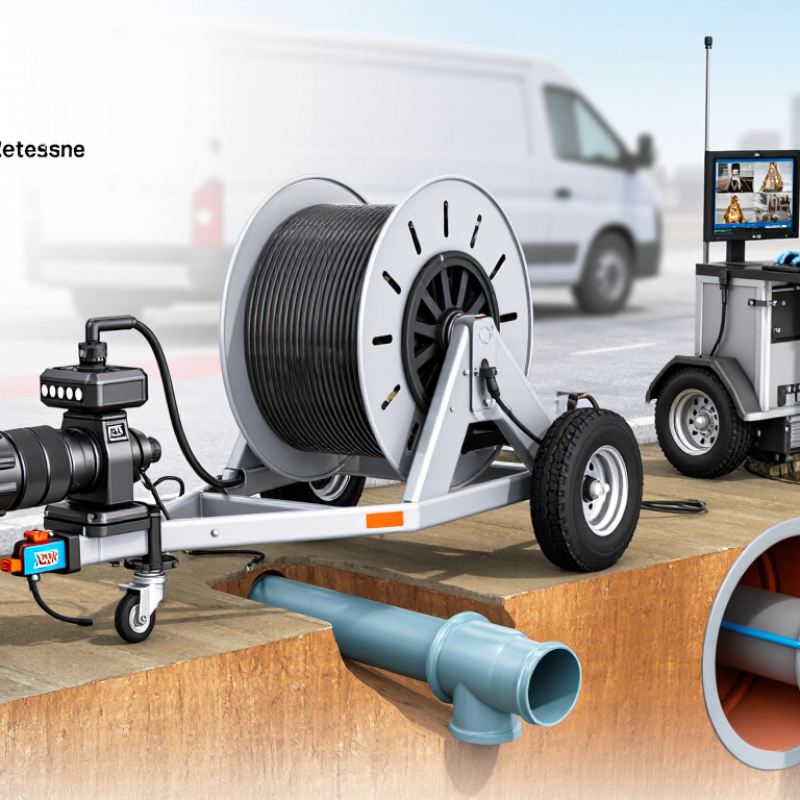
Professional Sewer Drain Cameras: Purpose and Core Components
Professional sewer Drain Cameras turn an inaccessible pipe into a recordable inspection. Their purpose is to show obstruction, cracking, root intrusion, standing water, and joint displacement without excavation. The scale of the need is substantial: the U.S. EPA’s 2022 Clean Watersheds Needs Survey estimated$630.1 billion in wastewater and stormwater infrastructure needs over 20 years. That figure is not a camera-market estimate, but it explains why dependable condition assessment matters.
A professional system centers on a sealed camera head, adjustable lighting, a flexible push cable, a powered reel, and a monitor with recording and distance tracking. The camera head must stay stable in wet, dirty pipes; its lights reveal details that a bright screen alone cannot. A locating sonde helps crews trace the camera’s position from above ground. Small components matter. Cable stiffness, lens clarity, and a readable footage counter can shape the usefulness of an inspection.
Operators should record pipe size, material, distance, and observed defects, then review uncertain sections rather than overstate a finding. Footage is evidence, not certainty. Grease, glare, and fast water can hide damage, and even a good camera cannot replace careful interpretation. The weak point is often the human review. That deserves more attention.
How Sewer Inspection Cameras Operate in the Field
A sewer inspection camera turns a dark, confined pipe into a live view on a monitor. Before entry, the operator checks the camera head, cable, connections, and recording system. A clean lens matters; grease or droplets can make a sound pipe look damaged. The push cable feeds the camera through an access point, while its flexible rod follows bends and changes in pipe direction. Go slowly.
On screen, the operator watches for cracks, roots, displaced joints, standing water, and blockages. A distance counter helps mark findings, though cable movement can make readings imperfect. At a suspected defect, the operator pauses, adjusts the camera angle, and records a clear view with its location. A second pass may help distinguish a real defect from debris or glare.
It is not magic. Good footage still depends on steady handling and careful interpretation. After the run, operators review the recording, document observations, and note uncertainty rather than treating every shadow as a confirmed failure. Even experienced crews sometimes need another look.
Main Camera Types for Professional Drain Work
Professional drain cameras are usually selected by pipe size, access, and the distance to the suspected problem. Push-rod systems suit many residential lines and smaller commercial branches. Their flexible cable travels through bends, while a compact camera head records roots, cracks, and standing water. The operator should match cable stiffness to the route. Too soft, and it may buckle; too rigid, and tight bends become difficult. Small details matter. A built-in distance counter helps locate a defect, but it can drift if the cable slips.
For larger pipes and longer runs, crawler cameras provide steadier movement on wheels. They can carry stronger lighting and show broader pipe sections, though setup takes more time and access space. Handheld inspection cameras are useful for short, restricted checks, but their reach and stability are limited. Some systems offer self-leveling images, which keep the pipe floor oriented on screen. Helpful, not magic. Camera footage still needs careful interpretation: grease can resemble a defect, and pooled water can hide damage. Choosing a system by job conditions is more reliable than buying for the longest advertised reach. Even experienced operators may need a second pass.
Key Features for Comparing Professional Sewer Cameras
Choosing a professional sewer camera starts with the pipe, not the screen. Measure typical pipe diameters, access bends, and inspection distances before comparing models. A compact camera head can pass tighter fittings, while a larger lens may provide a brighter, wider view. Self-leveling keeps the image upright, but it cannot compensate for a dirty lens or pooled water. Small details matter.
Cable length should match routine jobs, with some reserve for deep or offset runs. A very flexible push rod may buckle in broad lines. A rigid one can struggle through tight bends. Compare reel control, cable markings, and connector durability, not just advertised reach. A built-in sonde helps locate the camera head above ground; confirm its frequency works with your locator. Not always.
Check monitor readability in daylight, glove-friendly controls, and whether recordings retain date, distance, and job notes. Battery runtime should cover a full shift, and replaceable parts can reduce downtime. Ask about water resistance ratings and service support, then test the system on a familiar line before relying on it. No camera removes operator judgment: reflections, grease, and standing water can make defects look different on screen. That uncertainty deserves a note in the inspection record.
Top Sewer Drain Cameras for Professional Use: Key Features to Compare
Common nominal sewer pipe diameters (inches) to consider when checking a camera system’s stated pipe-size compatibility.
These are common nominal pipe sizes, not camera performance ratings. When comparing professional systems, check the manufacturer’s compatible pipe-diameter range, camera-head dimensions, cable length, and whether centering guides are available. Actual pipe dimensions can vary by material and standard.
Selecting a Camera System for Different Inspection Needs
Top Sewer Drain Cameras for Professional Use?
Selecting a Camera System for Different Inspection Needs
A camera system should match the pipe, access point, and inspection question. For short residential branches, a compact push camera can pass through tight bends and traps. A flexible cable is easier to handle, but may buckle in a larger pipe. That matters. Check the camera head diameter, cable length, and available footage counter before choosing.
Longer or wider lines often call for a sturdier reel and a more stable image. For large mains, a crawler may provide better movement and coverage, especially where deposits or standing water obscure the view. Pan-and-tilt control can help inspect joints and lateral connections without repeatedly repositioning the unit. Still, extra controls add weight, setup time, and training needs. More capability is not always more useful.
Consider how crews will document findings. Clear recording, readable distance data, and a locator can make a defect easier to find again after the inspection. Test the system on representative pipe sizes and bends before relying on it in the field. I have seen a technically capable camera produce poor results because its cable was wrong for the route. That is an easy detail to miss. Check battery life, water protection, screen visibility outdoors, and cleaning requirements against the work schedule.
| Camera System | Typical Pipe Range | Typical Reach | Key Inspection Features | Best Suited For | Main Trade-Offs |
|---|---|---|---|---|---|
| Compact push-rod camera | Approximately 1.5–6 in (40–150 mm) | Commonly 100–200 ft (30–60 m), depending on cable and pipe conditions | Small camera head, flexible push cable, LED lighting, distance counter and on-screen recording | Indoor drains, short branch lines, small-diameter pipes and routine service calls | Flexible cable can buckle in larger pipes or around multiple bends; limited control of camera direction |
| Standard push-rod camera | Approximately 2–10 in (50–250 mm) | Commonly 200–330 ft (60–100 m) | Interchangeable or adjustable skids, self-leveling camera options, footage counter and digital video capture | General-purpose inspection of building drains and small municipal laterals | Performance depends on pipe layout, cable stiffness and the operator’s ability to navigate bends |
| Pan-and-tilt push camera | Typically 3–12 in (75–300 mm), subject to camera-head size | Commonly 200–400 ft (60–120 m) | Remote pan and tilt, adjustable lighting, image capture and distance tracking for closer examination of defects | Detailed assessment of joints, connections, service laterals and suspected defects | More complex and usually larger than a basic push camera; tight bends and small pipes may limit access |
| Crawling camera system | Usually 6 in (150 mm) and larger; specific minimums depend on the crawler | Commonly 500–1,000 ft (150–300 m), depending on the tether and system configuration | Motorized travel, steerable wheels, pan-and-tilt camera head, longer tether and controlled inspection speed | Large gravity mains, longer pipe runs and inspections where a push cable cannot reliably reach | Requires a suitable launch point and adequate pipe diameter; heavier equipment and setup take more time |
| Mainline lateral-launch system | Mainline typically 6 in (150 mm) and larger; lateral access depends on the launch assembly and connection | Mainline travel is tether-dependent; lateral reach varies with branch length and configuration | Mainline crawler with a deployable lateral camera, recording and distance measurement for branch inspections | Surveying service connections and laterals from an accessible mainline without entering each property | Requires compatible access and careful alignment; lateral reach and maneuverability vary with pipe condition |
| Portable inspection system | Varies by camera head; commonly used in small- to medium-diameter drains | Often configured for shorter runs, with reach determined by the selected cable reel | Compact monitor and reel, battery operation on some configurations, image or video recording | Mobile crews, confined work areas and inspections where easy transport matters | May offer less reach, screen size or upgrade flexibility than a larger dedicated system |
| Typical ranges are indicative, not guaranteed specifications. Usable pipe size and reach depend on the camera head, cable or tether, bends, pipe condition, access points and system configuration. | |||||
