What Is the Best RFID Tool Tracking System in China?
Choosing the best Rfid Tool Tracking system in China starts with a practical question: can staff find the right tool quickly, and trust the record afterward? A busy workshop may hold hundreds of drills, meters, and torque wrenches. A missing item can delay a shift, while an incorrect scan can create false confidence.
RFID and Internet of Things pioneer Kevin Ashton wrote, “The Internet of Things has the potential to change the world, just as the Internet did. Maybe even more so.” That vision becomes useful through careful implementation. For tool tracking, tags must suit metal surfaces, readers must cover real storage areas, and software must show clear check-in and check-out histories. A polished dashboard is not enough.
This guide compares Chinese RFID tool tracking options through practical criteria: read accuracy, tag durability, deployment support, system integration, and total operating cost. It also considers whether a supplier can demonstrate performance with the tools and storage conditions a buyer actually uses. A short live trial can reveal missed reads around metal cabinets or confusion at a busy tool crib. Small details matter.
No single system fits every factory. Some buyers may value local service more than advanced analytics; others may need integration with existing inventory software. I would be cautious about claims that promise perfect accuracy. Real sites are messy, and even a strong system needs testing, training, and review.
What Is an RFID Tool Tracking System?
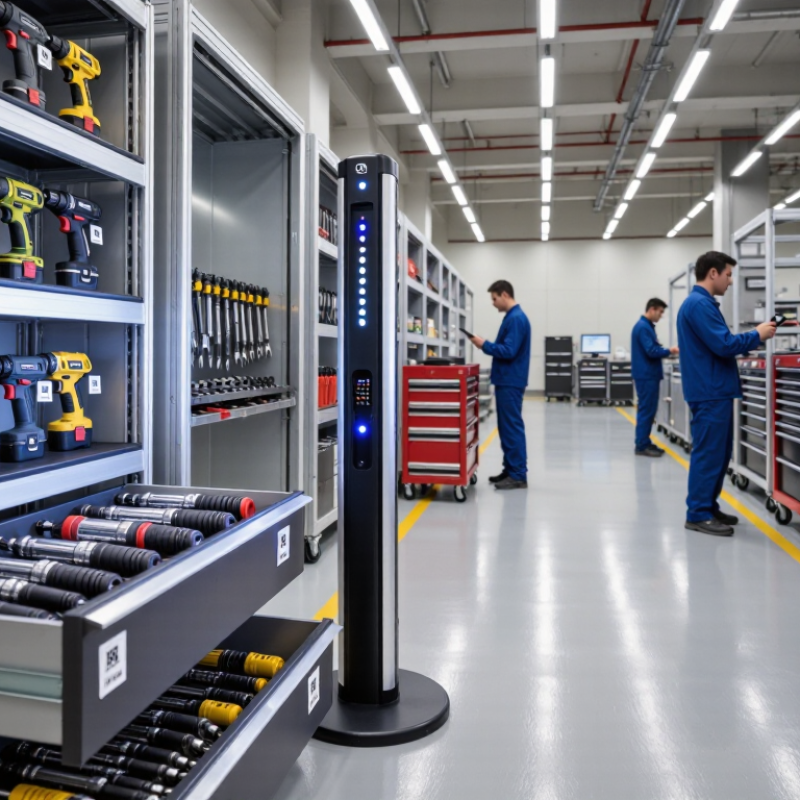
An RFID tool tracking system uses radio waves to identify tagged tools without scanning each barcode by hand. A typical setup combines durable RFID tags, fixed or handheld readers, antennas, and software that links each tag’s unique ID to a tool record. When a tagged drill passes through a workshop doorway, the reader can log its movement and time. Staff can also use handheld readers to locate tools on shelves or in storage cases.
The RAIN Alliance reported that 44.8 billion RAIN tags shipped worldwide in 2023, showing the technology’s broad adoption across industries. That figure is not a tool-tracking performance result.
A system still needs careful tag placement, reader testing, and clean inventory records. Metal surfaces can weaken or distort radio signals, so tool-specific tags and on-site trials matter.
Not magic.
Software may show a tool’s last detected location, but it cannot confirm that the tool is undamaged or ready to use. Teams should check those details in person. A misplaced tag, an unrecorded tool, or a reader blind spot can create gaps.
Real workshops are messy.
How RFID Tool Tracking Systems Work
An RFID tool tracking system connects tagged tools, readers, and inventory software. Each tool carries a tag with a unique identifier. A reader sends radio waves, and the tag returns its stored ID when it enters the reader’s range. No line of sight is usually needed.
A handheld reader can scan a tool cabinet or work area. Fixed readers may record tools moving through a doorway. The software matches each tag ID with a tool record, then logs events such as check-out, return, or transfer. A technician might scan a drill before taking it to a repair bay; the system can show who moved it and when. Useful detail.
RFID does not always reveal a tool’s exact position. It usually confirms that a tag was read within a reader’s zone. Metal surfaces, crowded storage, and poorly placed antennas can affect accuracy, so tags and readers need practical testing. Some tools may need specially mounted tags. That takes time. Teams should also define who updates records when a tag is damaged or a tool changes hands. Even a well-designed system can show incomplete data when daily procedures are skipped.
Key Components of an RFID Tool Tracking System
What Is the Best RFID Tool Tracking System in China?
Key Components of an RFID Tool Tracking System
A practical RFID tool tracking system connects tagged tools, readers, software, and clear work procedures. Each tool needs a durable tag with a unique identifier. Metal surfaces can weaken radio signals, so metal-compatible tags or carefully tested mounting positions may be necessary. Placement matters. A tag that catches on a case or gets covered by grime may fail when staff need it most.
Readers capture tag data at storage cabinets, workshop entrances, or checkout stations. Fixed readers can record tools moving through defined zones, while handheld readers help staff locate items during audits. They do not automatically provide precise, room-wide location. Antennas and reader settings must be tested around shelves, metal benches, and nearby equipment, where reflections can create missed or duplicate reads.
The software links each scan to a tool record, user, time, and location. It can show checkout status, overdue items, and maintenance dates on a shared dashboard. Reliable results depend on clean records and consistent routines, not hardware alone. Start with a small tool area and compare RFID counts with a manual check. Expect adjustments; the first antenna layout may not work well. A system should also define who corrects mismatched records and how damaged tags are replaced.
How to Evaluate RFID Tool Tracking Systems in China
What Is the Best RFID Tool Tracking System in China?
How to Evaluate RFID Tool Tracking Systems in China
A useful evaluation starts with the tools and work area, not the reader specifications. Check whether tags remain readable on metal tool cases, near machinery, and inside crowded storage cabinets. Ask for test results using your actual tools. A catalogue range may not match a busy workshop. Test it onsite.
Compare how each system records check-in, check-out, and overdue tools. Fixed readers can capture movement at storage points, while handheld readers help staff locate items during inspections. Check whether the software connects with your existing inventory process and provides clear records, user permissions, and exportable reports. A polished dashboard alone proves little.
Tips: Run a small pilot with commonly used tools and a few difficult-to-read items. Measure missed reads, search time, and staff training needs across several shifts. Ask who handles setup, troubleshooting, and system updates in China, and clarify response times. Keep the evaluation practical; a perfect test in an empty room can still miss everyday problems.
How to Choose the Best System for Your Needs
Choosing an RFID tool tracking system in China starts with the job, not the tag. Count how many tools move each shift, where they are stored, and how quickly crews need to find them. A 2023 Warehousing Vision Study reported that 83% of surveyed warehouse decision-makers planned to implement RFID by 2028. That signals growing interest, not a guarantee that every setup will work in a tool room. Metal racks, crowded benches, and handheld tools can disrupt reads. Test tags on real tools before setting a budget.
Compare systems using a small pilot. Tag a few frequently borrowed items, then measure read accuracy, checkout time, missed returns, and battery life. Include workers who will use the system; a complicated checkout screen can invite workarounds. Ask whether fixed readers, handheld readers, or both fit your layout. Check integration with existing inventory software, Chinese-language support, local maintenance, and clear data access controls. Keep the trial honest: a clean test bench may perform better than a noisy workshop. It is easy to overlook that. Record failures and retest with tools in different positions. Choose the system that meets your required accuracy and response time at a realistic total cost, not the one with the longest feature list.