
Quality Products

At a Fair Price

Wholesale Provider

Of Valves & Fittings

  • Corporate Office: 1301 Greengrass Drive Houston, TX 77008
  • 1-800-237-2512

Quality Products

At a Fair Price

Wholesale Provider

Of Valves & Fittings

Best Vehicle Hail Damage Scanning System for Accurate Assessment?

The impact of hail on vehicles can be significant. According to a recent report by the Insurance Institute for Highway Safety, hail damage accounts for a substantial portion of vehicle repair claims. The need for precise assessments is crucial in this context. An effective Vehicle Hail Damage Scanning System can make a difference. It provides accurate evaluations of damage extent, which can lead to proper insurance settlements.

Current scanning technologies offer advanced features. They can detect subtle variances that human inspections might miss. However, the systems are not foolproof. User training and experience play a vital role in achieving reliable results. This highlights the importance of expertise in deploying these tools. Research from the National Highway Traffic Safety Administration emphasizes that accurate assessments can reduce overall repair costs and time.

While the Vehicle Hail Damage Scanning System shows promise, it’s essential to remain critical. The accuracy and reliability of results can vary based on several factors. Proper calibration and regular maintenance are necessary for optimal functionality. In an industry where precision matters, stakeholders must continuously evaluate these systems to ensure they meet evolving standards.
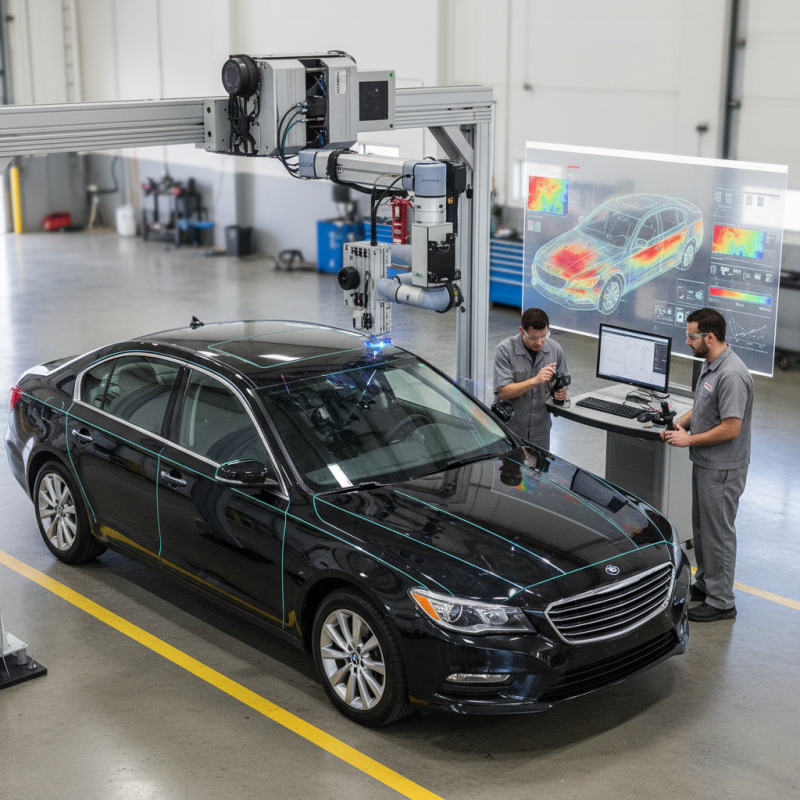
Best Vehicle Hail Damage Scanning System for Accurate Assessment?

Overview of Hail Damage Assessment Technologies

Hail damage can severely affect vehicles, leading to costly repairs. Accurate assessment technologies are essential for effective damage evaluation. Traditional visual inspections often miss subtle dents or cracks. This is where innovative scanning systems come into play, utilizing advanced imaging techniques to ensure no detail goes unnoticed.

Data from recent industry reports show that about 60% of hail damage is not detected during initial assessments. Scanning technology can significantly reduce this statistic. Employing methods like 3D laser scanning and infrared imaging enables comprehensive evaluations. These systems can provide precise data on the extent of damage, helping both assessors and vehicle owners make informed decisions.

However, reliance on technology has its flaws. Scanning systems can produce false positives or overlook minor damage. Regular calibration and operator training are necessary for accuracy. The technology is improving, but it is still not foolproof. A balanced approach combining technology with human expertise often yields the best results in vehicle hail damage assessments.

Best Vehicle Hail Damage Scanning System for Accurate Assessment

Technology Type Accuracy Ease of Use Cost Time for Assessment
Laser Scanning 95% Moderate $$$ 30 minutes
Photo Analysis 80% Easy $ 15 minutes
Ultrasonic Testing 90% Moderate $$$ 45 minutes
3D Imaging 98% Complex $$$$ 60 minutes

Key Features of Vehicle Hail Damage Scanning Systems

Vehicle hail damage scanning systems are essential for accurate assessments. These systems employ advanced imaging technology to detect and analyze damage. In a recent industry report, it was highlighted that about 90% of hail damage goes undetected without proper scanning. This emphasizes the importance of reliable systems that can identify even the smallest dents.

Key features of an effective scanning system include high-resolution imaging, speed, and user-friendly interfaces. High-resolution sensors can capture even minor distortions on surfaces. Speed is critical, especially in busy body shops. A system that can deliver results in minutes can enhance productivity significantly. User-friendly software helps technicians interpret data quickly, reducing the chance of errors. Reliability is also a vital factor; systems must be tested rigorously to ensure consistent performance.

However, challenges remain. The integration of scanning systems into existing workflows can be problematic. Technicians may need additional training to maximize the potential of these tools. A survey found that nearly 30% of shops struggled with implementing new technologies effectively. Addressing these issues can lead to better assessment accuracy and, ultimately, improved customer satisfaction. It's crucial to continuously improve these systems to meet the evolving needs of the automotive repair industry.

Comparison of Leading Hail Damage Scanning Tools

When assessing hail damage on vehicles, the choice of scanning tools is crucial. Various systems offer features tailored for accuracy. Each tool has different technologies and methodologies, impacting assessment reliability. Laser scanning may provide precise measurements, but photographic analysis can capture details in a more user-friendly format. The effectiveness of these technologies often varies based on user expertise.

Accurate damage assessment is not just about the tool itself; it’s also about how it’s used. Training and experience can lead to significant differences in results. Some operators may misuse the tools or fail to interpret data correctly. Reflecting on these mistakes can help improve future assessments. Furthermore, factors like weather conditions and lighting may also influence scan accuracy. These variables remind users that even the best tools require careful handling and understanding.

In the market, several scanning systems claim to deliver excellence. Yet, no system is perfect. Users often encounter challenges in clarity and detail resolution. Exploring user feedback and case studies helps identify strengths and weaknesses. Constant reassessment of tools and methods is essential for accurate evaluations. As technology evolves, staying updated on advancements can greatly enhance the hail damage assessment process.

Comparison of Leading Hail Damage Scanning Tools

Best Practices for Using Hail Damage Scanning Systems

Using a hail damage scanning system requires adherence to best practices for accurate assessments. Proper calibration of the equipment is crucial. The scanner must be aligned and adjusted before use. This step ensures measurements reflect true damage levels. Regularly updating the software and hardware components also enhances accuracy.

It is essential to perform thorough training for operators. Knowledgeable personnel can identify potential errors during scanning. Mistakes may occur, leading to misjudged damage assessments. Operators should practice consistent techniques across different vehicles. This consistency improves reliability in the results.

Documentation of each assessment is necessary. Keeping detailed records helps track previous evaluations. This can reveal patterns and assist in future inspections. While technology aids the scanning process, human oversight remains crucial. Always review the findings critically to ensure no significant damage is overlooked.

Future Trends in Vehicle Hail Damage Assessment Technology

Recent advancements in vehicle hail damage assessment technology are paving the way for improved accuracy. With over 40% of vehicles in hail-prone areas experiencing damage annually, accurate evaluation is essential. Innovative scanning systems, equipped with high-resolution cameras and AI, can now assess hail damage quickly. These systems analyze the vehicle's surface and provide real-time data. This minimizes the risk of overlooking minor dents which can escalate repair costs.

Upcoming trends suggest a shift towards integration and automation. Experts predict that by 2025, over 60% of collision shops will adopt AI-based assessment tools. These tools streamline the inspection process, ensuring consistency in evaluations. They also reduce human error, which is a persistent challenge in manual assessments. However, the reliance on technology raises questions about training and adaptation for technicians. Ensuring they possess the necessary skills to interpret automated assessments is crucial for reliable outcomes.

Moreover, drones are on the rise in hail damage evaluation. They offer unique aerial perspectives, making it easier to detect damage from above. Despite these advancements, challenges remain in harmonizing data from various sources. Achieving a unified standard for assessments will require ongoing industry collaboration. Continued investment in improving these technologies is vital for securing more accurate damage assessments in the future.

Top
error: Content is protected !!