
Quality Products

At a Fair Price

Wholesale Provider

Of Valves & Fittings

  • Corporate Office: 1301 Greengrass Drive Houston, TX 77008
  • 1-800-237-2512

Quality Products

At a Fair Price

Wholesale Provider

Of Valves & Fittings

7 Best Roots Blowers for Industrial Buyers in 2026

Industrial buyers entering 2026 face a practical question: which Roots Blower delivers dependable airflow without quietly inflating energy costs? The answer depends on pressure, flow, gas composition, duty cycle, and maintenance access. There is no universal winner. A food-processing line, a wastewater aeration basin, and a pneumatic conveying system need different operating profiles.

Industry data supports careful selection. The U.S. Department of Energy’s Improving Compressed Air System Performance guide identifies compressed air as a significant industrial electricity user and highlights leakage, pressure losses, and poor controls as common waste sources. The U.S. DOE’s Pumping System Assessment Tool also demonstrates how system design affects lifecycle energy consumption. Meanwhile, MarketsandMarkets’ Industrial Air Compressor Market research reports continued demand from manufacturing, water treatment, and process industries, although published market forecasts vary by methodology. That disagreement deserves attention.

This guide evaluates seven Roots Blower options for industrial buyers in 2026. It considers rated airflow, pressure stability, motor efficiency, noise, lubrication design, controls, service support, and total cost of ownership. Look beyond the nameplate. A dusty conveying room can expose weak filtration within weeks. A wastewater plant may run continuously, making a small efficiency gap financially important. A lower purchase price is not always lower cost.

Performance matters most.

Each recommendation should be checked against ISO 1217 testing practices, ISO 8573 air-quality requirements, and the manufacturer’s actual performance curves. Independent verification is valuable. Brochures can simplify reality. A careful buyer should request measured data, warranty terms, spare-parts availability, and references from comparable facilities before approving a purchase.
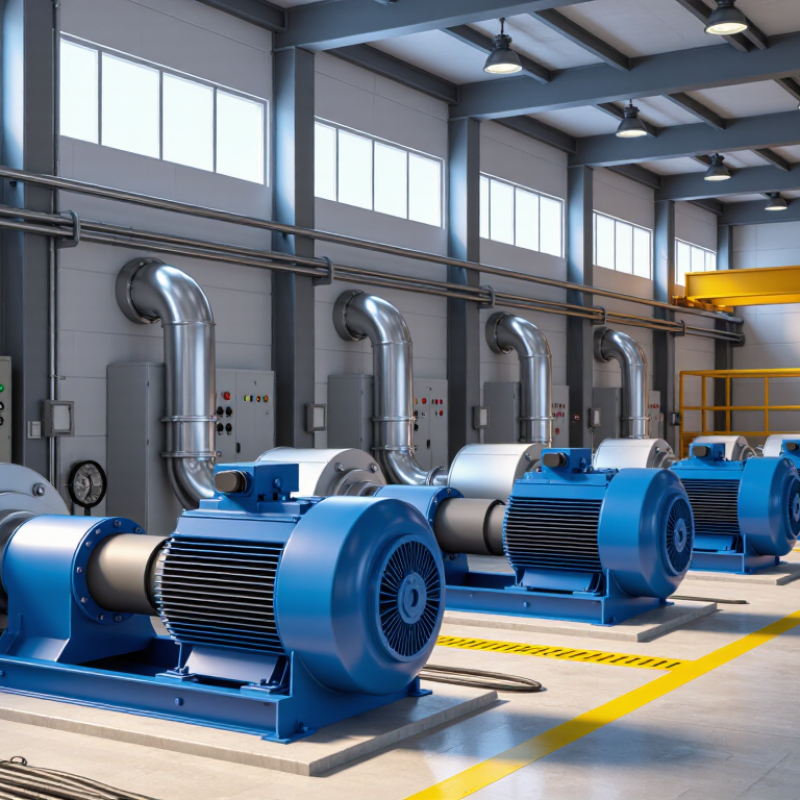
7 Best Roots Blowers for Industrial Buyers in 2026

Roots Blower Fundamentals: Positive-Displacement Airflow and 0.3–1.0 bar(g)

Roots blowers create airflow through positive displacement. Each rotation traps a measured air volume and moves it downstream. Pressure does not come from the blower alone; system resistance creates it. This distinction matters when industrial buyers compare seven units for 2026 projects.

The practical operating window is often 0.3–1.0 bar(g). Lower pressure can suit wastewater aeration, pneumatic conveying, and low-pressure gas handling. Near 1.0 bar(g), heat, shaft load, and power demand rise sharply. The U.S. Department of Energy’s compressed-air sourcebook reports that compressed-air systems commonly consume 10–30% of plant electricity. That figure is not a Roots-blower rating, but it exposes the cost of poor system design. CAGI guidance also emphasizes matching displacement, pressure, controls, and filtration to actual demand.

Field selection should begin with measured flow, not catalog airflow. Check inlet temperature, altitude, moisture, backpressure, and duty cycle. A silencer can reduce noise, yet it may increase pressure loss if undersized. A variable-speed drive can improve part-load performance, but savings depend on the demand pattern. This is where buyers sometimes overtrust projected efficiency. The estimate may look precise. Real plants are rarely precise. Verify performance against ISO 1217 testing principles, operating logs, and a site pressure survey before approval.

Industrial Sizing Data: 100–10,000 m³/h, Pressure, Speed, and Duty Cycle

7 Best Roots Blowers for Industrial Buyers in 2026

Industrial sizing starts with airflow, not catalog horsepower. A practical screening range is 100–10,000 m³/h, with many plants operating between 0.3 and 1.0 bar(g). Lower-pressure aeration may need 100–2,000 m³/h, while pneumatic conveying often demands higher pressure and tighter control. Seven useful duty profiles include wastewater aeration, cement conveying, grain handling, vacuum service, combustion air, chemical processing, and general plant air.

Speed matters at every point. Typical rotary-lobe units run near 800–3,600 rpm, but the correct speed depends on airflow, pressure rise, noise, and cooling. ISO 1217:2009 provides a recognized basis for compressor performance testing. Buyers should request measured inlet flow, discharge pressure, shaft speed, and power at the actual operating point. A rated 10,000 m³/h figure can mislead if it applies only at free air conditions.

Duty cycle changes the selection. Continuous 24-hour service needs stable bearings, effective oil management, and a motor sized for sustained heat rejection. The U.S. Department of Energy’s compressed-air sourcebook notes that leakage can waste 20–30% of compressor output in poorly maintained systems. That loss may make a smaller blower appear adequate. It is not. I would also question every oversized unit. Running far below design flow can increase energy use and control problems, despite a comfortable pressure margin.

Performance Testing: ISO 1217 Airflow, Shaft Power, and Efficiency Ratings

Industrial buyers comparing the seven best Roots blowers for 2026 should begin with verified performance data, not catalogue claims. ISO 1217 testing provides a consistent method for measuring airflow, shaft power, and efficiency. Test conditions matter greatly. Record inlet pressure, discharge pressure, air temperature, humidity, and rotational speed during every run.

Airflow should be measured with calibrated instruments at defined pressure ratios. Shaft power requires accurate torque and speed readings, including drive losses where applicable. Efficiency is then evaluated against delivered air power and absorbed mechanical power.

Small measurement errors can distort operating costs. A blower showing higher capacity may consume more electricity at the required pressure.

In practical trials, inspect the test setup before trusting the numbers. Leaks around flanges can inflate apparent airflow. Hot bearings may also change power demand during longer runs. Our first comparison was too optimistic because readings were taken before temperatures stabilized. That mistake changed the efficiency ranking.

It is worth repeating tests at several speeds and pressures. Do not rely on one attractive data point. Field performance may differ from laboratory results because pipe length, filters, altitude, and maintenance conditions vary. Keep the test report, calibration dates, uncertainty estimates, and raw readings with each purchasing file. Perfect data is uncommon. Transparent data is more useful.

Safety and Compliance: 85 dB(A) Exposure, ATEX Zones, and Guarding

For industrial buyers comparing the 7 best Roots blowers for 2026, noise control deserves early attention. A blower may create a sharp, continuous sound near the inlet, outlet, or drive coupling. Measure exposure at the operator’s ear, not beside the machine frame. The 85 dB(A) level is a practical warning point in many workplace programs, although local requirements may differ. Use a calibrated sound meter during normal load, startup, and pressure changes. Hearing protection helps, but it should not replace enclosure design, distance, maintenance, and shorter exposure periods. Small leaks can also produce surprisingly harsh tones.

ATEX zones require a disciplined equipment assessment. Confirm whether the area involves gas, vapor, mist, or combustible dust, then identify the zone, equipment category, gas or dust group, and temperature class. Do not assume a general-purpose blower is suitable. Check the motor, coupling, seals, instrumentation, and surface temperature as one system. Guard rotating shafts and couplings with fixed barriers that resist casual removal. Protect hot surfaces and keep access doors interlocked where practical. A pressure relief path is essential because a blocked discharge can rapidly heat the package. Lockout procedures should cover electrical, pneumatic, and stored pressure energy.

Field reviews often miss the inlet guard. That is a real weakness. Recheck it after installation, especially when maintenance teams alter pipework or remove covers. Records should link measurements, inspection dates, corrective actions, and responsible personnel. This evidence supports safer purchasing decisions and makes later audits less dependent on memory.

2026 Buyer Scorecard: Lifecycle Cost, IE3 Motors, Serviceability, and Warranty

A 2026 Roots blower shortlist should begin with lifecycle cost, not purchase price. The U.S. Department of Energy reports that compressed air can consume roughly 10% of industrial electricity, with inefficient systems costing far more. In many plants, energy represents the largest ownership expense. A low-price blower may become expensive after years of continuous operation.

IE3 motors deserve serious attention. IEC 60034-30-1 defines IE3 as a high-efficiency motor class, while the IEA’s Energy Efficiency 2023 report identifies motor-driven systems as major global electricity users. Check the complete package, not only the motor label. Pressure control, transmission losses, cooling, and standby power can change real performance. Ask for tested flow data at your operating pressure.

Serviceability often separates seven apparently similar blowers. Look for accessible filters, simple belt inspection, clear oil-level indicators, and documented bearing intervals. The U.S. DOE also emphasizes leak management and correct system maintenance. A five-year warranty sounds strong, but verify exclusions, labor coverage, parts availability, and technical response time. A practical buyer should request maintenance records from a comparable plant. This is where specifications become less certain. Published efficiency figures may not reflect dusty rooms, frequent starts, or overloaded lines. A useful scorecard should therefore weight measured field performance, repair access, and local service capability—not marketing claims.

Article Source:

Top
error: Content is protected !!