
2026 Best Metal Stamping Companies for Global Buyers
Choosing a Metal Stamping partner is not just a search for the lowest unit price. A supplier’s tooling capability, quality controls, production capacity, and communication can shape a program for years. For global buyers, distance adds practical questions: Can the company explain a process change clearly? Can it provide consistent inspection records? Will a sample part match the production run?
Industrial engineer Shigeo Shingo warned, “The most dangerous kind of waste is the waste we do not recognize.” His observation applies to stamping decisions: hidden scrap, unclear tolerances, or poorly maintained dies can quietly raise costs. This guide compares companies through capabilities buyers can investigate, including materials, press ranges, tooling support, secondary operations, and documented quality practices. It also considers responsiveness, delivery planning, and experience serving customers across borders. Details matter.
A company may look impressive in a brochure. A factory visit, technical discussion, or well-defined trial order can reveal more. Still, no shortlist can replace a buyer’s own engineering review. Supplier information may be incomplete, and public claims are not always easy to compare. That is worth admitting. The companies featured here are starting points, not automatic endorsements. Use the overview to frame better questions, then verify specifications, communication expectations, and project fit directly before making a sourcing decision.
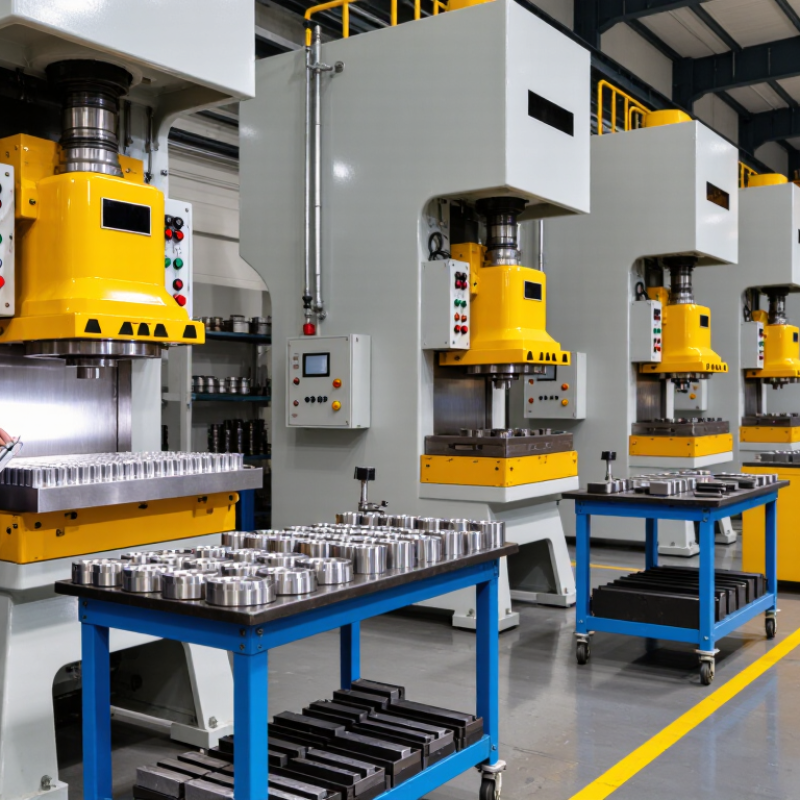
What Metal Stamping Companies Do and How the Process Works
Metal stamping companies turn flat sheet or coil into repeatable parts using matched dies and mechanical or hydraulic presses. The process may include blanking, piercing, bending, and drawing. Each operation changes the material in a controlled way. In a typical line, coil feeds through a straightener, enters the press, and advances through stations in a progressive die. The finished part then receives dimensional checks and, when specified, surface or functional inspection.
Tooling design shapes the result. Engineers review material grade, thickness, part geometry, tolerances, and expected production volume before selecting a process. A die that works for a simple bracket may not suit a deep-drawn housing. Press speed matters, but so do lubrication, alignment, and tool wear. Small changes can cause burrs, cracks, or dimensions that drift over a long run. That matters.
For global buyers, useful questions include how the supplier controls first-piece approval, monitors production, and manages tool maintenance. Ask how measurements are recorded, and whether samples represent the actual production process. A polished sample can hide a difficult setup. A clean drawing does not guarantee an easy production run, either. I would pay close attention to how the company explains risks, because vague answers often leave costly assumptions unresolved. The process is repeatable, but not automatic; experienced operators still need to notice when a familiar sound or edge looks different.
2026 Best Metal Stamping Companies for Global Buyers - What Metal Stamping Companies Do and How the Process Works
Use this process and capability checklist to compare suppliers. The information below describes common industry practices, not rankings or specifications for any particular company. Actual limits depend on material, part geometry, tooling, equipment, and required tolerances.
| Topic | What Happens | Typical Inputs or Outputs | What Global Buyers Should Check |
|---|---|---|---|
| 1. Design and feasibility review | The supplier reviews the part drawing, material, tolerances, production volume, and intended use before recommending a process and tooling approach. | CAD files, 2D drawings, material specifications, annual demand, and quality requirements. | Confirm that drawing revisions, critical dimensions, assumptions, and proposed design changes are documented and approved. |
| 2. Tool and die design | A die is designed to cut or form sheet material. Depending on the part and production plan, tooling may be single-operation, compound, or progressive. | Die layout, tooling design, strip layout where applicable, and a defined maintenance plan. | Clarify tooling ownership, payment milestones, expected service life, maintenance responsibility, and transfer or storage terms. |
| 3. Material preparation and feeding | Sheet or coil stock is identified, inspected, and fed into the press manually or through an automated feeding system. | Common materials include low-carbon steel, stainless steel, aluminum, and copper alloys. Material grade and thickness are part-specific. | Specify grade, temper, thickness tolerance, surface condition, material certifications, and requirements for lot traceability. |
| 4. Press stamping operations | A press drives the die to cut or shape the material. Operations can include blanking, piercing, bending, forming, and drawing; a part may require more than one operation. | A press with suitable force, bed size, stroke, and feeding setup, matched to the part and tooling. | Ask how the supplier validates press capacity, process controls, setup approval, and production consistency for the specific part. |
| 5. Secondary operations | Parts may be deburred, tapped, welded, heat-treated, plated, coated, or assembled after stamping when the design requires it. | Finished or semi-finished components, with processes selected according to drawing and performance requirements. | Identify which steps are performed in-house or subcontracted, and define finish standards, inspection records, and change controls. |
| 6. Inspection and validation | The supplier checks parts against agreed requirements using suitable gauges, measuring equipment, visual checks, and documented inspection plans. | Dimensional results, material records, appearance checks, and initial sample or production validation documents as agreed. | Agree on critical-to-quality features, sampling frequency, acceptance criteria, calibration controls, and nonconformance response. |
| 7. Packaging and delivery | Parts are protected, identified, packed, and shipped according to the agreed logistics plan and destination requirements. | Packaging specification, shipment labels, delivery schedule, and export documents where applicable. | Confirm packaging protection, labeling language, shipment terms, lead-time assumptions, and procedures for shortages or transit damage. |
| Supplier comparison dimensions | |||
| Technical fit | Assess whether the supplier's process, equipment, tooling, and finishing capabilities match the part requirements. | Capability should be demonstrated against the buyer's actual drawings and production needs. | Request a documented feasibility review and evidence relevant to the specific application. |
| Quality systems and traceability | Review how the supplier controls materials, processes, inspections, records, and corrective actions. | Required certifications and records vary by industry, customer, and product risk. | Verify applicable certifications directly and define the records that must accompany or be retained for each lot. |
| Total landed cost | Compare the full commercial picture rather than piece price alone. | Consider tooling, material, secondary processes, packaging, freight, duties, and quality-related costs. | Request itemized quotations with clear assumptions, currency, validity period, delivery terms, and cost-change triggers. |
| Supply continuity and communication | Evaluate the supplier's planning, escalation, and communication arrangements for ongoing orders. | Capacity, lead times, business continuity arrangements, and response processes should be confirmed for the program. | Agree on forecast sharing, order confirmation, change notification, escalation contacts, and contingency expectations. |